Clear Aligner Treatment


Reader-supported. We may earn a commission from links on this page. Advertising disclosure.
In this article
Do I Need Aligners?
You should consider clear aligners like Invisalign if you have crooked teeth and want to have a straight smile. Here are three signs you need clear aligners:
- You have spaces or gaps between teeth
- Your teeth are too close together that they overlap
- Your upper and lower teeth don’t meet the way they should when you bite down
Pain or soreness when you clench is not a sign you need aligners. It usually points to bruxism (grinding or clenching) or a jaw joint problem, and a night guard protects your teeth from that1. Compare the best night guards and ask your dentist to check your bite.
However, clear aligner treatment isn’t for everyone. Most aligners only work on mild to moderate cases2.
If you have severe teeth misalignment and bite issues (malocclusions), you may need in-office orthodontic treatments like traditional metal braces to get straight teeth.
What Are Aligners?
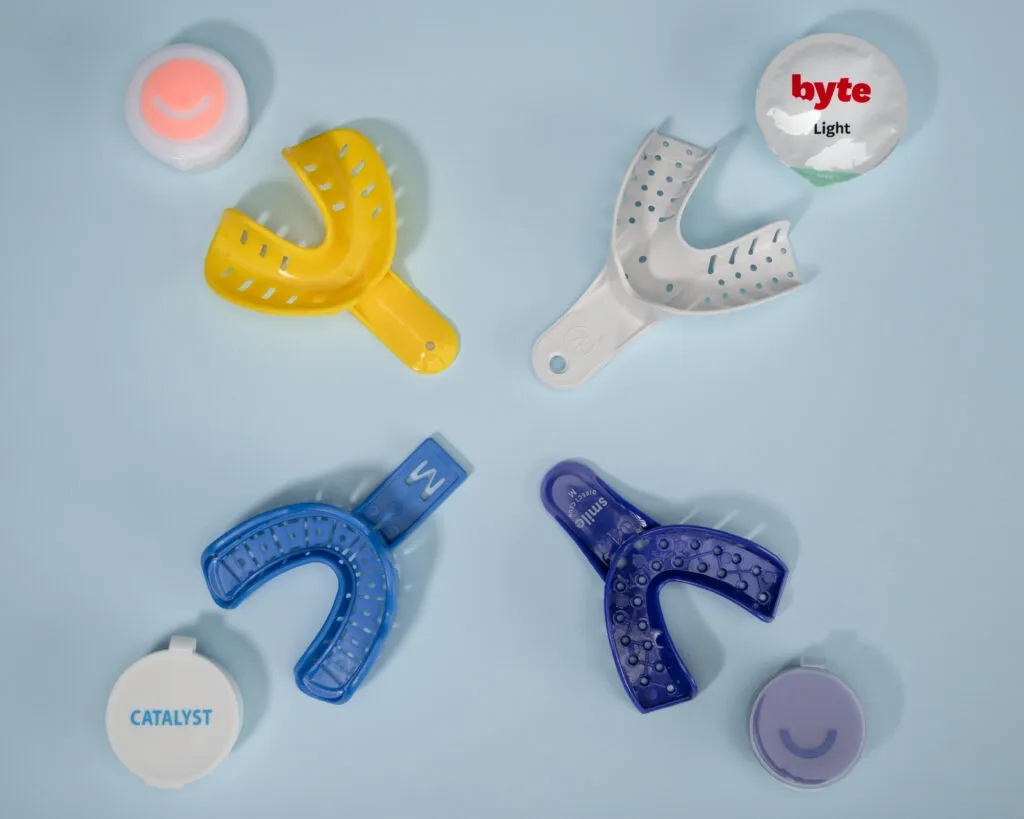
Clear aligners are dental trays that help you achieve a straighter smile by gradually shifting crooked teeth (malocclusions) into alignment.
Unlike braces that use metal brackets and wires, aligners are clear plastic. They’re barely visible when worn, allowing you to straighten your teeth discreetly.
Aligners are also removable alternatives to braces. While braces remain attached to your teeth during treatment, you can remove clear aligners when eating, flossing, or brushing your teeth.
Other names for clear aligners include invisible aligners, teeth aligners, teeth straighteners, and teeth straightening kits. They’re not the same as clear braces or invisible braces.
What Are Clear Aligners For?
Clear aligners can fix misaligned teeth, including:
- Crowded teeth: overlapping teeth
- Overbite: upper front teeth overlap the lower front teeth
- Underbite: lower front teeth overlap the upper front teeth
- Open bite: front and lower teeth that don’t touch with a clenched mouth
- Diastema: small or large gaps between teeth
However, this depends on your clear aligner brand. In-office aligners like Invisalign treatment can correct more teeth alignment issues than at-home aligners. Clear aligner kits only treat minor to moderate misalignments.

How Do Aligners Work?
Clear aligner treatment includes a series of plastic dental trays that are custom-fitted to your teeth. Each aligner is designed to slowly move teeth, about a fraction of a millimeter at a time3.
Generally, you need to wear each tray for one to two weeks before switching to the next aligner. The number of invisible teeth aligners may vary depending on your treatment plan.
Aligner treatment shouldn’t be painful, but getting used to the aligner trays takes a few weeks. You may also experience a different bite, wobbly teeth, lisps, and potentially gum irritation.
In-Office vs. At-Home Clear Aligners
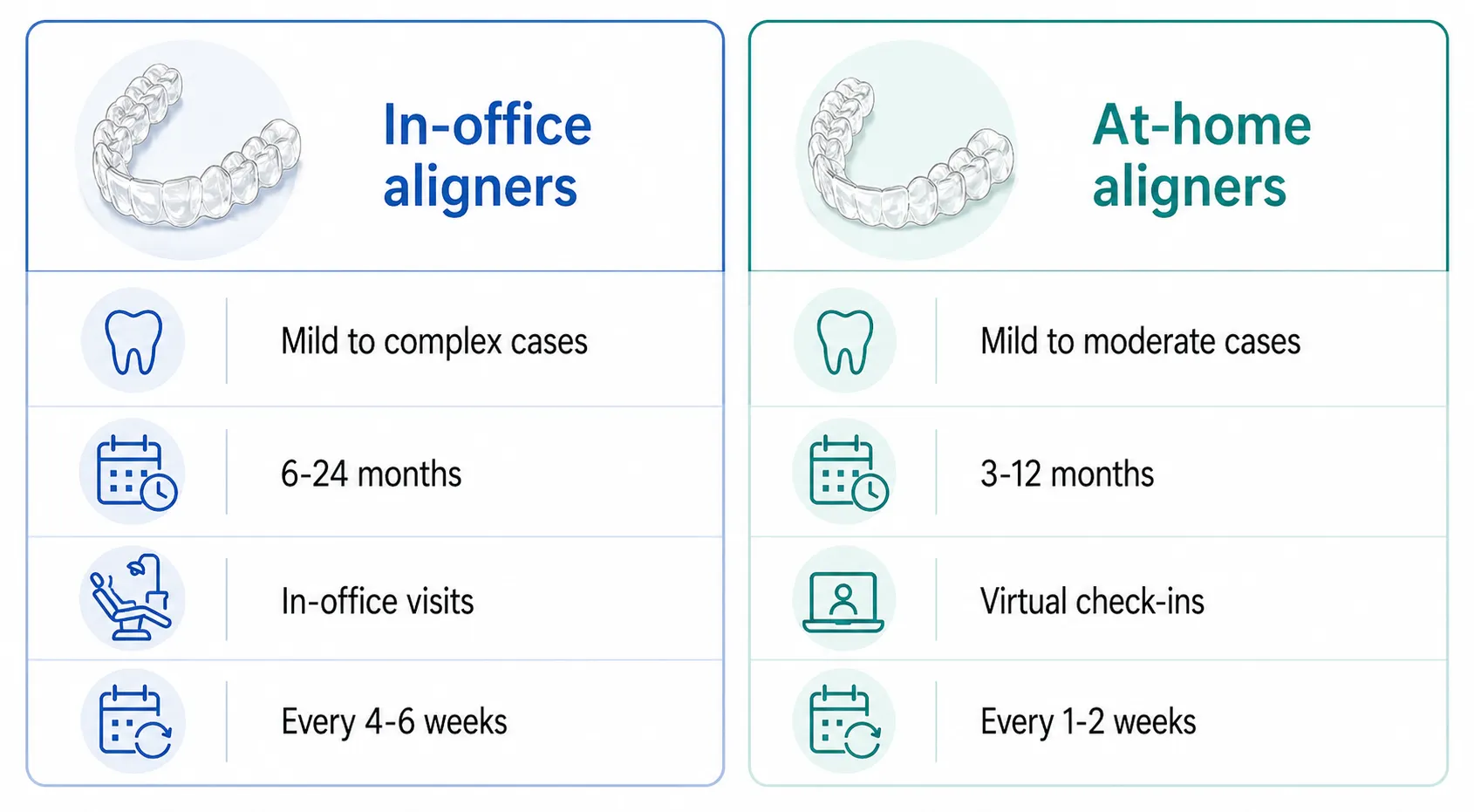
There are two types of aligner treatments: in-office and at-home. Here is a quick comparison:
| Features | In-Office Aligners | At-Home Aligners |
|---|---|---|
| Average treatment costs | Provider quote required | Provider quote required |
| Treatable cases | Mild to moderate cases and complex teeth misalignments (including bite problems) | Mild to moderate cases |
| Average treatment time | 6 to 24 months | 3 to 12 months |
| Starting treatment | In-person consultation | Online impression kit or in-person consultation |
| Daytime aligners | Yes | Yes |
| Nighttime aligners | No | Depends on brand |
| Daily wear time | 20 to 22 hours | Day aligners: 20 to 22 hours Night aligners: 8 to 10+ hours |
| Progress monitoring | In-office visits | Virtual check-ins |
| Frequency of monitoring | Every 4 to 6 weeks | Every 1 to 2 weeks |
| Offers financing options | Depends on your provider | Yes |
| Accepts insurance | Depends on your provider | Yes |
| Accepts HSA or FSA | Yes | Yes |
What Are In-Office Clear Aligners?
Companies that offer in-office aligners have dental partners located across the US. You can purchase these aligners through providers who can make sure you’re qualified.
Some of our recommended in-office invisible aligners are:
There are more than 60,000 licensed dental professionals across the US who offer in-office clear aligners like Invisalign treatment and ClearCorrect.
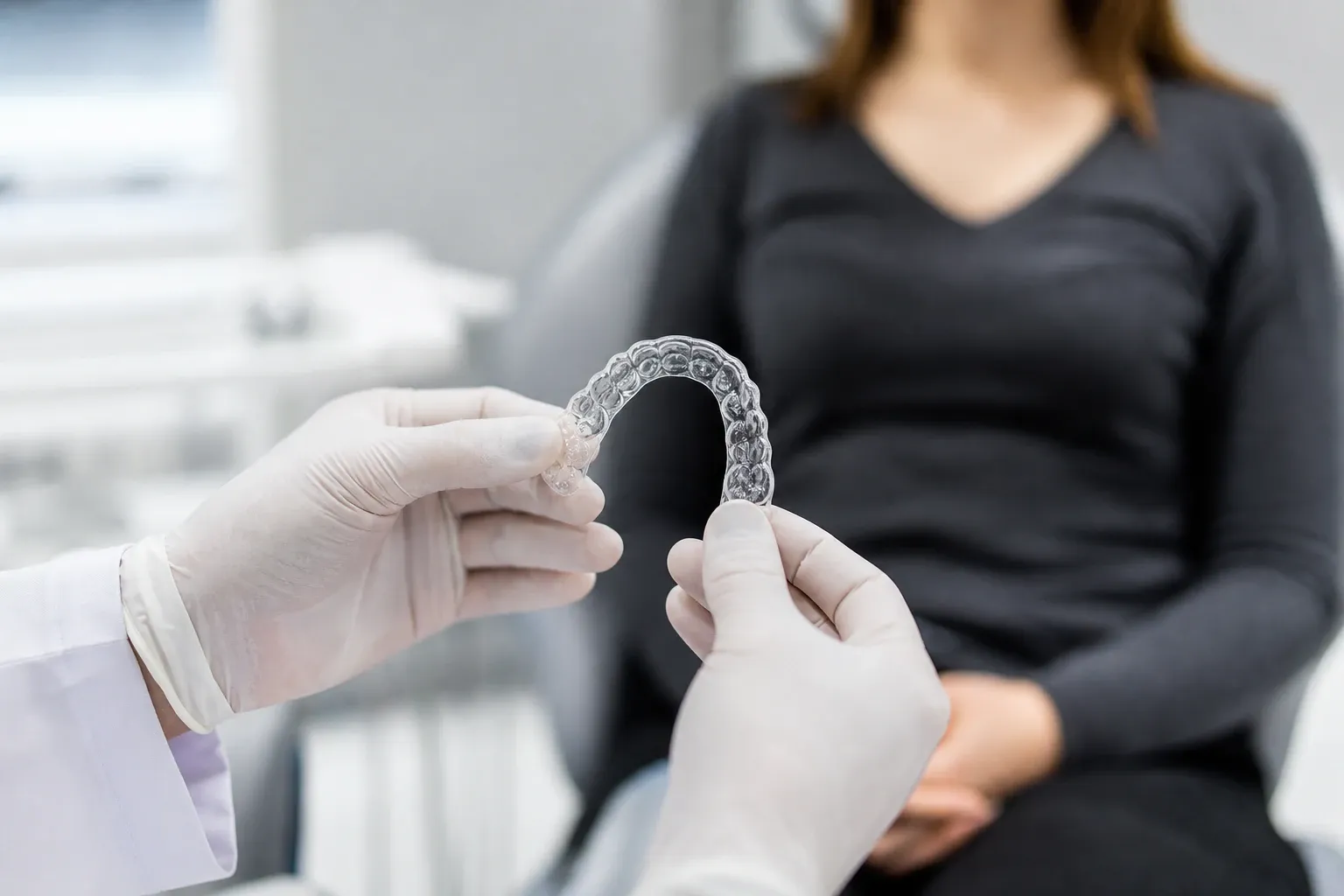
Pros of In-Office Aligners
- Licensed dental professionals at local clinics supervise treatments. This makes them accessible and helps ensure safe, effective treatment.
- In-office aligners can treat mild to complex teeth misalignments. They can also correct overbite and other minor bite issues.
- Brands like ClearCorrect may offer free touch-up aligners and retainers with your treatment, depending on your chosen plan.
- In-office aligners like Invisalign may be covered by insurance, your HSA, and FSA.
Cons of In-Office Aligners
- In-office aligners like Invisalign cost more than at-home clear aligners.
- You have to visit the dentist’s office regularly, which may be inconvenient for some.
- The availability of in-office aligners and treatment plans depends on your location. This can limit your access to reliable teeth straightening options.
- Treatments don’t include free teeth whitening. Brands like Invisalign may offer whitening trays, while others do not.
- Dental providers have different policies on financing options, refunds, and additional refinements if your treatment doesn’t go as planned.
- While most providers give free consultations to help you start your treatment, some may charge for an assessment.
- Even with a strong track record, in-office aligners like Invisalign and SureSmile are still less predictable than traditional braces.
What Are At-Home Clear Aligners?
At-home aligners can be purchased directly from clear aligner brands. Companies that offer them usually follow a qualification process to ensure their treatments work for you.
Our recommended at-home invisible aligners are:
Some of the best at-home clear aligners have physical locations or dental partners across the US. They offer free in-person consultations and digital teeth scans.
Pros of At-Home Aligners
- They’re cheaper, more convenient, and easier to access. This makes them a good alternative to Invisalign and other in-office treatments.
- At-home options like SA Aligners don’t require dental visits. Instead, you’ll be sending progress photos via an app so you can be monitored remotely.
- At-home aligner companies often include teeth whitening products, your first set of retainers, and a guarantee with your personalized treatment plan.
- If you’re unhappy with your treatment, several brands may offer touch-up aligners at no extra cost.
- You can pay for your treatment upfront or with affordable monthly installments using payment plans, dental insurance coverage, and HSA or FSA funds.
Cons of At-Home Aligners
- These aligners only work on mild and moderate teeth alignment issues.
- You may need some dental work to qualify, which adds to the treatment cost.
- Most at-home brands skip the in-person exam and X-rays an orthodontist would take first. Those records catch gum disease, short roots, and bone loss that make tooth movement unsafe4. Get a dental checkup before you order.
- The lack of direct dental supervision can lead to unpredictable results. Your treatment may last longer than planned, or you may not get the desired results.
- Evidence for night aligners is limited. We usually suggest daytime wear, and night-only wear is a fit for mild cases at most.
How Much Do Aligners Cost?
At-home aligners cost less than in-office aligners like Invisalign, which need a provider quote. You’ll find current brand-by-brand aligner prices in our cost guide, so this page sticks to the factors that change the number.
The cost of clear aligners depends on several factors, including:
- Your brand of clear aligners
- Your chosen payment option
- Your level of teeth misalignment
- How long your treatment lasts
- If you need extra dental work
- Your dental insurance coverage
- If you have HSA or FSA benefits
- Cost of dental checkups
After you finish treatment, you’ll wear retainers to hold your new smile. Retainers wear out and need replacing when they crack, warp, or stop fitting, so plan on that as a recurring cost.
It’s usually cheaper to purchase clear aligners upfront. Monthly plans are still a great option if you want to space out your payments, but they can incur interest and additional fees.
Remember, you don’t have to spend thousands of dollars to get straighter teeth. Here are the cheapest invisible aligners we recommend if you’re on a budget.
Are Clear Aligners Covered By Insurance?
Clear aligners may be covered by insurance if your plan includes orthodontic benefits3. How much you get back depends on your insurer, the brand of aligners, and your dental provider.
To confirm your insurance coverage for clear aligners, you’ll need to:
- Ask your health insurance company
- Check with a clear aligner brand
- Talk to your dentist or orthodontist
You won’t need to file for reimbursement if a brand or provider is in-network with your insurer. But sometimes, you may need to pay for your aligners and ask to be reimbursed.
Consider getting dental insurance that covers orthodontic devices like clear aligners. Here’s our guide on the best dental insurance plans.
Can I Use HSA/FSA To Pay For My Aligners?
Your flexible spending account (FSA) and health savings account (HSA) can pay for clear aligner treatment. The IRS counts orthodontic work like braces as a qualified dental expense5.
You can also use your HSA or FSA together with your insurance or in place of it if your chosen brand or provider isn’t covered by your health insurer.
How to Start Your Aligner Treatment
At-home and in-office treatments require you to wear your clear aligners as prescribed over the next few months. However, the process is slightly different for each treatment:
In-Office Aligner Treatments
Step 1: Visit a dental provider in your area
The only way to begin treatment is to book an appointment with a dental provider who offers the in-office aligners of your choice. They can determine if you’re a candidate.
If you qualify, your provider will help you decide which treatment plan is best for your case. This usually depends on your age and the severity of your teeth alignment issues.
They will take digital scans, photos, dental X-rays, and impressions of your teeth and send them to the aligner company to make your invisible aligners.
Step 2: Start wearing your in-office aligners
The aligner trays will be sent to your provider, who will schedule a fitting appointment. From there, you can take the aligners home and continue your treatment.
You’ll be asked to see your dentist or orthodontist every 4 to 6 weeks. During these visits, they’ll assess your progress and make slight adjustments to your treatment if necessary.
At-Home Aligner Treatments
Step 1: Choose how you want to begin treatment
In most cases, you’ll be asked to answer an online quiz that will help determine if you qualify for the treatment. Candidates can then proceed with the next step.
Depending on the brand of clear aligners, this means ordering an at-home impression kit, getting an in-person consultation, or requesting a specialist to visit you for an assessment.
Here’s how you can get started with the top aligner brands:
| At-Home Clear Aligner | Impression Kit | In-Person Consultation | Mobile Teeth Scan |
|---|---|---|---|
| SA Aligners | Yes | No | No |
| ALIGNERCO | Yes | Yes | No |
| NewSmile | Yes | No | No |
| Strayt | Yes | Yes | Yes |
| Smileie | Yes | No | No |
If you order an impression kit online, you must take dental impressions and send them back. Instructions will be provided, but some companies have experts who can guide you.
If you book an in-person consultation or mobile teeth scan, they will ask questions, take digital scans of your teeth, and send them to the aligner company for evaluation.
Step 2: Decide on a treatment plan
A dental professional, usually a dentist or orthodontist, will review your case and create your custom treatment plan. You can check your treatment plan and approve it or request changes.
Most companies let you choose from daytime aligners (worn 20 to 22 hours a day) and nighttime aligners (worn at night for 10+ continuous hours).
Brands that offer night aligners include:
Step 3: Start wearing your at-home aligners
Once you approve your doctor-directed treatment plan, they will have your new aligners made and ship them out. They should arrive in 4 to 8 weeks with the rest of your kit.
Each patient has to wear aligners for the prescribed number of hours. Every 1 to 2 weeks, you have to send photos of your teeth via an app so your progress can be monitored.
Post-Treatment Retainers
Once you complete treatment, you need to wear retainers that are customized to fit your newly straightened teeth. This prevents teeth from shifting back so you can maintain a great smile.
Your orthodontist or aligner company sets the wear schedule, and some retainer use usually continues for life6. Replace a retainer when it cracks, warps, or no longer fits rather than on a fixed calendar. You also have to keep retainers clean.
Which Clear Aligner Do I Choose?
When choosing the best invisible aligners, you have to consider the following:
- Your level of teeth misalignment: mild, moderate, or severe
- Accessibility of the treatment: online or in-person
- Available treatment options: daytime aligners, or night-only aligners for mild cases if you accept a longer timeline
- Treatment costs: upfront costs and payment plans
- Average treatment times: how long before you see results
If you want to treat a mild case from home, SmileSet is the at-home provider NewMouth reviews separately and recommends. The SmileSet review covers its aligners, retainers, and night guards, along with what to check before you order.
We also recommend consulting with a licensed dental professional. They can assess your condition and help you explore orthodontic treatments that will work best for your case.
Sources
- “Bruxism.” National Institute of Dental and Craniofacial Research, 2025.
- Hartogsohn, C. S., and Sonnesen, L. “Clear Aligner Treatment: Indications, Advantages, and Adverse Effects: A Systematic Review.” Dentistry Journal, 2025.
- “Clear Aligners.” American Association of Orthodontists.
- “At-Home Orthodontics: Cons and Considerations.” American Association of Orthodontists.
- “Publication 502, Medical and Dental Expenses.” Internal Revenue Service.
- “Orthodontic Retainers: Types, Care, and Life After Braces.” American Association of Orthodontists.

Experienced general dentist and adjunct professor. Advocates for preventive dentistry and dental education.

Lead content writer and certified nutritionist focusing on clear aligners and teeth whitening.
Related Articles

2Usmiles Clear Aligners
If you're exploring options to straighten your teeth without office visits, 2Usmiles might seem like an affordable and c...

ALIGNERCO: At-Home Budget Option
ALIGNERCO is an at-home budget option for teeth alignment. Read our full review of ALIGNERCO and whether it's a good tre...

Are at Home Teeth Aligners Safe?
Are at-home aligners safe? See what the ADA and AAO say, the safety criteria a remote aligner program should meet, and w...
Candid vs. Invisalign Review (2026)
Looking into aligners but are hesitant to sign a contract? Let us help! We guide you through the candid aligner, Invisal...