Early Orthodontic Treatment: Pros, Cons, Candidacy & Treatment Options


Reader-supported. We may earn a commission from links on this page. Advertising disclosure.
In this article
When it comes to orthodontic problems with their child’s teeth, many parents wonder how young is too young to start treatment. The American Association of Orthodontists (AAO) recommends scheduling your child’s first orthodontic evaluation by age 7.1
While this may seem young, many orthodontic problems are easier to treat at an early age. Additionally, early intervention may be necessary to create space for a child’s adult teeth to come in. However, not every early orthodontic evaluation results in treatment.
This article explains the pros and cons of early orthodontic treatment and the conditions it may benefit. Talk to your child’s orthodontist about whether early treatment is right for them.
What Is Early Orthodontic Treatment?
“Early” or “interceptive” orthodontic treatment refers to an orthodontic intervention that occurs while a child still has some baby teeth. It’s typically the first stage of two phases of orthodontic treatment.
Most young patients begin orthodontic treatment around age 14. All of a child’s permanent teeth have fully erupted by this age.
Interceptive orthodontic treatment occurs during the mixed dentition phase when some baby and permanent teeth are in a child’s mouth. This treatment aims to prevent orthodontic issues that may worsen if left untreated.
Early Orthodontic Treatment Pros and Cons
While early orthodontic intervention can help prevent future issues and improve your child’s smile, it also has disadvantages. Consult an orthodontist to determine if early treatment is right for your child.
Pros
Pros of early treatment include:
- Can address skeletal issues in the jaw and correct bite alignment before the permanent teeth grow in
- May reduce the complexity of or prevent the need for second-phase orthodontic treatment at a later age
- Provides your child with the foundations of a healthy, beautiful smile
- Occurs while your child’s skeletal growth is still active, making some conditions easier to treat
- Can help prevent the need for extraction of adult teeth
- Treats facial asymmetry that may become permanent if not corrected before puberty
Cons
Cons of early orthodontic treatment include:
- There is no way to guarantee a second phase won’t be needed when the child is older
- Kids will require parental supervision to ensure good oral hygiene with braces and other orthodontic appliances
- Compliance with the proper use of appliances can be a challenge for children
What Orthodontic Conditions May Require Early Treatment?
Scheduling an orthodontic evaluation is the best way to prevent issues with your child’s oral and dental development.
Certain conditions that affect a child’s bite or teeth may indicate the need for early interceptive treatment. These include:
- Tooth crowding — Severe dental crowding can cause some or all teeth to overlap
- Severely gapped teeth — Gaps can form between any two teeth in the mouth, the most common being the two upper front teeth (midline diastema)
- Underbites — A class III malocclusion happens when the lower jaw is too far forward, causing the lower front teeth to protrude beyond the upper front teeth
- Crossbites — This is when the lower teeth overlap the upper teeth rather than vice versa.
- Other discrepancies — Includes extra or missing teeth and jaw or teeth issues resulting from thumb-sucking or long-term pacifier use.
Common Types of Early Orthodontic Treatment
Four common types of early orthodontic treatment include:
Tongue Crib Appliance
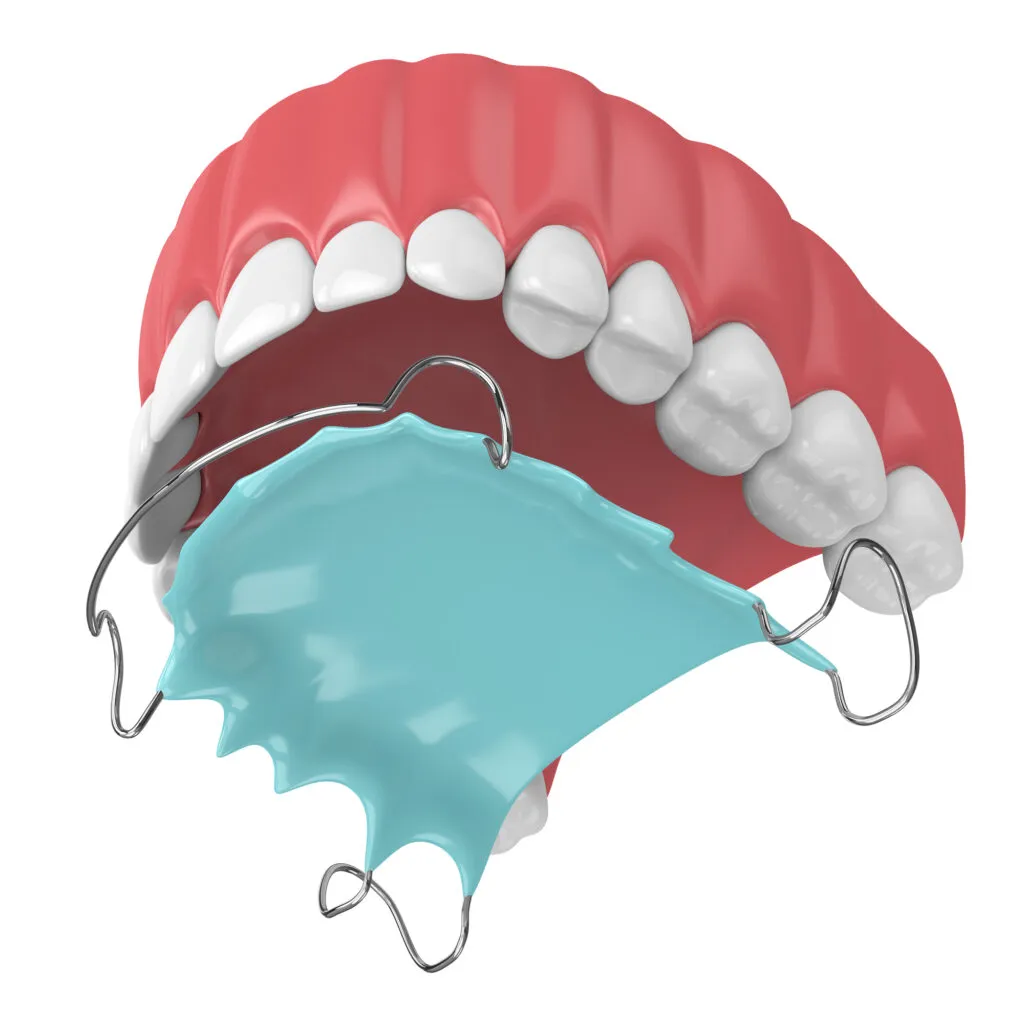
Many orthodontic issues arise from poor habits in early childhood, such as thumb sucking and prolonged pacifier use. These behaviors lead to tongue thrusting, which is a common cause of teeth misalignment.
A tongue crib is an orthodontic device that prevents children from sucking on their fingers or thumbs. Using a tongue crib may help your child avoid a potentially severe malocclusion, such as an open bite.
Palatal Expanders
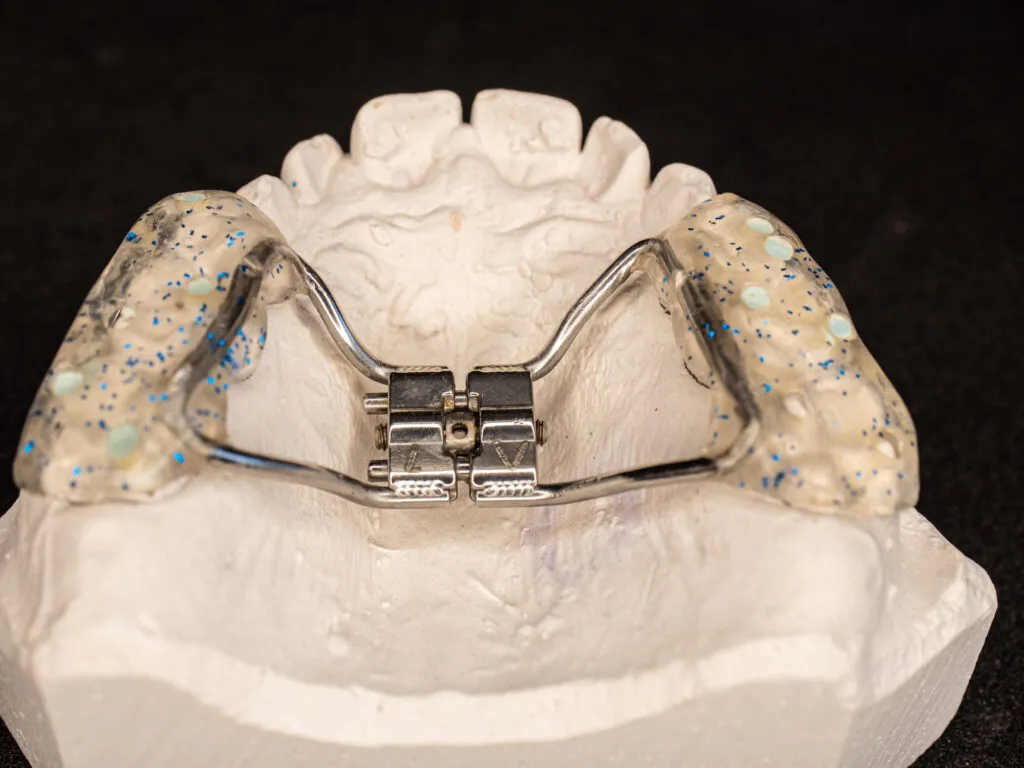
The most common reason children receive orthodontic treatment while they still have some of their primary teeth is due to abnormal jaw formation. If your child’s jaw isn’t wide enough for the permanent teeth to grow, they may need a palatal expander.
Expanders create more space in the mouth by widening the upper jaw over time. A wider jaw allows for more effective and quicker orthodontic treatment, such as clear aligners or braces.
Impacted teeth, crossbites, dental crowding, and breathing problems are common indicators of a palatal expander.
Traditional Braces
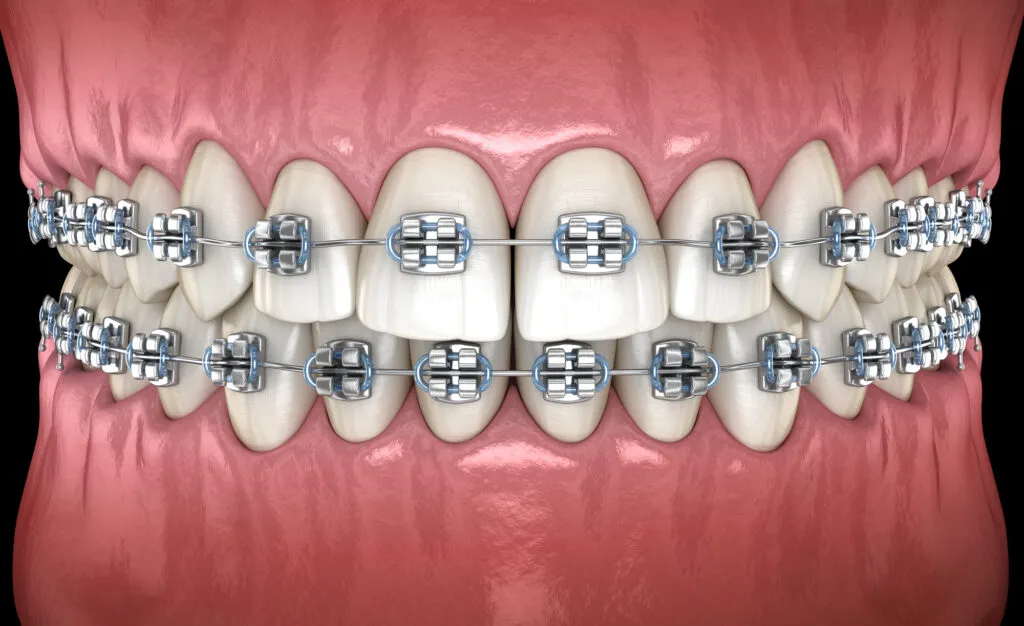
Traditional braces are the most popular orthodontic treatment to correct misaligned teeth, crooked teeth, and other bite problems.
Children and teens between 10 and 14 most commonly get braces. Children younger than 10 might need braces if they have severely crowded teeth, an underbite, gapped teeth, missing teeth, or other issues.
Headgear
Headgear may be necessary if your child’s jaw and teeth are severely misaligned. The appliance is attached to their head or face with a neck strap and is used in combination with braces.
Braces only fix the positioning of the teeth, while headgear can influence proper jaw growth.
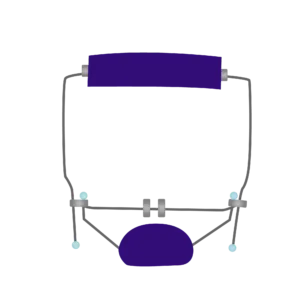
Common types of headgear include:
- Cervical Pull Headgear — treats overbites and underbites
- Reverse-Pull Headgear — treats underbites and crossbites
- High Pull Headgear — treats open bites
Clear Aligners
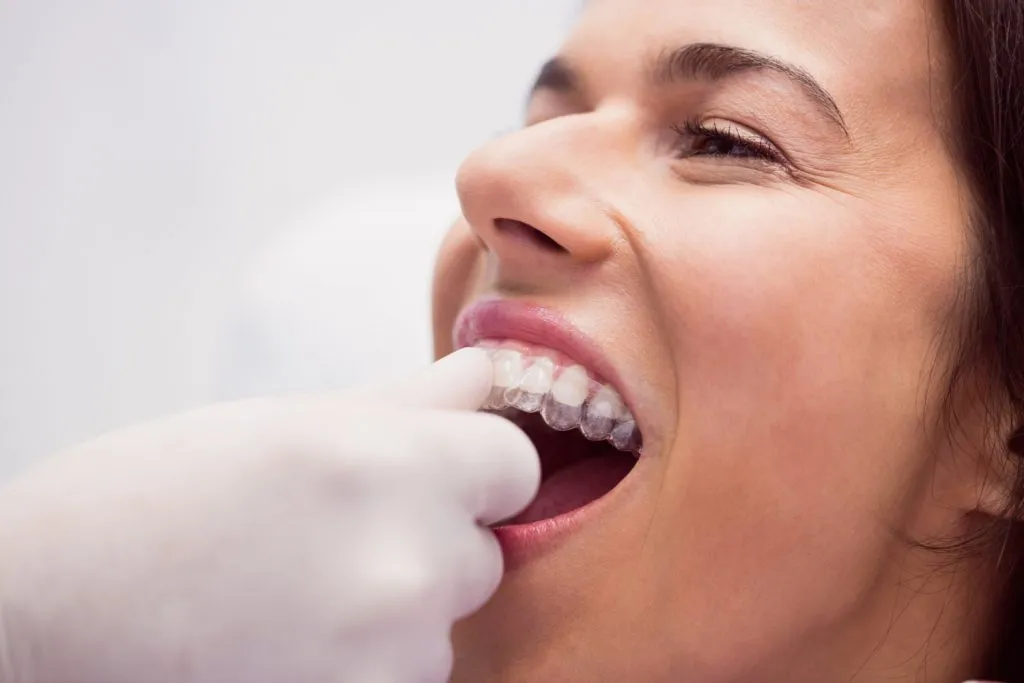
Clear aligners, also called invisible braces, have grown in popularity since the 90s. Adults prefer clear aligners over braces because they are removable, virtually invisible, and comfortable.
However, some younger children are also candidates for invisible braces. Invisalign offers aligners for children who still have some baby teeth.
Summary
Early or interceptive orthodontic treatment occurs while some baby teeth are still in a child’s mouth. Children should have an orthodontic evaluation no later than age 7 to determine if early treatment would be beneficial.
Addressing jaw and teeth misalignments early can help prevent more severe problems, including permanent changes to your child’s facial appearance.
However, early treatment doesn’t necessarily mean a child won’t need braces or other orthodontic interventions when they’re older.

UCLA-trained dentist practicing in public health. Focuses on whole-body approach to dental care.

Lead content writer and certified nutritionist focusing on clear aligners and teeth whitening.
Related Articles
Orthodontic Treatment for Adolescents & Teens (Phase II)
Knowing what orthodontic treatment options are available for your teen or adolescent is important. Here are some common...

Orthodontic Treatment for Different Age Groups
Check out our guide on orthodontic treatment for every stage of life, from interceptive treatment to braces for adults....
Adult Braces: Orthodontic Treatment for Adults
Are you an adult considering orthodontic treatment? Read on to learn about adult braces, how they work, what to expect,...
Orthodontic Headgear: Types & When Treatment is Necessary
Do you need orthodontic headgear? We discuss three types of headgear, when it's necessary to wear them, the potential si...