Swollen Tonsils - Symptoms, Causes & Treatments


Reader-supported. We may earn a commission from links on this page. Advertising disclosure.
In this article
What Causes Swollen Tonsils?
Swollen or inflamed tonsils are a common sign of tonsillitis. A little over half of all tonsillitis cases are caused by viral infections, the rest are bacterial.
The same viruses that cause the common cold can cause tonsillitis. Most cases of bacterial tonsillitis are due to strep throat.
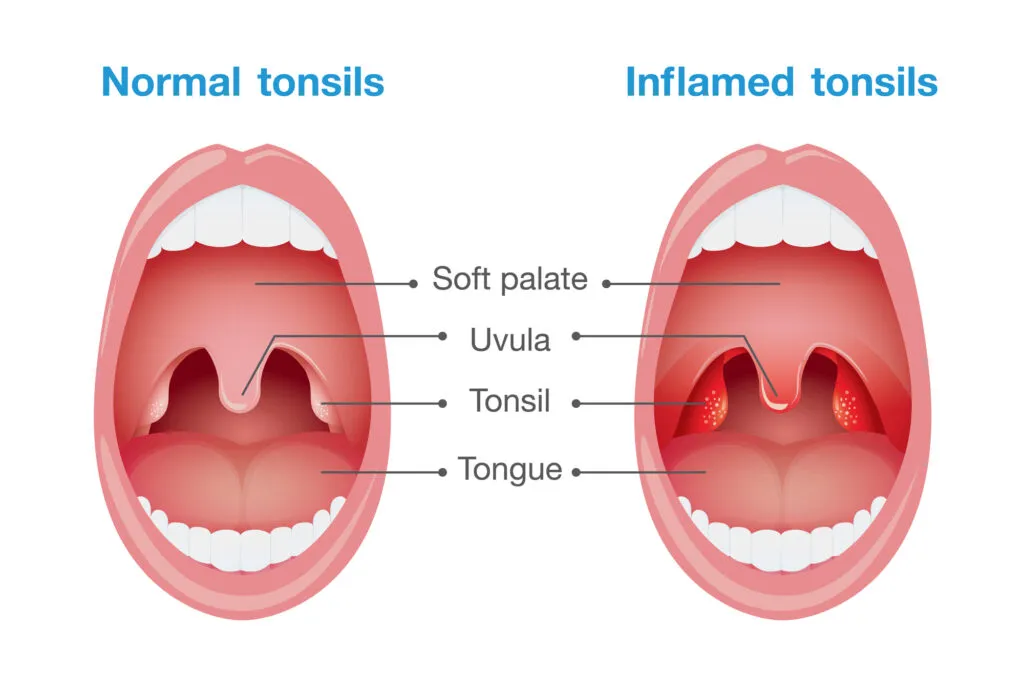
Throat cancer can also cause swelling of the tonsils. However, throat cancer usually only involves one tonsil.
Symptoms of Tonsillitis
Tonsillitis can have other symptoms beyond tonsil swelling. Common tonsillitis symptoms include:
- Red tonsils, sometimes with a whitish discharge (exudate)
- Sore throat, which may cause trouble swallowing
- General discomfort or malaise
- Fever and chills
- Ear pain
- Jaw pain
- Headache
- Swollen lymph glands in your neck
- Pus-filled spots on the tonsils
- Bad breath
Tonsillitis can sometimes be associated with tonsil stones, which are small, calcified deposits on the surface of the tonsils.
When to See a Doctor
You should see a doctor if you have swollen tonsils and a sore throat for over a day or two. Especially if you’re experiencing a high fever, severe pain, or difficulties breathing or swallowing.
You should also call your doctor if only one tonsil is swollen. This may be a sign of throat cancer.
You can see your dentist if you think you have tonsillitis. However, your primary care physician is probably the best healthcare professional to call.
Tonsillitis Complications
Bacterial tonsillitis caused by streptococcus A (strep throat) can lead to serious complications if left untreated. For this reason, antibiotics are often prescribed for bacterial tonsillitis.
Potential complications of tonsillitis include:
- Rheumatic fever (inflammation of multiple organs, including the heart)
- Kidney disease (glomerulonephritis)
- Quinsy (also known as peritonsillar abscess, an infection behind the tonsils)
Tonsillitis and related conditions can be associated with poor oral hygiene, which can also lead to tooth decay and gingivitis.
How Long Do Swollen Tonsils Last?
Whether viral or bacterial, tonsillitis often runs its course within about a week. However, bacterial tonsillitis can sometimes lead to more serious systemic illnesses.
When tonsillitis lasts longer than a week or keeps coming back, it’s called chronic tonsillitis. People with chronic tonsillitis might need surgery.
How to Treat Tonsillitis
To diagnose swollen tonsils, your doctor will examine your throat and take into account your age and symptoms. You may be given a rapid strep test to determine whether or not you have a strep infection. This involves a throat swab, which gets tested for strep bacteria.
Once your doctor determines whether you have tonsillitis caused by a viral or bacterial infection, they’ll recommend the best treatment. Treatment for tonsillitis is usually a combination of home remedies and professional treatments.
Home Remedies
Home care can help relieve many common symptoms of tonsillitis. Remedies include:
- Over-the-counter medication — OTC medications like acetaminophen and ibuprofen can help reduce pain and fever.
- Drink plenty of fluids — Warm water, herbal tea, and broth can all provide comfort to your throat and tonsils.
- Add honey to warm water or tea — Honey has antimicrobial properties and can act as a cough suppressant.
- Cold foods — Cold foods like ice cream can have a soothing effect which can help manage pain.
- Gargle warm salt water — Mix ½ teaspoon of salt with 8 ounces of warm water to help relieve discomfort and prevent infection.
- Use a humidifier — It’s important to keep your environment humid because dry air can irritate the throat.
- Avoid caffeine, alcohol, and crunchy foods — Alcohol and caffeine are dehydrating, and crunchy foods can irritate the throat.
- Rest — Give your body the time it needs to heal by getting plenty of rest.
Professional Treatments
Doctors will typically prescribe antibiotics to fight the infection responsible for the inflammation. In some cases, steroid medication may be used to reduce swelling.
However, a tonsillectomy may be used for severe and repeated infections. While tonsillectomy can improve quality of life, it sometimes has little effect and isn’t without complications.
How to Prevent Swollen Tonsils and Tonsillitis
There’s no way to ensure you’ll never get tonsillitis. But there are some steps you can take to reduce your vulnerability to tonsillitis-causing viruses and bacteria.
Consider practicing the following:
- Washing your hands thoroughly and regularly
- Avoiding close contact or sharing food with people who are currently sick
- Disinfecting frequently used surfaces such as phone screens and doorknobs
- Maintaining a balanced diet
- Getting adequate sleep to support your immune system
- Maintaining good oral hygiene
Sources
- De, M. and Anari, S. “Infections and foreign bodies in ENT.” Surgery (Oxford, Oxfordshire), 2018.
- Vokes et al. “HPV-Associated Head and Neck Cancer.” JNCI: Journal of the National Cancer Institute, 2015.
- Windfuhr et al. “Clinical practice guideline: tonsillitis I. Diagnostics and nonsurgical management.” European Archives of Otorhinolaryngology, 2016.
- Pasupuleti et al. “Honey, Propolis, and Royal Jelly: A Comprehensive Review of Their Biological Actions and Health Benefits.” Oxidative Medicine and Cellular Longevity, 2017.
- Stelter, K. “Tonsillitis and sore throat in children.” GMS Current Topics in Otorhinolaryngology – Head and Neck Surgery, 2014.
- Bhattacharyya et al. “Efficacy and Quality-of-Life Impact of Adult Tonsillectomy.” JAMA Otolaryngology-Head and Neck Surgery, 2001.
- Mitchell et al. “Clinical Practice Guideline: Tonsillectomy in Children (Update).” Otolaryngology–Head and Neck Surgery, 2019.
- Mark, AM. “Oral and throat cancer.” JADA The Journal of the American Dental Association, 2019.
- Spinks et al. “Antibiotics for treatment of sore throat in children and adults.” Cochrane Database of Systematic Reviews, 2021.

UCLA-trained dentist practicing in public health. Focuses on whole-body approach to dental care.

Experienced dental health writer dedicated to providing accurate, accessible information.
Related Articles
Cavity vs. Stain: How to Tell the Difference
Tooth cavities and tooth stains are a nuisance, but they're not the same thing. Learn how to tell the difference and how...

Cavities Between Teeth (Interproximal) - Symptoms & Treatment
Cavity Between Teeth (Interproximal Cavity) When tooth decay penetrates enamel, a cavity develops. Oral bacteria that ea...

Prognathism: Causes, Symptoms, and Treatment
Prognathism is a condition where the lower jaw protrudes forward. In this article, you'll learn more about prognathism's...

Misaligned or Crooked Jaw
The upper and lower jaws are meant to fit together evenly and painlessly. However, jaws can develop misaligned or uneven...