Bump on Roof of Mouth: Painless and Painful Causes


Reader-supported. We may earn a commission from links on this page. Advertising disclosure.
In this article
Bump on Roof of Mouth: Painless and Painful Causes
A bump on the roof of your mouth is usually harmless. If it doesn’t hurt, it’s most often torus palatinus1 — a slow-growing, harmless bony bump — or a mucocele, a soft, fluid-filled cyst from a blocked salivary gland. If it hurts, the most common causes are a canker sore, a cold sore, or a minor burn. See a dentist if a bump lasts longer than two weeks, bleeds, or changes shape9 — early oral cancer can also be painless, which is the one reason a stubborn bump always deserves a look.
Painless Bump on Roof of Mouth: Quick Triage Table
| If your bump is… | It’s most likely… | Painful? |
|---|---|---|
| Hard, bony, in the midline of the hard palate | Torus palatinus | No |
| Soft, fluid-filled, bluish or clear | Mucocele | No |
| Behind your front teeth | Nasopalatine duct cyst | No (unless infected) |
| Cauliflower or wart-textured, on a stalk | Squamous papilloma | No |
| Round, yellow-white center with red border | Canker sore | Yes |
| Cluster of blisters, often on the lip border too | Cold sore | Yes |
| Tender, red, after eating something hot | Burn or injury | Yes |
When to See a Dentist
Most bumps on the roof of your mouth heal on their own. Make an appointment if any of these apply:
- The bump doesn’t heal within two weeks
- The bump bleeds, grows, or changes shape
- You have a discolored or oddly shaped patch in your mouth
- You have trouble eating, swallowing, breathing, or talking
- A bump goes away and keeps coming back
- You develop a fever, a rash, or body aches alongside the bump
- The sore causes numbness or unexplained weight loss10
The two-week rule is the one to remember. A painless bump that lingers past two weeks still needs to be checked — early oral cancer is often painless, which is why it gets missed.9
12 Possible Causes of Bumps on the Roof of Your Mouth
Most palate bumps fall into a short list of benign causes. The sections below run painless causes first, then painful ones, then the rarer conditions.
1. Torus Palatinus
Torus palatinus is a harmless, slow-growing bony bump in the middle of the hard palate.1 It often runs in families, affects roughly 20% of US adults, and never becomes cancerous.1,2 Most people only notice it when running their tongue along the roof of the mouth or when a dental impression catches on it.
The exact cause isn’t fully understood. Genetics likely plays a role, alongside factors like jaw anatomy, tooth grinding, and age.1 Torus palatinus is more common in women and in people of Asian or Inuit descent.1,2
Treatment
Torus palatinus does not require treatment in most cases. A dentist or oral surgeon can remove it surgically if it interferes with eating, speech, or fitting a denture. Tori can also form on the lower jaw — see mandibular tori for the jaw counterpart.
2. Mucoceles
An oral mucocele is a round, smooth, fluid-filled bump.3 It’s typically painless and looks bluish or clear. Mucoceles form when a salivary gland duct gets blocked or damaged, trapping saliva under the surface.
Mucoceles show up most often on the lower lip but can also appear on the palate.3
Treatment
Mucoceles often rupture on their own and don’t need treatment. If a mucocele is large, persistent, or keeps recurring, a dentist or oral surgeon can remove it.
3. Nasopalatine Duct Cyst
A nasopalatine duct cyst sits at the roof of your mouth, just behind your front teeth.4 It’s usually painless — the most common non-odontogenic cyst on the palate.4 You may only notice swelling, drainage, or pain if the cyst becomes infected.
Treatment
A suspected nasopalatine duct cyst should be checked by a dentist or oral surgeon.4 Watchful waiting works for some cases, but most are removed in a short outpatient procedure to confirm the diagnosis and prevent infection.
4. Squamous Papilloma
A squamous papilloma is a painless, soft bump growing from a stalk. It looks like a small red or pink raspberry, or a piece of white cauliflower. Subtypes of the human papillomavirus (HPV) cause it.5 These growths are benign and don’t turn into cancer.
Treatment
Squamous papilloma doesn’t need treatment. A dentist or oral surgeon can remove it surgically if it’s in the way or you’d prefer it gone.
5. Canker Sores
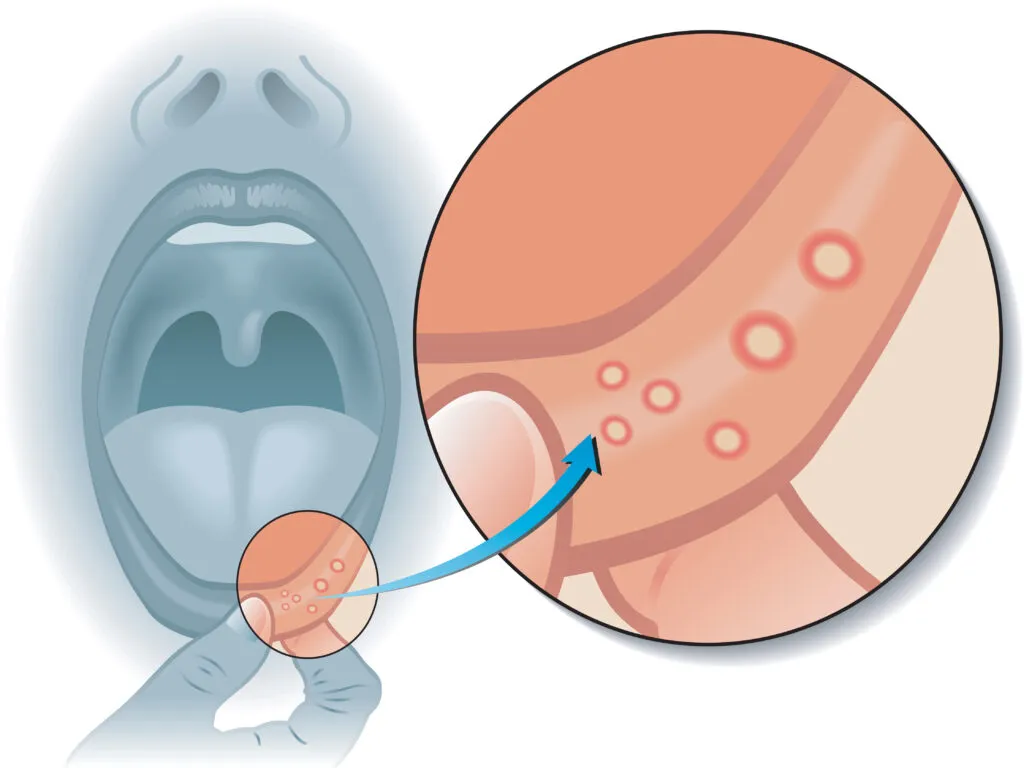
Canker sores are round, painful ulcers with a yellow-white center and a red border. They’re not contagious.6 They can show up on the roof of your mouth, tongue, or the inside of your lips and cheeks.
Triggers include minor mouth injuries, stress, acidic foods, and hormonal changes.6 You may feel a tingling sensation a day or two before one appears.
Treatment
Canker sores heal on their own in one to two weeks. Over-the-counter numbing gels, warm salt-water rinses, or a baking-soda rinse can ease the pain. For longer-lasting sores or recurring cases, see our canker sores guide for home remedies and when prescription treatment makes sense.
6. Cold Sores
Cold sores are clusters of small, fluid-filled blisters caused by the herpes simplex virus (HSV-1).7 They show up most often on or around the lips, but they can also appear on the hard palate. Unlike canker sores, cold sores are contagious, especially when the blisters rupture.7
Treatment
Most cold sores heal within one to two weeks, though first outbreaks and severe flare-ups can run longer.7 Prescription antiviral creams or pills can shorten an outbreak and reduce how often they recur.7
7. Injury
The roof of the mouth has thin, sensitive skin that’s easy to damage. Common culprits include:
- Cuts from sharp or crunchy foods
- Minor burns from hot food or drinks
- Irritation from braces, retainers, or dentures
- Tobacco use
- Repeated friction from a dental appliance
Treatment
Most minor injuries heal in a few days. Over-the-counter pain relievers, warm salt-water rinses, and avoiding spicy or acidic foods speed recovery. If a dental appliance keeps causing the bump, ask your dentist to adjust the fit.
8. Candidiasis
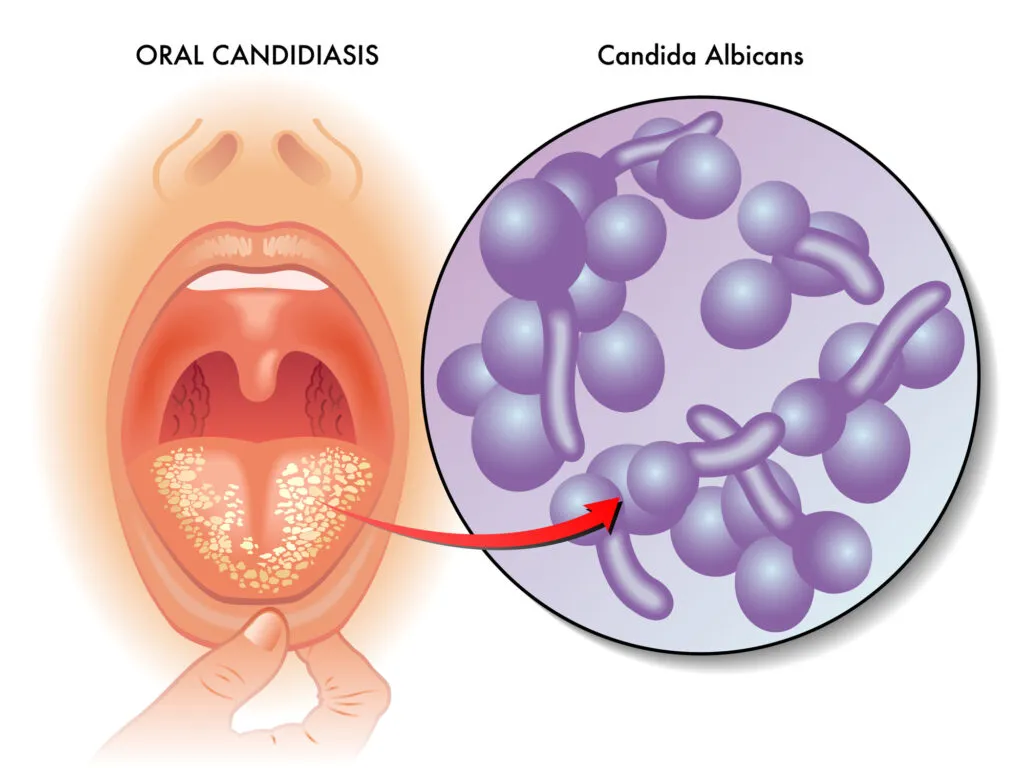
Oral candidiasis, also called oral thrush, causes white, creamy bumps on the roof of the mouth. The patches resemble cottage cheese and can be painless or cause soreness and burning.
Oral thrush is most common in people with weakened immune systems and denture wearers who sleep in their dentures. The fungus Candida albicans is the cause.
Treatment
An oral antifungal medication clears most cases. Cleaning dentures daily and removing them overnight reduces recurrence.
9. Strep Throat
Strep throat sometimes shows up as tiny red spots — called petechiae — on the soft palate.8 These are pin-prick dots rather than raised bumps. The bacteria Streptococcus pyogenes causes it, and it’s highly contagious. Sore throat, fever, and swollen lymph nodes usually come along with the palate findings — and throat pain is the more reliable indicator of strep than a palate finding alone.
Treatment
Strep throat is treated with antibiotics, with symptoms often easing within a few days.8 Finish the full prescribed course — typically 10 days — even if you feel better early. Stopping short can leave bacteria behind, prolong how long you’re contagious, and raise the risk of complications.8
10. Epstein Pearls
Epstein pearls are small, white-yellow nodules in a newborn’s mouth. They’re harmless and very common — some reviews report them in 60% to 85% of newborns.4
Treatment
Epstein pearls don’t need treatment. They resolve on their own within a few weeks to months.
11. Hyperdontia
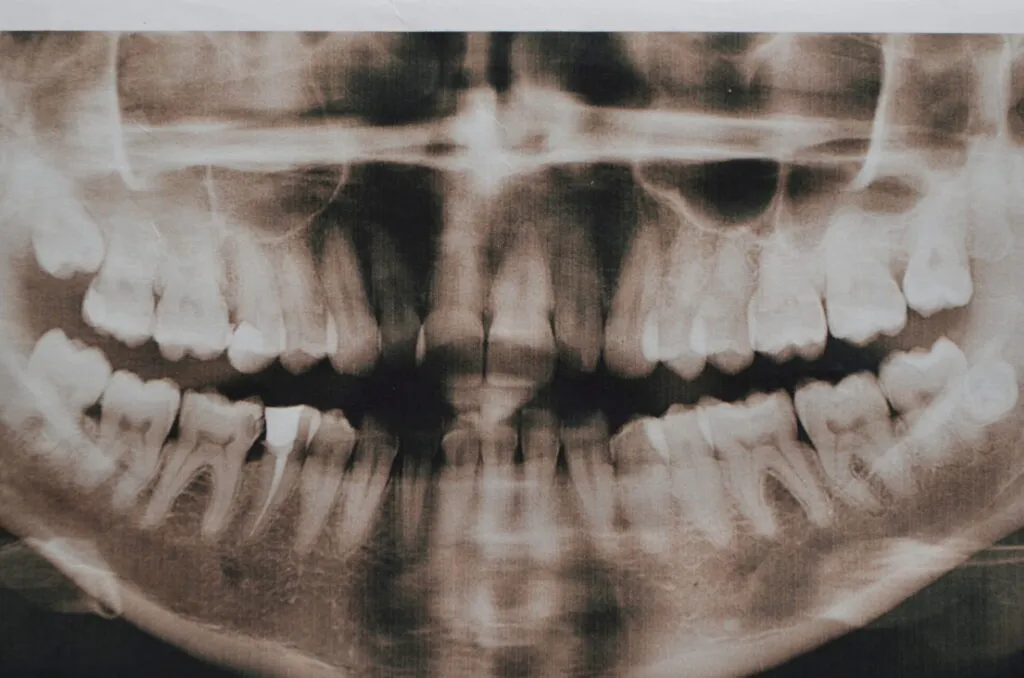
Hyperdontia is a rare condition that causes extra teeth to grow. A supernumerary tooth called a mesiodens can erupt through the palate behind the front incisors and feel like a bump.12 Most cases don’t cause symptoms, though impacted teeth can.
Treatment
A dentist or oral surgeon can remove an extra tooth if it crowds other teeth or interferes with a dental appliance.
12. Oral Cancer
Oral cancer rarely causes bumps on the roof of the mouth — the lifetime risk of oral cavity or oropharyngeal cancer is about 1 in 59 for men and 1 in 139 for women.10 But it’s the reason a stubborn palate bump always deserves a closer look.
Early oral cancer is often painless.11 That’s why the two-week rule matters: any lump, sore, thick patch, bleeding area, numbness, or red or white patch that lasts more than two weeks should be evaluated by a dentist or doctor.9
Common signs include:
- A bump or sore that doesn’t heal in two weeks
- A white, red, or oddly shaped patch in the mouth
- Numbness or persistent pain
- A growth or thickening of tissue
- Trouble chewing or swallowing
- Neck or jaw swelling
Tobacco and alcohol use are the main risk factors.9,10 HPV-linked oropharyngeal cancer has been rising in the U.S. and is more common in men.10
Treatment
Treatment depends on the type, location, and stage. Surgery, radiation, and chemotherapy are the most common approaches. When oral cancer is caught early, outcomes are significantly better — see our oral cancer guide for screening, diagnosis, and what recovery looks like.
How a Bump on the Roof of the Mouth Is Diagnosed
A dentist can often identify a palate bump on visual exam alone. Persistent or unusual bumps may need:
- A biopsy (a small tissue sample)
- Blood tests
- Ultrasound or other imaging
Can You Prevent Bumps on the Roof of Your Mouth?
You can’t prevent every bump — torus palatinus, for example, tends to run in families. But these habits cut the risk for most other causes:
- Brush twice a day and floss daily
- Get regular dental checkups
- Avoid tobacco and limit alcohol
- Skip foods that are spicy, salty, rough, or extremely hot when your mouth feels sensitive
- Stay hydrated
- Keep dental appliances clean and well-fitted
- Avoid sharing utensils or close contact with someone who has an active cold sore
Outlook for Bumps on the Roof of Your Mouth
A bump on the roof of your mouth is usually no cause for concern. Most heal within days or weeks. Bumps tied to an underlying condition — thrush, hyperdontia, or rarely, oral cancer — resolve once that condition is treated.
Related Reading
12 Causes of a Bump on the Roof of Your Mouth
NewMouth PodcastSources
- “Torus Palatinus (Palatal Tori).” Cleveland Clinic, 2023.
- Vaduganathan, M., et al. “Torus palatinus.” Baylor University Medical Center Proceedings, National Library of Medicine, 2014.
- Huzaifa, M., and Soni, A. “Mucocele and Ranula.” StatPearls, National Library of Medicine, 2023.
- McKinney, R., Menicucci, C., and Brizuela, M. “Non-Odontogenic Cysts.” StatPearls, National Library of Medicine, 2025.
- Ruiz-Mojica, C. A., and Brizuela, M. “Viral Infections of the Oral Mucosa.” StatPearls, National Library of Medicine, 2023.
- “Canker Sores.” MouthHealthy, American Dental Association, 2026.
- “Herpes Simplex Virus.” World Health Organization, 2025.
- “About Strep Throat.” Centers for Disease Control and Prevention, 2026.
- “Oral Cancer.” National Institute of Dental and Craniofacial Research, National Institutes of Health, 2024.
- “Key Statistics for Oral Cavity and Oropharyngeal Cancers.” American Cancer Society, 2026.
- Tan, M. “Oral Cavity Cancer.” Johns Hopkins Medicine, The Johns Hopkins University, 2023.
- “Hyperdontia.” Cleveland Clinic, 2023.

UCLA-trained dentist practicing in public health. Focuses on whole-body approach to dental care.

Related Articles

Alzheimer's and Oral Health
A recent study has linked gum disease to Alzheimer's. This article talks about these two conditions and their connection...

The Effects of Anxiety and Depression on Oral Health
What are the effects of anxiety and depression on oral health? Read on to find out and learn some oral health tips for p...

Are Tonsil Stones Contagious?
No, tonsil stones aren't contagious. They form from debris trapped in your own tonsils. Learn what kissing can spread, h...

Black Spot on Tooth - Causes, Symptoms & Treatments
Do you have a black spot on your tooth? Learn about its nine possible causes, symptoms, treatments, and prevention for t...