Mouthguards for Sleep Apnea


Reader-supported. We may earn a commission from links on this page. Advertising disclosure.
In this article
How Mouthguards Treat Sleep Apnea
A sleep apnea mouthguard keeps your tongue and/or lower jaw in a more forward position while you sleep. This helps to keep your airway open.
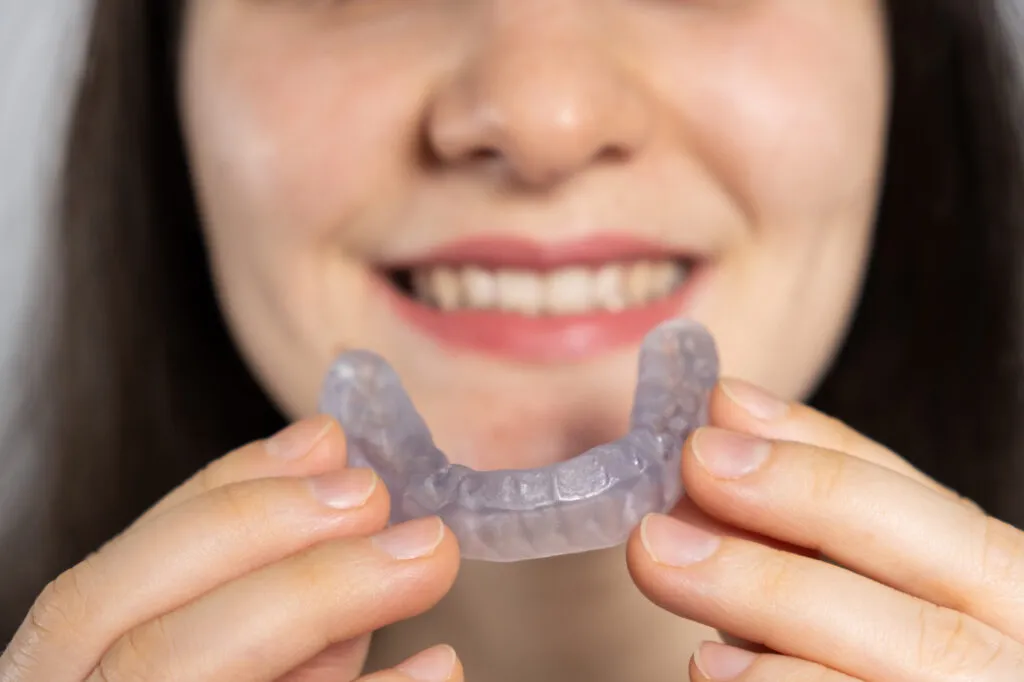
Some mouthguards have a strap that wraps around your head and chin to hold your lower jaw in a specific position.
If your dentist prescribes you a mouth guard or other oral appliance for sleep apnea, you should follow up with them after six months and then at least once a year. This schedule helps ensure that your mouthpiece continues to work correctly. Your dentist can then adjust or replace it if needed.
What is Sleep Apnea?
Sleep apnea refers to pauses in breathing during sleep, often due to the airway becoming blocked or collapsing. These pauses can last for several seconds to several minutes and can happen repeatedly throughout the night.
These pauses interrupt a person’s sleep and deprive them of oxygen. People with sleep apnea may feel fatigued even after what seems like a full night of sleep. They have a higher risk of accidents and health complications.
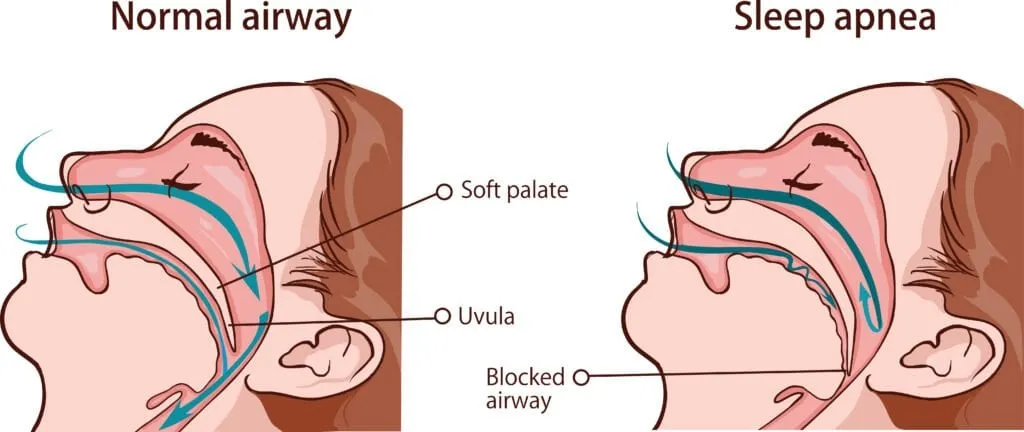
Sleep apnea is a potentially life-threatening sleep disorder, and several kinds of treatment exist. Many people with sleep apnea benefit from using mouthguards.
Best Mouthguards for Sleep Apnea
When choosing a mouthguard for sleep apnea, one of the essential factors to consider is comfort. You’ll be more likely to wear a comfortable oral device consistently.
The two main types of mouthguards for sleep apnea are mandibular advancement devices and tongue-retaining devices:
Mandibular Advancement Device (MAD)
A mandibular advancement device (MAD) temporarily shifts the lower jaw (mandible) and tongue forward. This allows for more airway space, reducing apnea and snoring.
Some MADs, known as boil-and-bite MADs, are available over the counter (OTC). These are made from soft materials that are flexible when exposed to hot water. Biting down on the soft mold helps to fit it into your mouth.
MADs can also be custom-made to fit your mouth from the beginning. Your dentist will take a mold of your teeth and use it to make a mouthguard specifically for the shape of your teeth and mouth. This allows for a better fit than an OTC sleep apnea mouth guard.
Benefits and Risks
Custom-made mouthguards are often more comfortable than OTC options. They’re also more difficult to accidentally move or dislodge while you sleep.
While custom MADs are more costly than OTC mouthpieces, many medical or dental insurance plans cover some or all of the fees.
However, one of the most common issues with MAD dental devices is tooth shifting and tooth discomfort. These risks are higher with OTC mouthguards since they won’t fit your mouth perfectly. For people with dental problems, MADs may not be suitable.
Tongue-Retaining Device
Tongue-retaining or tongue-stabilizing devices (TSDs) are mouth guards that hold the tongue in a forward position without involving the lower jaw. These are generally available over the counter or online.
Pulling the tongue forward allows for a wider gap between the tongue and the back of the throat. This reduces or stops sleep apnea and snoring because the upper airway is less likely to become blocked.
Benefits and Risks
One advantage of these oral devices is that they’re less likely to make your jaw uncomfortable. They’re also less likely to cause temporomandibular joint and muscle disorders (TMJD) or tooth shifting.
A tongue-retaining device may be more suitable for people with dental problems or missing teeth. However, some people claim to feel uncomfortable with the position it holds their tongue in. This device may also cause you to salivate more than usual.
Costs
Over-the-counter MADs and TSDs will be less expensive than prescription MADs that are custom-made for your mouth. You can find pre-made or boil-and-bite devices for less than $50, whereas a custom MAD may cost around $2,000.
However, if you have been diagnosed with obstructive sleep apnea and have medical insurance, you may have coverage for a custom mouthguard.
Is a Mouthguard Necessary?
Depending on the severity and underlying causes of your sleep apnea, a mouthguard may not be necessary. You may see just as much benefit from a CPAP machine. However, mouthguards provide an effective alternative for people with mild sleep apnea who don’t want to use a CPAP machine.
If you’re still unsure about mouthguards for sleep apnea, speak to your dentist, doctor, or a sleep specialist. They can also help you determine what kind of treatment is best for you.
More Reading
Summary
Sleep apnea occurs when people stop breathing during sleep for seconds or minutes at a time. Most of the time, this is caused by the person’s airway being blocked.
Mouthguards are an effective treatment for many people with sleep apnea. They work by holding the tongue and/or lower jaw into a position that keeps the upper airway open.
Like other treatments, these oral appliances come with pros and cons. Your doctor, dentist, or sleep physician can help you choose among the different sleep apnea treatment options available.
Sources
- “Sleep Apnea.” MedlinePlus.
- “What is Sleep Apnea?” National Heart, Lung, and Blood Institute (NHLBI).
- Jayesh, S. Raghavendra, and Wasim Manzoor Bhat. “Mandibular advancement device for obstructive sleep apnea: An overview.” Journal of pharmacy & bioallied sciences, 2015.
- Lazard, Diane S., et al. “The tongue-retaining device: efficacy and side effects in obstructive sleep apnea syndrome.” Journal of clinical sleep medicine, 2009.
- Deane, Sheryn A., et al. “Comparison of mandibular advancement splint and tongue stabilizing device in obstructive sleep apnea: a randomized controlled trial.” Sleep, 2009.
- Tsuda, Hiroko, et al. "Practical considerations for effective oral appliance use in the treatment of obstructive sleep apnea: a clinical review." Sleep Science and Practice, 2017.
- Alshhrani, Waled M., et al. "The efficacy of a titrated tongue-stabilizing device on obstructive sleep apnea: a quasi-experimental study." Journal of clinical sleep medicine, 2021.

UCLA-trained dentist practicing in public health. Focuses on whole-body approach to dental care.

Experienced dental health writer dedicated to providing accurate, accessible information.
Related Articles
Sleep Apnea Risk Assessment
Take our free online sleep apnea risk assessment to evaluate your risk factors and get personalized recommendations. Bas...
Sleep Apnea - Symptoms, Causes, and Treatment Options
Sleep apnea is a sleep disorder that can cause health problems. Learn more about sleep apnea treatment, symptoms, causes...

Composite Fillings - Pros, Cons, Costs & Pictures
Find out everything you need to know about composite fillings. We discuss what composite fillings are, their pros and co...
How Much Does Wisdom Tooth Removal Cost?
Find out how much it costs to have your wisdom teeth extracted. Our simple guide will discuss the cost of wisdom tooth e...