Best At-Home Teeth Whitening Kits in 2025 (And What to Skip)


Reader-supported. We may earn a commission from links on this page. Advertising disclosure.
In this article
Whitening strips are the easiest, cheapest way to lift surface stains quickly. Prefilled trays offer more even coverage with less mess than syringes and custom trays.
Sensitivity-first kits combine ingredients like potassium nitrate or hydroxyapatite to reduce the typical “zing” some people feel after bleaching.
Use these options as directed and plan for occasional touch-ups; none of them permanently prevent future staining.
Who Should Use At-Home Teeth Whitening?
We know you want results without pain or surprises. If your teeth feel healthy and you don’t have recent dental work, at-home whitening is a sensible, lower-cost option.
Here’s a quick candidacy checklist before you start:
- Healthy natural teeth: no active cavities, loose teeth, or untreated gum disease.
- No recent restorative work: crowns, veneers, and fillings won’t change color with bleaching.
- Over age recommendations: avoid full-arch cosmetic bleaching in children/adolescents without a dentist’s OK.
Keep in mind that it’s still best to talk to your dentist before starting whitening.
How At-Home Teeth Whitening Works
Most at-home kits use peroxide: hydrogen peroxide (HP) or carbamide peroxide (CP) that breaks into HP. These oxidize stain molecules and lighten tooth color.
Here’s a rough concentration guide:
- Typical OTC hydrogen peroxide runs about 3–10%
- Professional in-office systems may use 25–40%
- A 10% carbamide peroxide gel is roughly equivalent to ~3.5% HP
Some kits include LED lights, but high-quality reviews show that light activation adds little clinical benefit beyond the bleaching gel itself.
Newer non-peroxide agents (PAP+ formulas) whiten by a different oxidation route and often pair with nano-hydroxyapatite (nHA) or potassium compounds to protect enamel and reduce sensitivity. However, long-term evidence is still growing.
Talk with your dentist if you have restorations, braces, or active gum problems before starting any bleaching plan.
How to Choose the Best At-Home Teeth Whitening
Pick a method that matches your sensitivity, timeline, and willingness to follow instructions.
Think of three factors: how fast you want results, how sensitive your teeth are, and how much time you’ll commit to the routine.
Use this quick decision bridge, then choose the format you’ll actually use:
- Choose strips if you want simple, affordable surface whitening with short daily sessions.
- Choose prefilled trays if you want even coverage without filling syringes or getting impressions.
- Choose LED kits if you want a packaged “hands-free” experience, but expect mixed evidence on extra speed.
Remember, higher-strength gels shorten wear time (for example, stronger HP/CP products may require 15–30 minutes per session while lower concentrations often need 30–60 minutes), but they also raise the chance of temporary sensitivity.
If you get sharp or lingering pain, stop treatment and check with your dentist before resuming.
Top At-Home Teeth Whitening Picks 2025
Here are the best at-home options we’d reach for, organized by what they do best and what to watch for.
Our Top Picks
Crest 3D Whitestrips
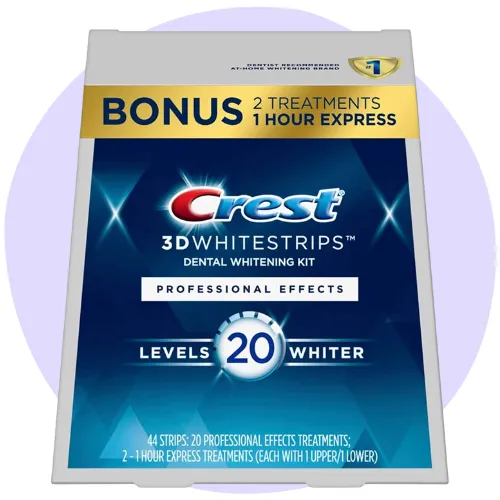
Crest Whitestrips offer reliable, easy strip whitening with ADA-accepted SKUs and familiar 30-minute sessions.
In our tests, we used the standard 30-minute wear time and saw a noticeable shade lift within the first week of use.
Why We Like It
- Trusted brand with broad retail availability
- ADA-accepted family of SKUs (safety reassurance many other brands lack)
- Typical pack includes 14 treatments (28 strips)
What to Know
- Temporary sensitivity is common; the Sensitive SKU reduces risk but can be slower
- Results are surface-level and require touch-ups over time
Specs
- Active
- Hydrogen peroxide (OTC % varies by SKU)
- Session
- 30 minutes
- ADA Seal
- Yes (select SKUs)
- Typical Price
- $41.35–$52.99
Pricing as of Sep 12, 2025
Auraglow Kit
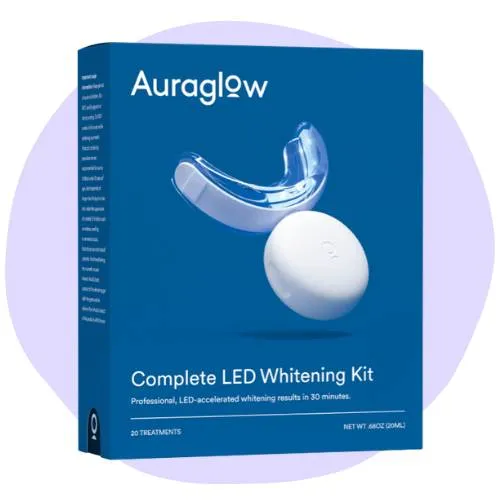
Auraglow is a full LED kit that pairs a high-concentration gel with a timed mouthpiece for a hands-free session.
In our tests, a single 30-minute session produced visible change for at least one tester; we tracked consistent shade improvement over several sessions.
Why We Like It
- Strong per-session whitening power at a value price
- Includes a rechargeable LED mouthpiece and xylitol in the gel
- 2-year warranty on devices
What to Know
- High-concentration gels can raise sensitivity risk if gel leaks or is overapplied
- Several users cite battery life as a hardware annoyance
Specs
- Active
- 35% carbamide peroxide
- Session
- 30 minutes
- Warranty
- 2 years on device
- Typical Price
- $36.99–$48.00
Pricing as of Sep 12, 2025
Zimba Flavored Teeth Whitening Strips
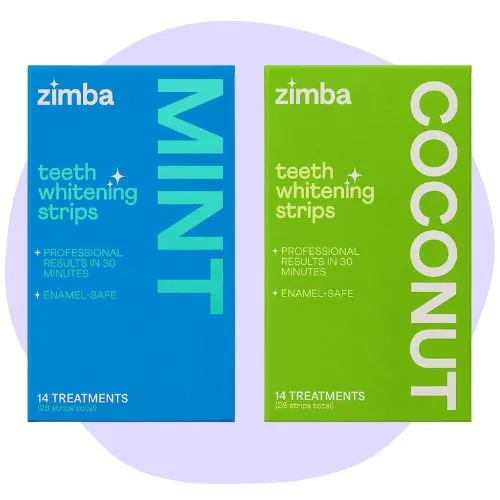
Zimba strips are the budget option: flavorful, affordable, and generally gentle.
In our tests, we ran standard 30-minute sessions and found they’re comfortable for sensitive users, though shade gains tended to be smaller than stronger kits.
Why We Like It
- Substantial value for light surface stains
- Excellent flavor variety that improves user adherence
- Gentle enough for sensitive users
What to Know
- Results can be modest on deeper intrinsic stains
- The company enforces a 14-day treatment window for refund eligibility
Specs
- Active
- Hydrogen peroxide (% not disclosed)
- Session
- 30 minutes
- Typical Price
- $19.98–$24.99
Pricing as of Sep 12, 2025
Snow Kit
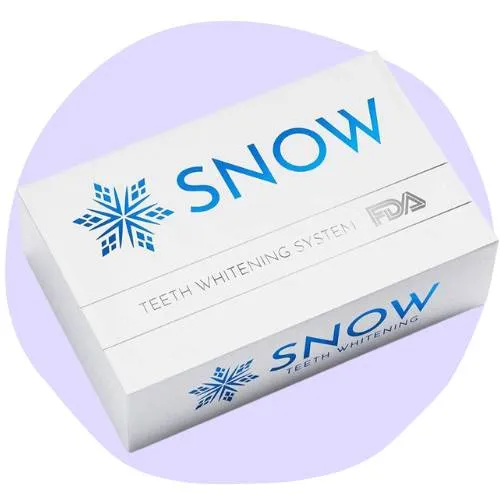
Snow targets people who have teeth sensitivity and want a gentler yet effective routine.
In our tests, short sessions (9–30 minutes per the brand’s guidance) produced gradual improvement with low VAS sensitivity scores across participants.
Why We Like It
- Formula includes hydroxyapatite and potassium nitrate to support enamel
- Limits sensitivity — great for people who've struggled with other gels
- 30-day money-back guarantee on authorized purchases
What to Know
- Premium price point compared to strips
- Some customers report customer-service frustrations in BBB reports
Specs
- Active
- Hydroxyapatite + potassium nitrate
- Session
- 9–30 minutes
- Retail
- Direct + select retailers
- Typical Price
- $59.00–$59.99
Pricing as of Sep 12, 2025
Opalescence Go
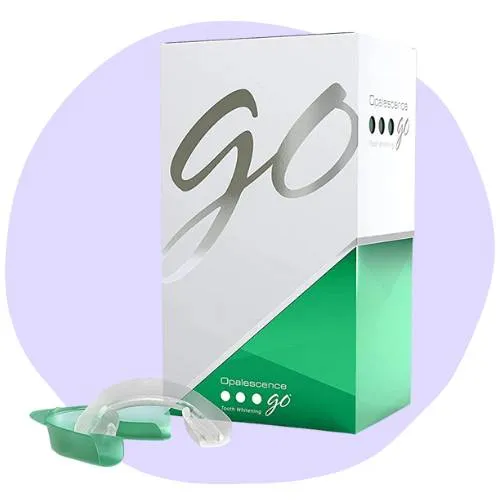
Opalescence Go is the best prefilled tray pick for even coverage without impressions.
In our tests, the UltraFit™ trays delivered consistent coverage during 30–60 minute sessions and produced solid shade improvement for many users.
Why We Like It
- Prefilled trays balance potency and convenience
- PF formula includes potassium nitrate + fluoride to reduce sensitivity
- Available in 10% and 15% HP strengths
What to Know
- Some users find the two-step tray transfer awkward
- Store gels cool and check expiration for best potency
Specs
- Active
- 10% or 15% hydrogen peroxide
- Session
- 30–60 min (10%) or 15–20 min (15%)
- Extras
- PF (potassium nitrate + fluoride)
- Typical Price
- $40.00–$84.00
Pricing as of Sep 12, 2025
Compare Top Options
Use the table below for a quick side-by-side.
| Pick | Best For | Key Specs |
|---|---|---|
| Crest Whitestrips | Trusted everyday whitening | HP strip; 30 min sessions; ADA-accepted SKUs |
| Auraglow Kit | Fast at-home power + LED | 35% CP gel; 30 min sessions; rechargeable LED |
| Zimba Strips | Budget/light touch-ups | HP strips; 30 min sessions; flavored options |
| Snow Kit | Sensitive teeth | HAp + potassium nitrate; 9–30 min sessions |
| Opalescence Go | Even tray coverage | 10–15% HP; 15–60 min sessions; PF formula |
New Products to Consider
Here are some notable product innovations that could be good for touch-ups or convenience when it comes to teeth whitening:
- Moon Dissolving Strips: Dissolve in ~10–15 minutes; marketed for on-the-go convenience and a lineup that includes hydroxyapatite in the Platinum version.
- BURST Whitening Breath Strips: Dual-action quick strips (8% HP + zinc acetate) that aim to whiten and freshen breath in one use.
- Colgate ComfortFit LED: Smartphone-powered LED mouthpiece focused on comfort and portability; runs short daily sessions.
Use these if convenience or rapid touch-ups are your priority; treat marketing shade claims with cautious expectations.
How We Test
We run repeatable, consumer-focused checks so product claims match real use.
Core tests we run include:
- Shade Lift (ΔE): Measured baseline → post-treatment (ΔE used to quantify color change). Typical in-panel change for strips over one week is detectable but modest.
- Sensitivity (VAS 0–10): Recorded daily; we score average discomfort and peak pain events. Many sensitivity-minded kits score lower on average VAS.
- Adhesion/No-Slip: Timed minutes until significant detachment or re-application needed. Strips and prefilled trays fare best.
- Gingival Irritation Index: Logged any visible irritation (0–3) and subjective gum discomfort.
The two quantified readouts we report are:
- Wear time compliance (minutes per session) and number of sessions to a visible change (e.g., “noticeable after 3–7 sessions” for many strips).
- Average VAS sensitivity during a 7–14 day course for high-concentration vs low-concentration gels.
However, small test panels can miss rare adverse events and long-term color stability differences; larger, blinded RCTs are the gold standard.
If you have a history of cavities, dental restorations near your smile line, advanced gum recession, or severe sensitivity, consult your dentist before whitening.
Safe-Use Tips for At-Home Teeth Whitening
To ensure your teeth’s health, here are some tips when using at-home teeth whitening products:
- Start low: Choose a lower-concentration product or a “sensitive” SKU if you’re sensitive.
- Follow wear times: Shorter high-% sessions are not always safer—adhere to manufacturer directions.
- Pause if needed: If sharp pain or gum burns occur, stop for 48–72 hours and see your dentist if symptoms persist.
- Watch restorations: Whitening won’t change crowns, veneers, or fillings; discuss color-matching with your dentist first.
- Store smart: Many gels keep potency longer when stored cool; check expiration dates.
- Pregnancy: Defer elective cosmetic whitening until after pregnancy; routine dental care should continue with your provider’s guidance.
Sources
- de Boa et al. “Can carbamide peroxide be as effective as hydrogen peroxide for in-office tooth bleaching and cause less sensitivity? A systematic review.” Restorative Dentistry & Endodontics, 2024.
- American Academy of Pediatric Dentistry. “Policy on the Use of Dental Bleaching for Child and Adolescent Patients.” Reference Manual of Pediatric Dentistry, 2019.
- American Dental Association Council on Scientific Affairs. “Tooth Whitening/Bleaching: Treatment Considerations for Dentists and Their Patients.” American Dental Association, 2009.
- Baroudi, K., & Hassan, N.A. “The effect of light-activation sources on tooth bleaching.” Nigerian Medical Journal, 2014.
- He et al. “The effects of light on bleaching and tooth sensitivity during in-office vital bleaching: A systematic review and meta-analysis.” Journal of Dentistry, 2012.
- Maran et al. “In-office dental bleaching with light vs. without light: A systematic review and meta-analysis.” Journal of Dentistry, 2018.
- Maran et al. “Different light-activation systems associated with dental bleaching: A systematic review and a network meta-analysis.” Clinical Oral Investigations, 2019.
- Pascolutti, M., & de Oliveira, D. “A Radical-Free Approach to Teeth Whitening.” Dentistry Journal, 2021.

UCLA-trained dentist practicing in public health. Focuses on whole-body approach to dental care.

Lead content writer and certified nutritionist focusing on clear aligners and teeth whitening.
Related Articles
Best Philips Sonicare Toothbrushes Reviewed
Looking for the best Sonicare toothbrush? We have comprehensive reviews of the top 5 models for 2022. Plus, find out how...
Oral Health Basics for Adults
Adult dental care is essential for maintaining your quality of life. Here are eight ways to maintain good oral health pl...

Veterans Dental Health — Common Oral Conditions & Diseases
Serving in the military can significantly impact your oral health. Learn about common conditions veterans face and how t...
Loose Crown
Dental crowns can become loose for various reasons. Learn important facts about what can cause a loose crown, its signs,...