Bite Blocks for Braces


Reader-supported. We may earn a commission from links on this page. Advertising disclosure.
In this article
What are Bite Blocks for Braces?
Bite blocks, also known as ramps or turbos, are tiny devices sometimes used to support orthodontic treatment with braces.
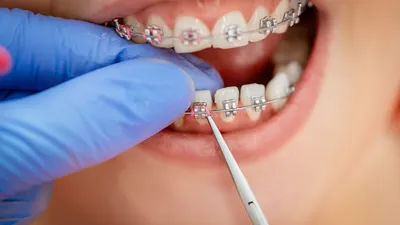
Dentists may recommend braces to align teeth. Braces consist of brackets that are fixed to the teeth and connected with an archwire. Braces apply gentle pressure to the teeth, helping them move into the desired position.
You may need bite turbos on the back or front teeth to achieve good results from braces. They help by preventing the upper and lower teeth from touching, thereby keeping you from breaking your brackets when biting down.
Altering how you bite alleviates pressure on the brackets. The result is faster and more effective teeth alignment and a healthy smile.1
How are Bite Blocks Made?
Bite blocks are custom-made to fit your mouth and have various styles. They can be removable or fixed to the teeth. Sometimes, they’re spring-loaded to increase the pressure on the teeth.
Removable bite blocks are usually made of soft materials like silicone, gel, or acrylic and come in different colors. Fixed bite blocks are made of glass ionomer cement, bonding resin, or metal.2
Potential Side Effects of Bite Blocks
As with any orthodontic treatment, bite turbos can cause some side effects, especially at first. Here are some of the most common issues:
Chewing Problems
Bite turbos change how your jaw muscles work. You’ll need time to get used to the new position and learn to eat properly.4
While adjusting, it’s best to eat softer foods that require less chewing. It’s also helpful to cut food into pieces and take smaller bites. After about a week, you’ll adapt as your jaw muscles become accustomed to the new position.
Speech Difficulties
Bite blocks may change the way your tongue moves when you speak. You may find it hard to pronounce certain vowel sounds and words. This problem is more common with bite turbos attached to the inside (lingual) surface of the teeth.
As with chewing, you’ll eventually adjust as your jaw and tongue muscles adapt to the bite block. It may help to practice speaking when you’re alone. But if speech impairments persist, you might need to work with a speech and language pathologist.
Discomfort
Braces and bite turbos can be uncomfortable at first. Your mouth may also become dry and sore as your tongue adjusts to the new shape. But again, this should improve with time.
Over-the-counter (OTC) pain medications like acetaminophen (Tylenol) or ibuprofen (Advil or Motrin) can ease discomfort. But if you experience any pain or swelling, contact your dentist immediately. They’ll adjust the bite block if necessary.
Lost or Worn Blocks
Bite blocks can become fragile, come off, or wear down over time. Without fully functioning bite blocks, you risk damaging your braces and teeth.
If you notice a block is missing or damaged, contact your orthodontist immediately so they can assess your mouth and replace the bite block.
Biting on One Block
During treatment, your bite shifts, and your teeth may touch only one block. Even though it may feel strange, it’s normal and expected.
Providing you’re not in pain, your dentist may not need to do anything about the problem. But ask them for advice if biting on one block is causing other issues.
Who Needs Bite Blocks?
Orthodontists may recommend bite blocks for an overbite (deep bite), underbite, or otherwise misaligned teeth. They can also help with overcrowded teeth and mouth breathing.
If you clench or grind your teeth, a dentist may recommend bite turbos. Bite turbos help fix the alignment of your bite. If you have a misaligned bite, every time you chew or clench your teeth, you put excessive pressure on your jaw and temporomandibular joint (TMJ). Bite turbos help relieve the pressure on both your TMJ and teeth.
Usually, bite blocks are used together with conventional dental braces to help realign your bite. However, sometimes orthodontists use them by themselves. For example, in children, bite blocks can help correct a crossbite.3
Summary
Bite blocks are temporary devices that realign the jaw and teeth while wearing braces. They work by gently separating your upper and lower teeth, improving your bite alignment and speeding up treatment time.
Although bite turbos can feel uncomfortable, they shouldn’t cause any pain. However, you may have some issues chewing food and speaking at first. Call your orthodontist for advice and replacement if a bite block gets damaged or comes off.
Bite Blocks for Braces
NewMouth PodcastSources
- Mucedero, M., et al. “Long-term evaluation of rapid maxillary expansion and bite-block therapy in open bite growing subjects: A controlled clinical study.” Angle Orthodontist. 2018.
- Maheshwara, M. V. “Hygienic bite blocks.” Aisan Pacific Orthodontic Society. 2016.
- Kravitz, N. D. “Interceptive Orthodontics with Resin Turbos for Pseudo-Class III Malocclusions.” Case Reports in Dentistry. 2019.
- Pativetpinyo, D., et al. “Immediate effects of temporary bite-raising with light-cured orthodontic band cement on the electromyographic response of masticatory muscles.” Journal of Applied Oral Science. 2018.
- “Bite Blocks: What They Are and How They Help Braces.” Northwest Orthodontics. 2021.
- “Bite Blocks for Braces: Everything You Need to Know.” Putnam Orthodontics. 2022.
- Işcan, H N et al. “The effects of the spring-loaded posterior bite-block on the maxillo-facial morphology,” 1992.

Board-certified general dentist specializing in patient education and preventive dentistry.

Public health expert and copywriter covering various health topics, including dentistry.
Related Articles
Gold Braces: Pros, Cons & Costs
What are Gold Braces? Gold braces are orthodontic devices that align and straighten teeth to improve bite and dental hea...

Braces and Insurance Coverage
Does Insurance Cover Braces? Most dental insurance plans don’t cover orthodontic treatment for people over 18, but many...
Power Chain Braces
Power Chain braces are a type of orthodontic treatment that can close gaps between teeth. In this guide, we'll discuss t...
How to Use Dental Wax for Braces
Dental wax is a great way to relieve pain from dental appliances. Learn about its other benefits, proper use, and the be...