What Do Cavities Look Like?


Reader-supported. We may earn a commission from links on this page. Advertising disclosure.
In this article
Key Takeaways
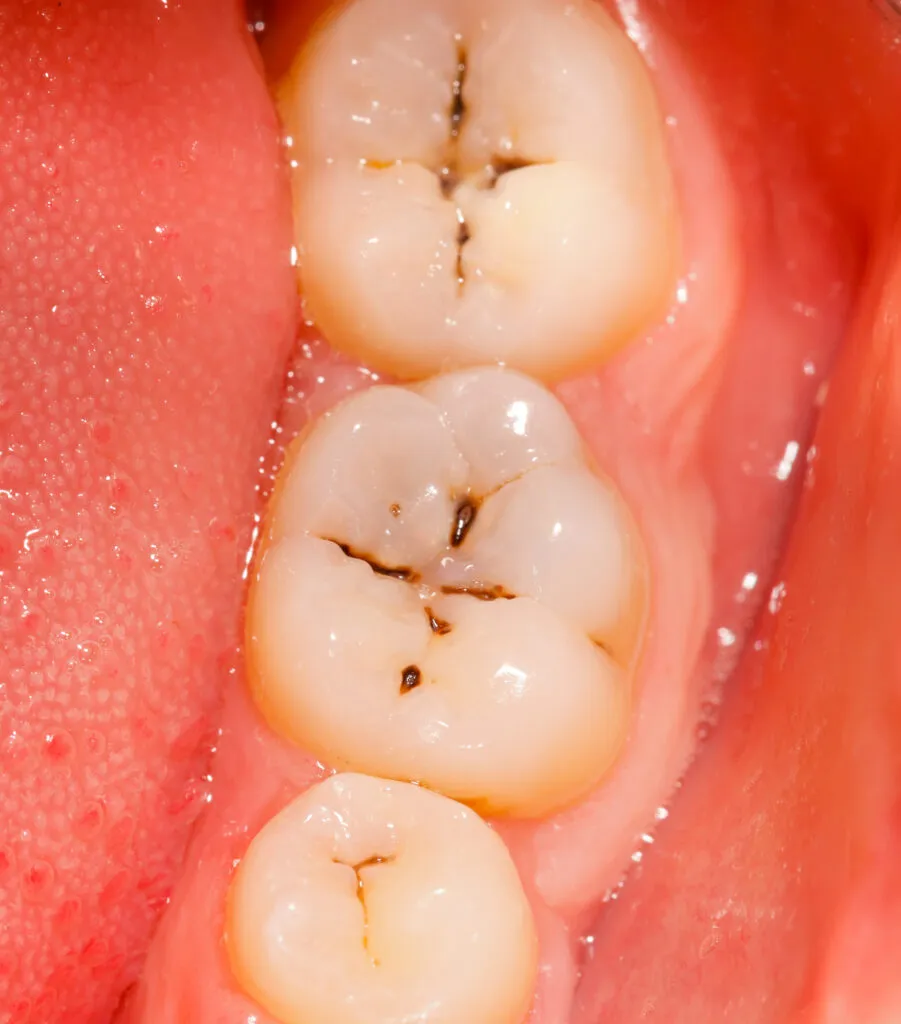
- A cavity may appear as a black, brown, or gray hole going into your tooth
- Cavities are holes in the teeth caused by corrosive oral bacteria that break down minerals in the tooth enamel
- Cavities that haven’t fully formed may appear as white spots
- You can prevent cavities by managing good oral hygiene and having a balanced diet
What Are Cavities?
Cavities are holes in teeth caused by tooth decay.
They result from the breakdown of tooth enamel. Tooth decay is a gradual process. Certain oral bacteria produce acids, which eat away at your enamel faster than your saliva can replenish it. Eventually, your enamel develops a permanent hole.
What Do Cavities Look Like?
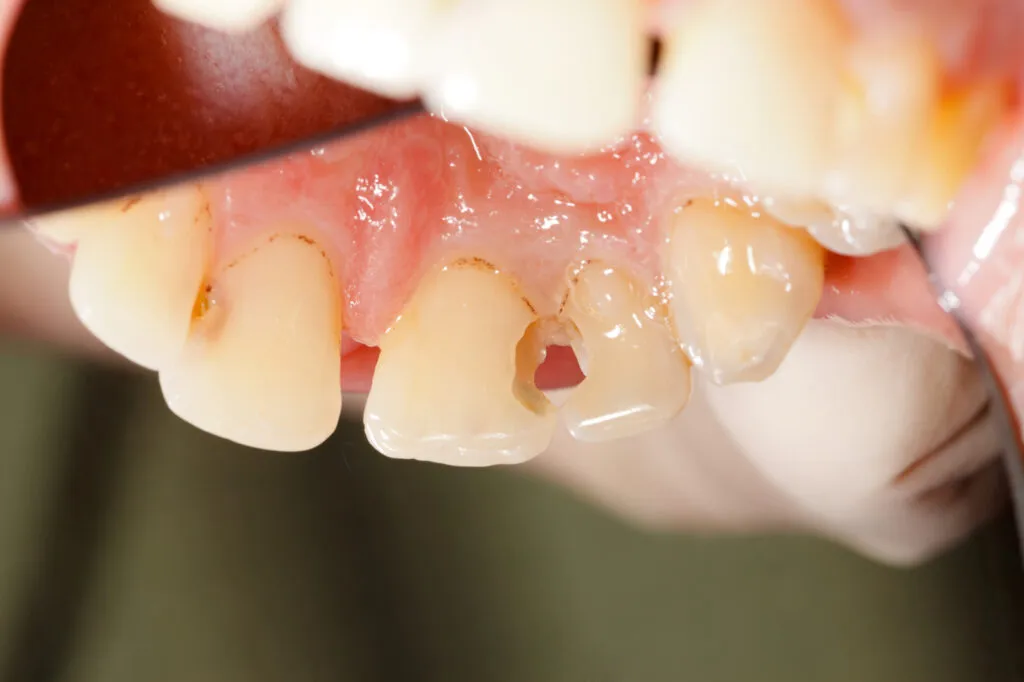
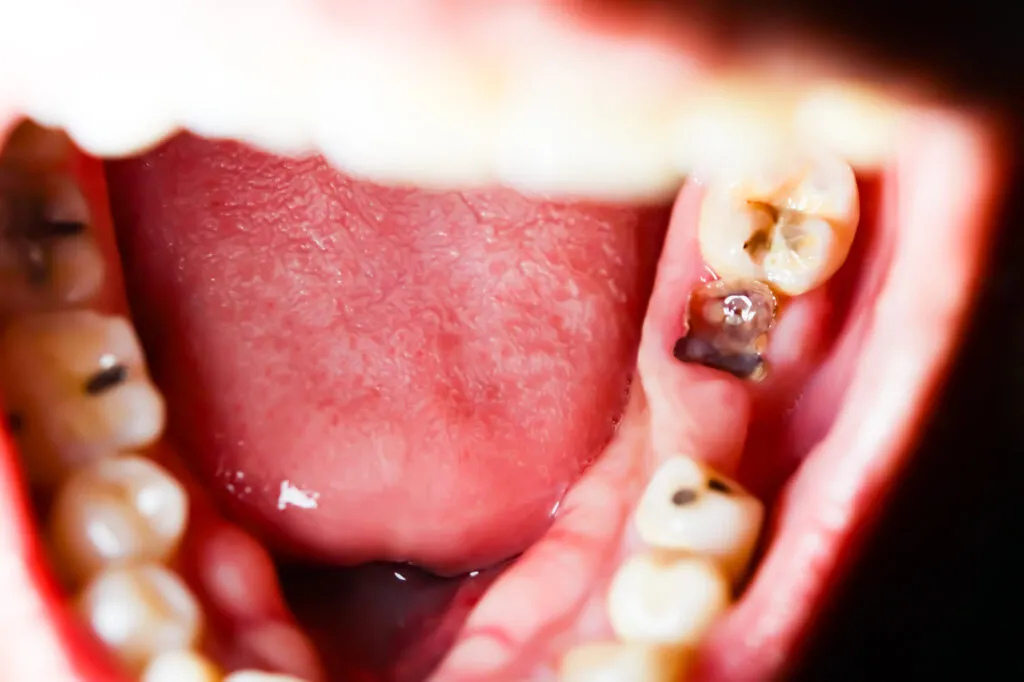
A cavity may appear as a black, brown, or gray area on a tooth surface. Its appearance can vary from a tiny, dark spot to a large hole in the tooth.
Saliva or food may obscure a cavity from your view. Over time, however, a cavity may change color as the decay spreads deeper or wider.
In the very early stages, a developing cavity may appear white. This is generally before the enamel damage becomes severe.
When to See a Dentist for Treatment
See a dentist if you or your child has a visible cavity in one or more teeth. The earlier you seek treatment, the less extensive it will have to be.
A fluoride gel or varnish may be enough to stop a cavity that has barely begun to form. But usually, a visible cavity will need a filling.
Early Signs and Symptoms of Cavities
Besides the obvious appearance of a dark spot, patch, or hole on a tooth, you may also notice:
- Pain or sensitivity when eating something hot or cold
- Tooth sensitivity to cold air
- Persistent toothache
- Bad breath or a foul taste in your mouth
These symptoms can also be signs of other conditions, such as an infection or dentin hypersensitivity. Visit your dentist regularly to address potential oral health issues before they cause further problems.
What Causes Cavities?
Your mouth is home to many bacteria from food particles. Some form plaque, a sticky substance that coats your teeth and gums.
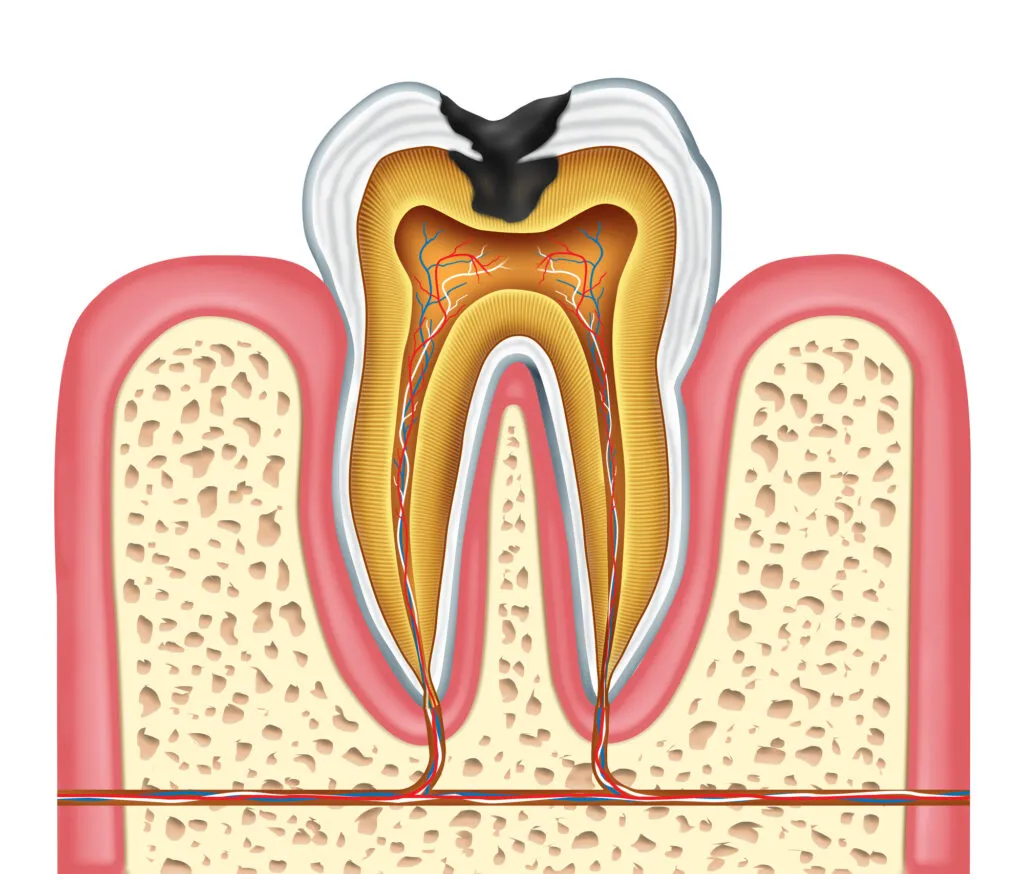
These bacteria feed on the sugars and starches in your food. They use them to produce acids, which break down the calcium and phosphate-based minerals in your enamel.
However, your saliva contains minerals that naturally replenish your enamel. But tooth decay occurs when the enamel breaks down faster than your saliva can restore it. This can be caused by:
- Starchy or sugary foods — Provides fuel for bacteria
- Poor oral hygiene — Allows plaque to continue to grow and spread
- Dry mouth — Less saliva means less mineral content to keep your enamel strong
- Genetics — Some people may be more susceptible to cavities due to differences in saliva pH and other factors
Tips for Cavity Prevention
Here are a few things you can do to prevent cavities and disrupt the formation of plaque:
- Ensure good oral hygiene by brushing twice daily and flossing once daily
- Use a toothpaste that contains fluoride or hydroxyapatite to remineralize enamel
- Eat sugary or starchy foods in moderation
- Include adequate levels of vitamins D and K2 in your diet (these are vital for dental health and remineralization)
- Ask your dentist to apply a fluoride gel or varnish, or dental sealant
Regular dental checkups can also help detect problems early. If necessary, your dentist can treat cavities with fillings and other procedures.
More Reading
Sources
- Heng, C. “Tooth Decay Is the Most Prevalent Disease.” Federal Practitioner, 2016.
- Humphrey et al. "Earliest evidence for caries and exploitation of starchy plant foods in Pleistocene hunter-gatherers from Morocco." Proceedings of the National Academy of Sciences of the United States of America, 2014.
- Alotaibi et al. "Genome-Wide Association Study (GWAS) of dental caries in diverse populations." BMC Oral Health, 2021.
- Jin, J. "Screening and Interventions to Prevent Dental Caries in Young Children." Journal of the American Medical Association, 2021.
- Horst et al. “Fluorides and Other Preventive Strategies for Tooth Decay.” Dental Clinics of North America, 2018.
- Arifa et al. “Recent Advances in Dental Hard Tissue Remineralization: A Review of Literature.” International Journal of Clinical Pediatric Dentistry, 2019.
- Grohe, B., and Silvia, M. "Advanced non-fluoride approaches to dental enamel remineralization: The next level in enamel repair management." Biomaterials and Biosystems, 2021.
- Uhlen et al. "Treatment decisions regarding caries and dental developmental defects in children - a questionnaire-based study among Norwegian dentists." BMC Oral Health, 2019.

UCLA-trained dentist practicing in public health. Focuses on whole-body approach to dental care.

Experienced dental health writer dedicated to providing accurate, accessible information.
Related Articles

What Is Phossy Jaw
Key Takeaways Phosphorus necrosis, or phossy jaw, was an occupational disease suffered by workers in match factories bet...

Posterior Tongue Tie - Symptoms, Risks & Treatments
What is a Posterior Tongue Tie? A tongue tie (ankyloglossia) is when the connective tissue attaching the tongue to the m...
What to Consider When Getting an Inner Lip Tattoo
In recent years, lip tattoos have become more widely known. They include inner lip tattoos as well as permanent lip line...

Is Vaping Bad for Your Teeth?
Are you concerned about the effects of vaping on your teeth and gums? This article covers everything you need to know ab...