Is Brushing With Baking Soda Toothpaste Safe?


Reader-supported. We may earn a commission from links on this page. Advertising disclosure.
In this article
Baking soda is a cooking ingredient commonly found at home. However, you might have heard people talking about using it to whiten teeth.
You might have even seen people mix baking soda with water to make a toothpaste that removes stains. But can it actually whiten your teeth?
How Does Baking Soda Whiten Your Teeth?
Baking soda (sodium bicarbonate) gently scrubs away stains through mild physical polishing. Unlike peroxide whitening toothpaste, which bleaches deep intrinsic discoloration, baking soda primarily removes surface stains from coffee, tea, and other sources.
Baking soda’s naturally soft crystals dissolve easily, making baking soda toothpastes low-abrasive. Some baking soda toothpastes have an RDA below 70, but reputable bodies like the ADA consider products with an RDA of up to 250 as safe. A good rule of thumb is: lower is gentler.
Transform your smile with the best toothbrushes of 2026. Find your perfect brush here.
Smile brighter, fight cavities, freshen breath – 2026’s best toothpastes deliver. See our expert picks here.
3 Best Baking Soda Toothpastes of 2026
While many brands are on the market, some work better than others. The best baking soda toothpaste brands include:
Arm & Hammer Advance White™ Extreme Whitening
Best Overall
The added fluoride helps protect your teeth against cavities. While powerful, its formula is gentle enough for daily use. It also has low abrasiveness, with a relative dentin abrasivity of 47, well below the ADA safety ceiling of 250.
Colgate Baking Soda & Peroxide Whitening Toothpaste
Best Fluoride Toothpaste
It also has sodium monofluorophosphate, so your teeth are better protected from cavities. However, it does have a high relative dentin abrasivity of 107.
Tea Tree Therapy Toothpaste with Baking Soda
Best Fluoride-Free Alternative
Its fluoride-free formula not only freshens breath but also effectively controls plaque and tartar. Its parsley and tea tree oil extract flavor provides a refreshing twist to your daily brushing routine.
How Often Should You Use Baking Soda Toothpaste?
Use baking soda toothpaste daily for 1 to 2 weeks as instructed. You can reduce it to 1 to 2 times weekly after.
While some suggest it’s safe to use every day, you should opt for baking soda toothpastes that contain fluoride for cavity protection.
Remember, everyone’s smile is unique. You should ask your dentist for personalized advice on how often you can use baking soda toothpastes.
Explore our top-rated water flossers for 2026. See our recommendations.
What are the Benefits of Baking Soda Toothpaste?
Baking soda offers additional oral health benefits thanks to its alkaline pH, which helps protect your teeth by neutralizing harmful acids. Benefits include:
- Naturally whitens teeth — Brightens your smile by gently scrubbing away surface stains caused by coffee, tea, or smoking.
- Prevents plaque and gingivitis — Neutralizes the acids in your mouth, which promotes healthy gums and protects against enamel erosion.
- Promotes overall oral health — You can choose from fluoride and fluoride-free toothpastes and other ingredients that are good for your smile.
- Safe for everyday use — As long as you follow the instructions and select a toothpaste with a low abrasiveness, baking soda toothpaste should be safe to use.
- Affordable and convenient — A budget-friendly way to whiten your teeth at home, plus they’re readily available in most stores
- Protects tooth enamel — Its alkaline pH helps neutralize acids and creates conditions that allow fluoride or saliva to remineralize enamel.
Side Effects of Baking Soda Toothpaste
Despite being relatively safe, baking soda toothpastes have a few drawbacks:
- They can wear down tooth enamel, increasing your risk for staining and developing sensitive teeth.
- They can irritate gums and lead to gum recession.
- Their results may have little whitening effect or produce subtle results.
- They may weaken certain adhesives used in dental appliances, such as retainers or temporary crowns.
How to Safely Use Baking Soda Toothpaste
While baking soda toothpastes are gentle and effective, it’s crucial to use them correctly to maintain enamel and gum health. Here are some things you can do to avoid damaging your teeth:
- Check abrasivity levels — Choose products with an RDA below 70 to avoid enamel wear.
- Avoid aggressive brushing — Over-brushing or excessive pressure can irritate gums and erode enamel.
- Ensure fluoride inclusion — Fluoride supports remineralization and helps prevent dental caries.
- Consider personal sensitivities — Avoid baking soda toothpaste if you have sensitive teeth, exposed dentin, or active cavities.
- Avoid DIY baking soda mixes: Limit use to no more than biweekly (every 2–3 weeks) to avoid unnecessary abrasion.
3 Best Baking Soda Toothpastes of 2026
While many brands are on the market, some work better than others. The best baking soda toothpaste brands include:
Arm & Hammer AdvanceWhite Extreme Whitening
Best Overall
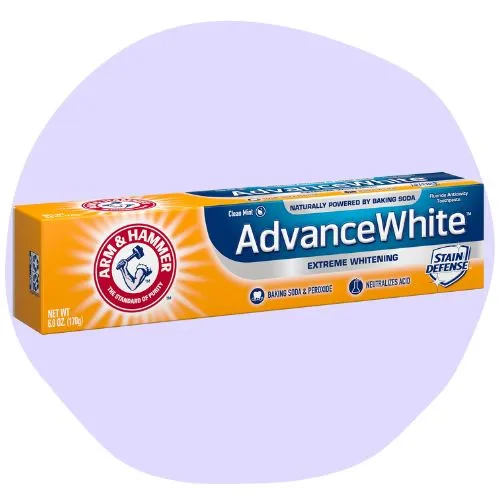
Relative Dentin Abrasivity: 47 (low abrasiveness)
The AdvanceWhite Extreme Whitening Toothpaste from Arm & Hammer combines baking soda with peroxide to give you a brighter smile.
This combination not only removes tough stains but also helps prevent new ones from forming. The added fluoride helps protect your teeth against cavities. While powerful, its formula is gentle enough for daily use.
Colgate Baking Soda & Peroxide Whitening Bubbles
Best Fluoride Toothpaste
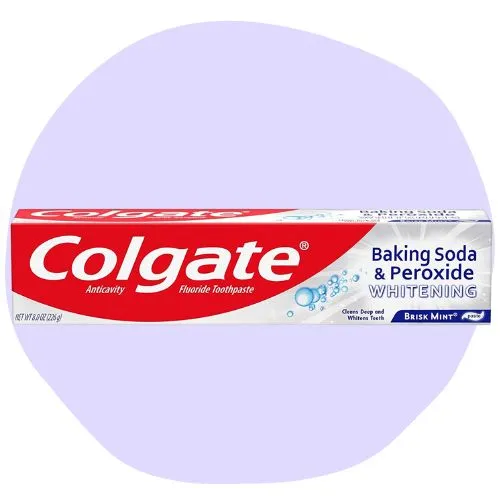
Relative Dentin Abrasivity: 107 (medium abrasiveness)
Colgate’s Baking Soda & Peroxide Whitening Toothpaste can lighten your teeth beyond surface level. Besides removing plaque and teeth stains, it penetrates the enamel for significant whitening. It also has sodium monofluorophosphate so your teeth are better protected from cavities.
Tea Tree Therapy Toothpaste with Baking Soda
Best Fluoride-Free Alternative
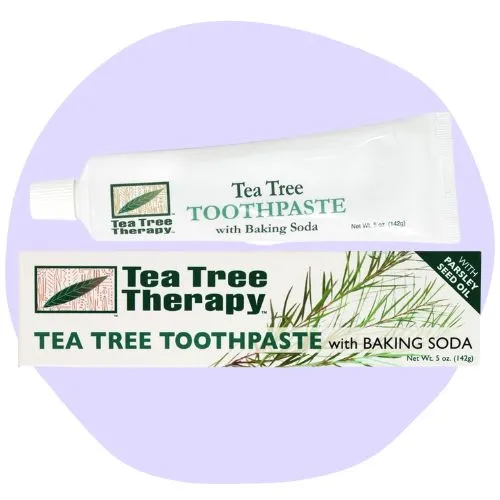
Relative Dentin Abrasivity: Unknown
Tea Tree Therapy Toothpaste with Baking Soda has a unique blend of natural ingredients and distinctive flavor. The combination of tea tree oil (known for its antiseptic properties) and baking soda (a gentle abrasive) creates an effective yet gentle cleaning experience.
Its fluoride-free formula not only freshens breath but also effectively controls plaque and tartar. Its parsley and tea tree oil extract flavor provides a refreshing twist to your daily brushing routine.
Fresher breath, healthier gums, stronger teeth – find it all in 2026’s best mouthwashes. Explore the top picks here.
Sources
- Hara et al. “Baking soda as an abrasive in toothpastes: Mechanism of action and safety and effectiveness considerations.” Journal of the American Dental Association, 2017.
- Li Y. “Stain removal and whitening by baking soda dentifrice: A review of literature.” J Am Dent Assoc, 2017.
- Valkenburg et al. “The efficacy of baking soda dentifrice in controlling plaque and gingivitis: A systematic review.” Int J Dent Hyg, 2019.
- “Toothpastes (Oral Health Topics).” American Dental Association, 2021.
- Chandel et al. “The effect of sodium bicarbonate oral rinse on salivary pH and oral microflora: A prospective cohort study.” National Journal of Maxillofacial Surgery, National Library of Medicine, 2017.
- Noble, A. “Should You Use Baking Soda to Whiten Your Teeth? We Investigated This Viral TikTok Hack.” Allure, 2020.

Licensed dental specialist focusing on personalized dental content writing and blogging.

Journalism graduate specializing in clear, factual dental and medical content.
Related Articles

What to Expect During Wisdom Teeth Removal
Learn about the wisdom teeth removal procedure, aftercare, and costs. Discover why it's essential and get tips for a smo...

Does Dental Insurance Cover Implants?
Dental implants have many benefits, but they can be expensive. Find out how much dental insurance will cover for dental...
Space Maintainers: Why Your Child Might Need One
What are space maintainers? Learn the three types, when they're necessary, and why they're essential during premature to...

When and Why Should Dental Visits for Children Begin?
Pediatric dentists handle children's dental care. Learn more about the four types of procedures and preventive treatment...