Are Night Aligners Too Good To Be True?


Reader-supported. We may earn a commission from links on this page. Advertising disclosure.
In this article
Key Takeaways
- NewMouth does not recommend night aligners. There is no scientific evidence that proves these aligners are safe or effective.
- Traditional aligners are worn nearly all day and are only removed for eating and cleaning. Night aligners are worn for 10+ hours a day. Treatment is typically longer.
- Wearing aligners for less than 20 to 22 hours a day can result in poorer results and oral health issues. Every additional hour you don’t wear the aligners increases the likelihood of your teeth shifting into the wrong position.
What are Nighttime Clear Aligners?
Nighttime aligners are clear aligner trays that you only wear while asleep. They are worn for 10+ hours a day versus 22+ hours a day for traditional aligners.
Night-only aligners move your teeth slower than regular invisible aligners. They are also more expensive.
Although convenient, many oral health experts are concerned about the safety and effectiveness of these aligners.
Because of these risks, NewMouth does not recommend night aligners. Keep reading to learn why and how to find the best alternatives.
Best Night Aligner Alternatives
What are the Risks of Night Aligners?
Night-only aligners appeal to many people because of their convenience. But this doesn’t mean they are the best option.
In fact, there is no scientific proof that night aligners are safe. They may actually do more harm to your teeth than good. There are also concerns about what could go wrong if aligners are only worn for a few hours each day.2, 6
Because the protocols around nighttime aligner therapy generally specify only 10 hours of wear time per day, I am concerned that you may never experience the light continuous force necessary for effective healthy tooth movement.
Dr. C Lynn Hurst, Chief Clinical Officer at Candid
Without a longer and more consistent wear schedule, your teeth can be left in a limbo state of inflammation. This means it would take your teeth and gums much longer to heal, if at all.
“It’s kind of like breaking your arm and having the physician reset the fracture, but only wearing the cast at night, preventing proper healing,” says Hurst.
Other side effects and risks of night aligners include:
- More discomfort. When you start a new aligner set, you may experience some discomfort for a few days. This is completely normal. The discomfort will last longer if you leave your aligners out for more than a few hours. This is because your teeth can revert back to their original position.
- Longer treatment duration. Night aligner treatment is less predictable. Failing to comply with the 20- to 22-hour rule can result in revised treatment timelines.
Night Aligners vs. Traditional Aligners
| Traditional Aligners | Night-Only Aligners | |
|---|---|---|
| **Which is Better? ** | Recommended option | Not recommended for safety reasons |
| Cost | $1,200 to $2,000 | $1,300 to $2,300 |
| Wear Time | 22+ hours a day | 10+ hours a day |
| Treatment Time | 4 to 12 months | 6 to 12+ months |
| Treatable Cases | Mild to severe (depends on brand) | Very mild |
Best Night Aligner Alternatives
Are Traditional At-Home Aligners Safe?
There is not enough research to prove that night aligners are safe. This is why we don’t recommend them.
Traditional aligners that require 20+ hours a day of wear time are the best alternatives.
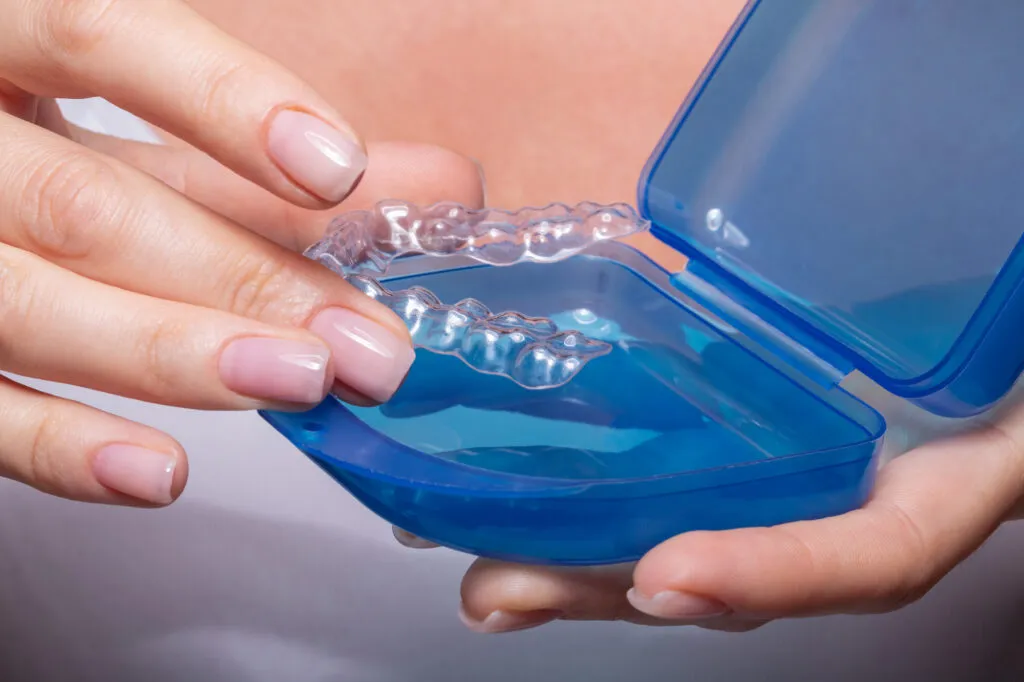
Many dentists and orthodontists always recommend in-office treatment (like Invisalign or braces) over at-home aligners. These treatments can be monitored closely, and it’s easier to make adjustments.
At-home aligner treatment is generally considered safe and effective if you follow instructions very carefully throughout treatment.
According to one study, 87.5% of respondents were satisfied with their at-home aligner treatment, while 6.6% had to visit their dentist after treatment due to adverse effects.
Since at-home aligner treatment is still relatively new, more research is still being done on the risks and benefits of treatment.
Patients following at-home aligner treatment need to be proactive about wearing their aligners for the recommended 20-22 hours per day. For patients who may not be as disciplined with their aligner wear, having the accountability of in-office visits may be needed.
Dr. Elvi Barcoma, a Smile Doctors orthodontist
Importance of the 20- to 22-Hour Rule
Traditional aligners are worn for 20 to 22+ hours a day. They are only removed for eating and cleaning.
Night aligners are worn for 10+ hours a day, and treatment is typically longer.
Traditional at-home aligners take between 4 and 8 months to straighten your teeth. Night aligners take 8 to 12 months. Invisalign takes the longest (up to 18 months) but is the most effective option overall.
Night aligners are a newer concept that goes against traditional orthodontics. This is because, in order for aligner treatment to be effective, teeth need to be under constant pressure.
Aligners interrupt the contact between your top and bottom teeth. And if you don’t wear them consistently, the contact between the arches can cause your teeth to shift back.
In other words, every additional hour that you are not wearing the aligners increases the likelihood of your teeth shifting in an undesired direction.
According to Dr. Hurst, night aligners require a longer duration of heavy occlusal forces, increasing the risk of tooth damage and unaligned teeth (bite problems). There is also a risk for bone loss and root resorption.
This circular event of moving teeth for 10 hours, followed by subsequent exposure to counter-forces, has not been proven to be either effective or healthy.
Dr. C Lynn Hurst, Chief Clinical Officer at Candid
Sources
- “FAQs About Invisible Aligners." Candid.
- “Why Candid Doesn't Offer Night Wear Only Clear Aligners.” Candid.
- “What to Expect with Invisalign® Treatment.” Invisalign.
- “Discover the Candid Difference.” Candid.
- Ke Y, Zhu Y, Zhu M. A comparison of treatment effectiveness between clear aligner and fixed appliance therapies. BMC Oral Health, 2019.
- “Why Compliance Matters: Following the Invisalign® 22-hour Rule.” Cosmetic Dentistry New York.
- Weir, T. “Clear Aligners in Orthodontic Treatment.” Wiley Online Library, John Wiley & Sons, Ltd, 2017.
- “Candid Clear Aligners.” Candid.

Licensed dental specialist focusing on personalized dental content writing and blogging.

Lead content writer and certified nutritionist focusing on clear aligners and teeth whitening.
Related Articles

Does Newsmile Accept Insurance?
Is NewSmile Covered By Insurance? Unlike other at-home invisible aligners, NewSmile doesn't currently have any insurance...
How Much Do Clear Aligners Cost?
Wondering how much clear aligners cost? We break down the prices of popular brands and provide recommendations for who o...

2Usmiles Clear Aligners
If you're exploring options to straighten your teeth without office visits, 2Usmiles might seem like an affordable and c...

ALIGNERCO: At-Home Budget Option
ALIGNERCO is an at-home budget option for teeth alignment. Read our full review of ALIGNERCO and whether it's a good tre...