Teeth Stains: Types, Causes, & Removal


Reader-supported. We may earn a commission from links on this page. Advertising disclosure.
In this article
What are Teeth Stains (Tooth Discoloration)?
Teeth stains are discolorations of the teeth that a toothbrush can’t easily remove. They can look yellow, white, brown, green, and purple.
Many people develop some type of tooth stain at some point. Discoloration can affect the surface (extrinsic) or the interior of the teeth (intrinsic), depending on various factors, including:
- Your habits
- Environment
- Genetics
Though they can be a source of embarrassment, tooth stains typically aren’t harmful.> Get your brightest smile with NewMouth’s top teeth whitening picks for 2026.
3 Types of Tooth Discoloration
Tooth discoloration falls into three types:
1. Extrinsic Discoloration
Extrinsic staining, sometimes called external staining, is staining on the surface of a tooth. It occurs when tinted residue builds up on your teeth, commonly from tobacco use or dark foods and beverages such as:
- Black tea or coffee
- Wines
- Popsicles and candy
- Soy sauce
- Tomato sauce
- Sodas
- Blueberries
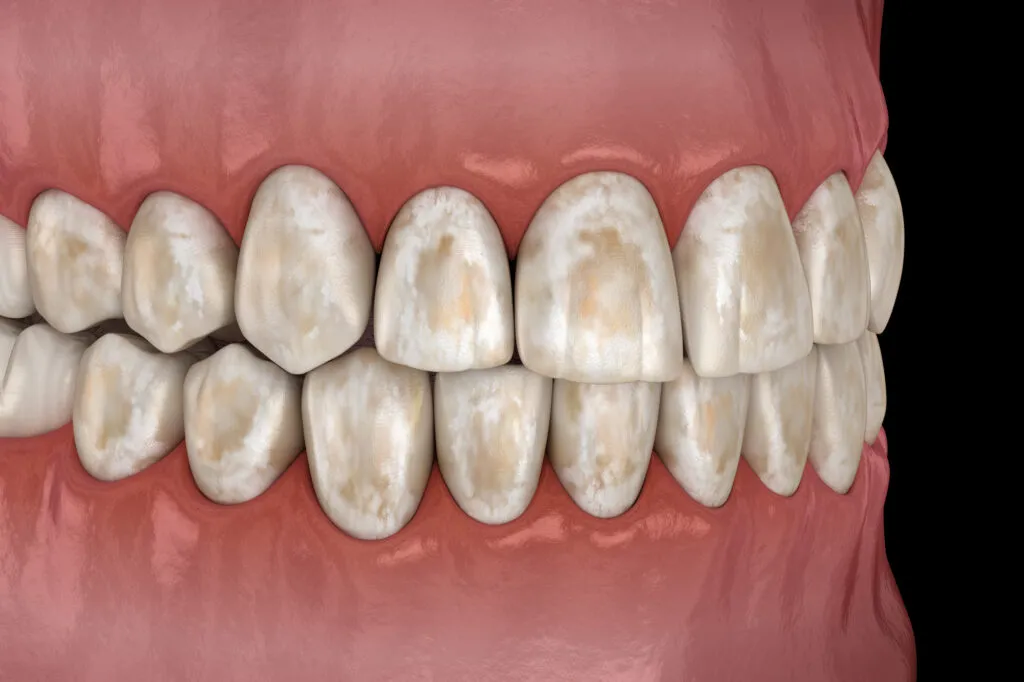
Avoiding smoking and excessive consumption of these foods can help prevent extrinsic staining. However, some environmental factors may also contribute to extrinsic staining, including antibiotics and metals such as iron or copper.
2. Intrinsic Discoloration
Intrinsic or internal staining occurs when pigmented particles seep under the tooth’s surface. If allowed to accumulate in the enamel, they will cause discoloration.
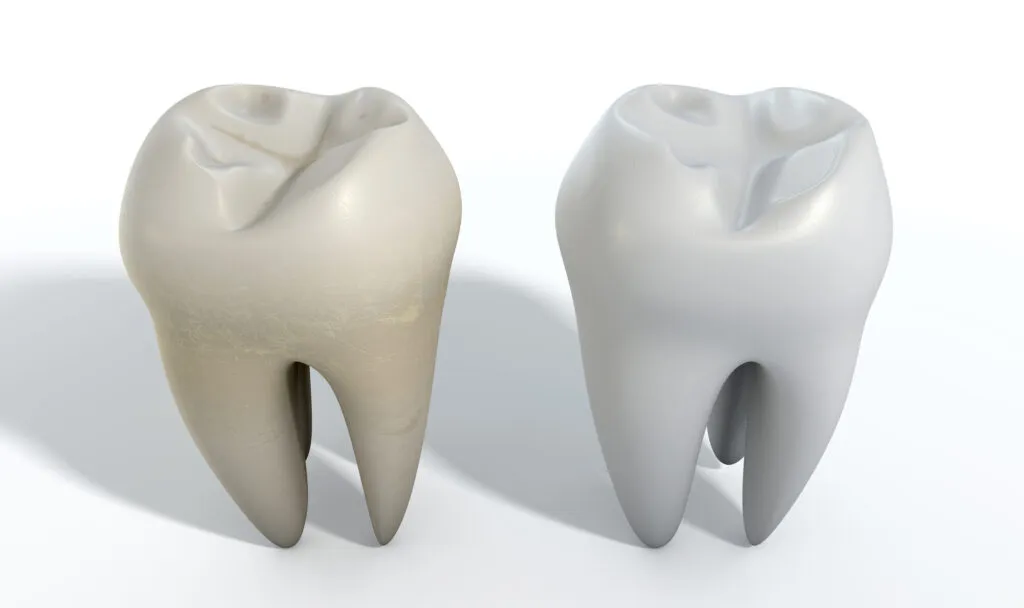
Intrinsic stains are commonly found in children and people who use excessive fluoride. Other factors may also influence it, including:
- Genetic conditions, such as dentinogenesis imperfecta and amelogenesis imperfecta
- Tetracycline and other antibiotics
- Trauma
- Developmental disorders
- Chemotherapy
- Medical conditions, such as pulpal necrosis
Removing intrinsic staining goes beyond professional cleaning or teeth whitening. It requires a dental restoration like a veneer, crown, or internal bleaching.
3. Age-Related Discoloration
The core tissue of the teeth, known as dentin, yellows over time. As you age, the enamel on teeth surfaces becomes thinner, allowing the dentin to show through.
A combined accumulation of intrinsic and extrinsic causes of discoloration will result in teeth staining in older adults. Without prevention or treatment, extrinsic factors are more likely to cause discoloration in older people.
4 Ways to Remove Teeth Stains
You can alleviate tooth discoloration in several ways:
1. Practice Good Oral Hygiene
You can often decrease tooth staining by keeping your mouth clean and healthy. The best practices for oral hygiene to remove stains are:
- Clean your teeth daily – Brush and floss twice daily, 30 minutes after consuming dark, acidic, or sugary foods or beverages, to avoid damaging the tooth’s enamel
- Visit your dentist routinely – Dentists recommend a professional dental cleaning every six months
- Rinse with mouthwash – Choose a mouthwash that has antibacterial and antiplaque properties
- Eat a healthy diet – Eating fibrous, crunchy fruits and vegetables may remove plaque and reduce discoloration and erosion
- Try whitening products – Use whitening products that contain hydrogen peroxide or baking soda, which help kill bacteria and whiten teeth
2. At-Home LED Teeth Whitening Kits
LED teeth whitening uses a blue LED light and hydrogen peroxide to bleach teeth. These two elements can cause a chemical reaction that quickly and effectively whitens teeth.
NewMouth recommends at-home LED whitening kits over other teeth whitening methods because of their effectiveness, ease of use, and minimal side effects.
LED teeth whitening is safe and effective when users follow the manufacturer’s protocols. After you whiten at home, avoid drinks that cause stains, particularly red wine, tea, and dark sodas.
3. Natural Teeth Whitening Products
Natural teeth whitening products use all-natural ingredients (such as essential oils and botanicals) to whiten the teeth. They don't contain toxins, peroxide, artificial ingredients, or alcohol.
Some natural remedies for tooth whitening include:
- Baking soda
- Charcoal whitening products
- Oil pulling
Many natural treatments have limited evidence supporting their effectiveness and can have adverse side effects. Always talk to your dentist before trying a DIY or natural whitening treatment.
4. Professional Teeth Whitening Treatment
A licensed dentist can perform professional teeth whitening in their office. Professional teeth whitening involves a hydrogen peroxide solution and heat or light to accelerate the process.
It has an average cost of $650, which can be expensive. However, professional teeth whitening is the most effective treatment for intrinsic staining and highly discolored teeth.> See NewMouth’s top 10 teeth whitening products of 2026.
How to Prevent Stained Teeth
The best way to prevent extrinsic tooth stains is to avoid smoking and practice excellent oral hygiene, especially after consuming dark foods and beverages.
Other ways to keep your teeth white include:
- Brush twice and floss once daily
- Avoid smoking or using tobacco
- Limit consumption of staining substances like coffee, tea, red wine, dark berries, and curry powder
- Limit or avoid sugary foods and drinks
- Get a professional dental cleaning every six months
- Use over-the-counter whitening products a few times a week
- Eat coarse and leafy vegetables, which help scrub away surface stains
Tooth Stain Causes by Color
Tooth stains come in many colors, each with its common causes. If your teeth are stained, you can usually determine the cause based on the color.
Yellow Stains
Yellow stains often come from lifestyle choices, such as tobacco use and a sugar-heavy diet.
Common factors that cause yellow teeth stains include:
- Smoking or using chewing tobacco
- Beverages like tea, coffee, and red wine
- A diet high in simple sugars
- Certain medications
- Poor oral hygiene
- Chronic dry mouth
Brown Stains
Brown stains may occur from lifestyle factors or poor oral hygiene. If you have brown discoloration on your teeth, it could be from:
- Tobacco use
- Beverages like tea, coffee, cola, and red wine
- Untreated tooth decay
- Tartar buildup
Purple Stains
Though they can come from what you eat or drink, purple stains may also have a more concerning underlying cause.
Common factors that cause purple teeth stains include:
- Habitual wine consumption
- Internal bleeding caused by trauma
- Frequent consumption of pigmented fruit like blueberries and pomegranates
- A rare condition called dentinogenesis imperfecta
White Stains
White stains or spots on the teeth may be a sign of early decay. They can also come from excessive fluoride use.
You should consult a dentist if you have white stains on your teeth.> View the best enamel-safe teeth whitening products.
Summary
Tooth stains are discolorations of the teeth that you can’t brush away. It’s common to have tooth stains, especially as you age. They typically aren’t harmful.
The three types of tooth discoloration are extrinsic (on the tooth’s surface), intrinsic (below the surface), and age-related. The causes for these stains include consumption of dark food and beverages, tobacco use, medications, and genetics.
You can prevent and remove stains by quitting smoking and practicing good oral hygiene. If your teeth are already stained, use at-home whitening products or visit your dentist for professional teeth whitening.
Sources
- Carey, C. “Tooth Whitening: What We Now Know.” The Journal of Evidence-based Dental Practice, National Library of Medicine, 2015.
- “Dental Erosion.” Better Health Channel, Department of Health, State Government of Victoria, Australia, 2014.
- “Dentinogenesis Imperfecta: MedlinePlus Genetics.” MedlinePlus, U.S. National Library of Medicine, 2020.
- Lader et al. “Smoking and Tooth Discolouration: Findings from a National Cross-Sectional Study.” BMC Public Health, BioMed Central, 1970.
- Gbadebo et al. “Self-Reported Tooth Discolorations Among Patients Seen at Dental Center University College Hospital Ibadan.” Journal of the West African College of Surgeons, National Library of Medicine, 2015.
- “Discoloration of Teeth.” Oral Health Education Division, The Government of the Hong Kong Special Administrative Region, 2023.
- Freeman, A. “How Much Does Teeth Whitening Cost?” Bankrate, 2017.
- Haralur, S. “Effect of Age on Tooth Shade, Skin Color and Skin-Tooth Color Interrelationship in Saudi Arabian Subpopulation.” Journal of International Oral Health, National Library of Medicine, 2015.
- “How to Whiten Yellow Teeth Using Natural Remedies at Home?” India Today, Living Media India Limited, 2020.
- Karadas et al. “The effect of different drinks on tooth color after home bleaching.” European Journal of Dentistry, National Library of Medicine, 2014.
- “What Causes Discolored Teeth and Is There Any Way to Cure or Prevent Staining?” Tufts Now, Tufts University, 3016.

Licensed dental specialist focusing on personalized dental content writing and blogging.

Related Articles
Waterpik Sonic Fusion
Are you looking for an in-depth review of the Waterpik Sonic-Fusion? This article answers all of your questions about th...

Tonsil Stones: Causes, Symptoms & Treatment
Tonsil stones are small, hard deposits that form in the tonsils. This article covers everything about tonsil stones – fr...
How to Get Rid of White Spots on Teeth
Do you have white spots on your teeth? Learn what causes them, how to treat them, and how to prevent them from coming ba...
Dental Calculus Causes & Treatment
This article will discuss dental calculus buildup, its effects on teeth and gums, how to prevent its development, and ho...