5 Ways to Fix a Snaggle Tooth


Reader-supported. We may earn a commission from links on this page. Advertising disclosure.
In this article
Key Takeaways
- A snaggle tooth is a single misaligned tooth that stands out of place when compared to your other teeth
- It can be a troublesome cosmetic issue
- It can also obstruct brushing and flossing
- You can realign a snaggle tooth with braces, clear aligners, and other treatments
- If you’re concerned about a misaligned tooth, talk to your dentist
What is a Snaggle Tooth?
A snaggle tooth is an irregular or out-of-alignment tooth that stands out from the rest of your teeth. Depending on the shape and angle of a snaggle tooth, brushing and flossing in the area may be difficult.
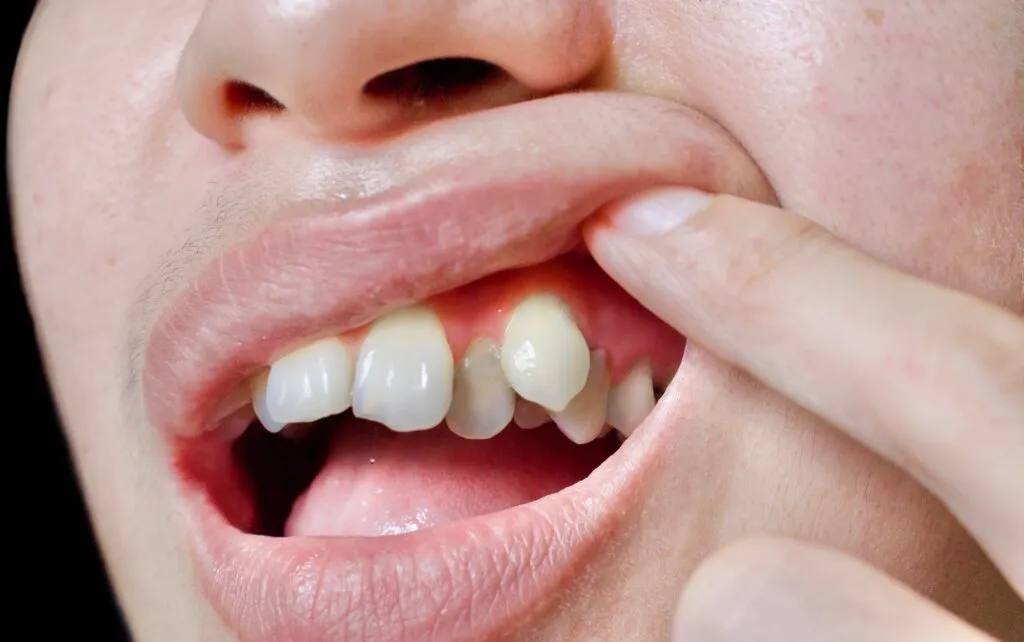
However, even if these teeth aren’t posing any oral health concerns, you may consider them a cosmetic flaw. If most of your teeth are well-aligned and a few are out of place, you have some options for aligning them, such as braces and clear aligners.
What Issues Can Snaggle Teeth Cause?
A snaggle tooth may be nothing more than a cosmetic issue. But depending on the shape, angle, and location of the tooth, it could cause more serious problems if left untreated.
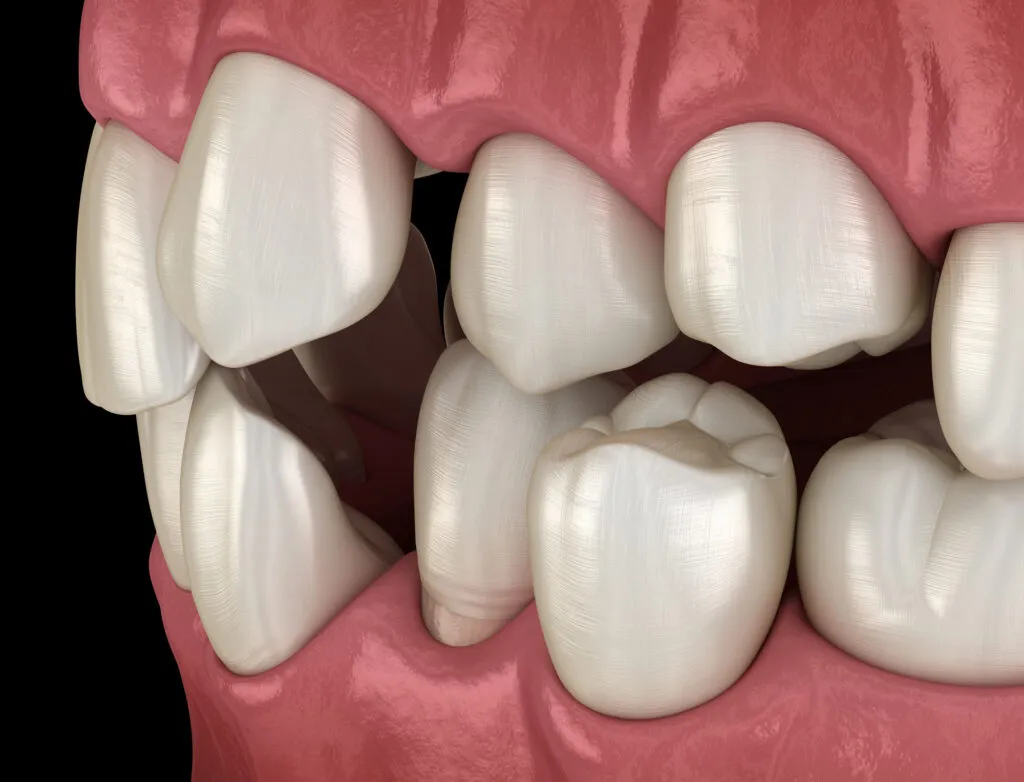
When a snaggle tooth overlaps with another tooth, it can be difficult to keep it clean and healthy with brushing and flossing. Bacteria builds up in the area, forming plaque and contributing to tooth decay or gum disease.
If your snaggle tooth results from overcrowding or a gap from a missing tooth, the tooth could continue to drift over time. Your other teeth could begin to move out of place as well. If you have trouble cleaning the area around a misaligned tooth or have any concerns, you should see your dentist for an evaluation.
Common Causes of a Snaggle Tooth
Several issues can cause a snaggle tooth, such as:
- Overcrowded teeth, which may or may not result from impacted wisdom teeth
- Thumb sucking during childhood
- Early loss of a baby tooth, which alters the eruption of the underlying permanent tooth
- Poor or changing tongue posture, which can change the alignment of teeth
- Bruxism (teeth grinding), which can push teeth out of place over time
Depending on the cause, the snaggle tooth itself may not be the only abnormality that needs to be corrected. In other cases, it is a mild deviation that can be treated on its own.
5 Ways to Fix a Snaggle Tooth
1. Braces
Braces work by putting pressure on your teeth with brackets and wires to bring out-of-place teeth into proper alignment.
Braces may need to be worn for only a few months or over two years, depending on a person’s needs. After the braces are removed, you’ll need to wear a retainer indefinitely to help stabilize your teeth.
Pros
- Reduces space between teeth
- Corrects of rotated teeth
- It doesn’t need to be replaced
- Lasting improvements in tooth alignment and oral-health-related quality of life
Cons
- It can be expensive, especially if there is only one misaligned tooth
- Need to be worn for months
- Oral hygiene with braces can be more difficult
- Post-treatment upkeep, such as wearing a retainer
Cost
Braces can cost anywhere from $4,000 to over $10,000, depending on the type of braces, your needs, and where you live. Lingual braces, which run along the back of your teeth, are likely to cost more than traditional braces.
The cost of braces may also vary depending on the type of braces. These include:
| Types of Braces | Cost |
|---|---|
| Traditional metal braces | $3,000 to $7,000 |
| Ceramic braces | $4,000 to $8,000 |
| Lingual braces | $5,000 to $10,000 |
| Self-ligating braces | $3,000 to $7,000 |
Dental insurance may partially or fully cover braces if they’re considered medically necessary.
2. Clear Aligners
Clear aligners are transparent plastic trays fitted to your teeth. They’re a common alternative to braces when the misalignment isn’t as severe. There are several brands of clear aligners, and they vary in quality.
Pros
- Effective at improving tooth spacing
- Less expensive than braces
- Don’t have to be worn for as long as braces
- More cosmetic than conventional braces
Cons
- Not as effective as braces for more complex tooth alignment problems
- Not as effective at moving severely rotated teeth
- Less accurate results if there are serious occlusion (bite) issues
Cost
Depending on the brand and your location, clear aligners can cost between $1,000 to $8,000. It’s possible that this cost may be paid in part or in full by your insurance.
3. Veneers
A dental veneer is a layer of porcelain or composite resin placed over a tooth. It can help protect a tooth and give it a more esthetic color and shape.
Pros
- Natural-looking color and shape
- It may be less expensive than braces
Cons
- Generally considered cosmetic and thus not covered by insurance
- It needs to be replaced every few years
- Fragile, can pop up off or break easily, especially in people who clench or grind their teeth
Cost
One veneer can cost as little as $500 or several thousand dollars, depending on the type of veneer you’re getting. These include
| Type of Veneer | Cost |
|---|---|
| Porcelain Veneers | $925 to $2,500 per tooth |
| Composite Veneers | $250 to $1,500 per tooth |
| Lumineers | $800 to $2,000 per tooth |
| Removable Veneers (Temporary Veneers) | 300 or more (per arch) |
Insurance isn’t likely to cover veneers.
4. Tooth Contouring
Tooth contouring involves shaving a small amount of enamel off the tooth. If your snaggle tooth only protrudes a little bit, tooth contouring may be an option.
Pros
- Significantly less expensive than braces or veneers
- It doesn’t need to be replaced or adjusted
- More cost-effective than braces or veneers for just one tooth
Cons
- Usually cosmetic, and thus not covered by insurance
- It won’t be effective for all snaggle teeth
Cost
Tooth contouring could cost anywhere from $50 to a few hundred dollars. Insurance may cover it in cases of injury where it’s considered a necessary procedure.
5. Tooth Extraction
Only very severe cases of single misaligned teeth will require extraction and replacement.
This may require replacing the extracted tooth with a single-tooth denture or dental implant.
Pros
- Provides a permanent solution
- Replacements can offer a natural-looking shape and color that will blend in with your other teeth
Cons
- It can be very expensive and may not be fully covered by insurance
- Requires a long recovery period
- Complications are possible, such as post-op infection
Cost
Tooth extraction on its own may cost between $65 to $370 dollars. A single-tooth denture may be an additional several hundred dollars.
On the other hand, an implant to replace one tooth can cost between $3,000 to $4,000. Insurance may cover a single-tooth denture but isn’t likely to cover the full cost of an implant.
Sources
- “Misaligned teeth and jaws: Overview.” InformedHealth.org. Cologne, Germany: Institute for Quality and Efficiency in Health Care (IQWiG), 2020.
- Zhou et al. “The impact of orthodontic treatment on the quality of life a systematic review.” BMC Oral Health, 2014.
- Galan-Lopez et al. “A systematic review of the accuracy and efficiency of dental movements with Invisalign®.” Korean journal of orthodontics, 2019.
- Ke et al. “A comparison of treatment effectiveness between clear aligner and fixed appliance therapies.” BMC Oral Health, 2019.
- Soonshin Hwang et al. “A 15-year follow up of an orthodontic treatment including a lower incisor extraction and keeping the maxillary canine–premolar transposition.” The Angle Orthodontist, 2019.
- “How Much Do Braces Cost?” CostHelper Health.
- “How Much Does Tooth Extraction Cost?” CostHelper Health.

UCLA-trained dentist practicing in public health. Focuses on whole-body approach to dental care.

Experienced dental health writer dedicated to providing accurate, accessible information.
Related Articles
Types of Teeth, Their Function and Shapes
Key Takeaways Your teeth naturally come in several different shapes and sizes. This allows them to perform multiple task...

Tight Jaw Causes, Tips for Relief, and Prevention
Why Does My Jaw Feel Tight? There are many potential causes of a tight jaw. Your lifestyle, jaw disorders, and certain i...

What Are the Causes and Treatments for Scalloped Tongue?
What is a Scalloped Tongue? A scalloped or crenated tongue has wavy indentations along the sides. These indentations, ca...

Prognathism: Causes, Symptoms, and Treatment
Prognathism is a condition where the lower jaw protrudes forward. Learn about prognathism's causes, symptoms, and treatm...