Can Cavities Go Away on Their Own?


Reader-supported. We may earn a commission from links on this page. Advertising disclosure.
In this article
A cavity that has formed a hole in your tooth won’t go away. Once a cavity wears through your tooth’s enamel, you must see a dentist.
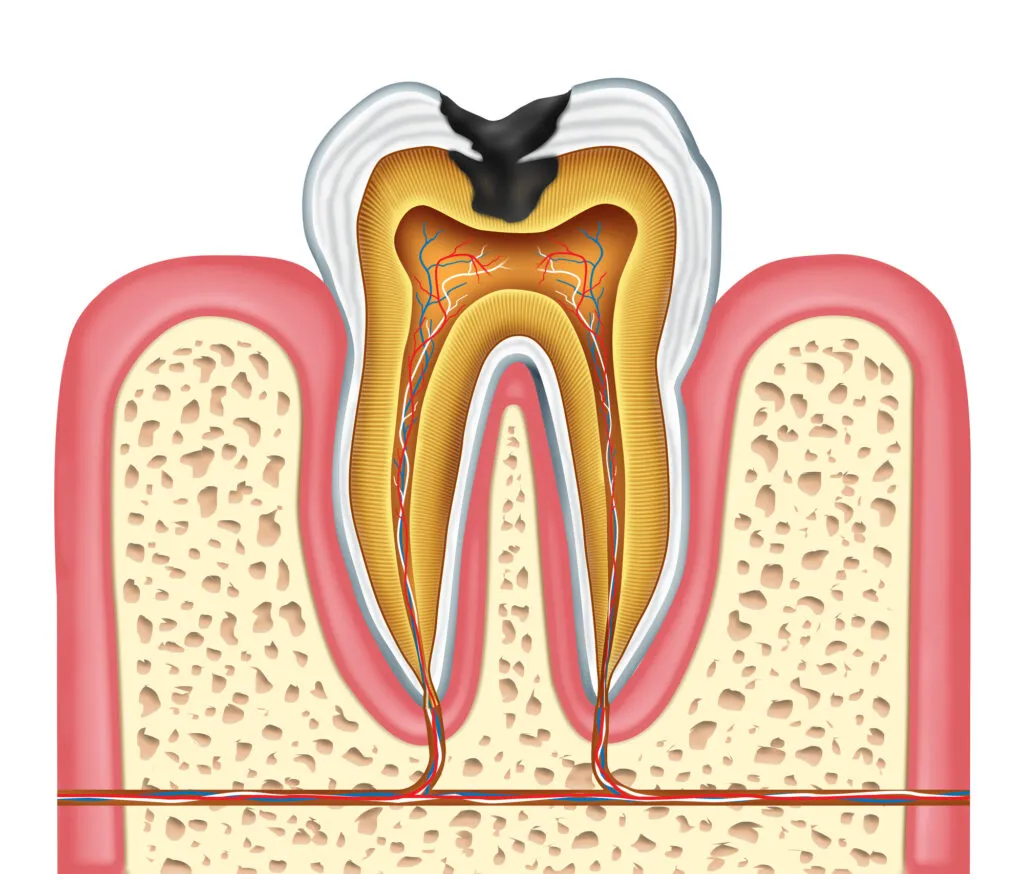
It is possible to halt cavity formation, but only if it’s in the early stages of tooth decay. To do this, you’ll need to:
- Commit to good oral hygiene with regular brushing and flossing
- Limit consuming sugar and starchy foods
- Remineralize your tooth enamel with fluoride
To ensure you’re getting enough fluoride, you can:
- Use fluoride toothpaste or mouthwash
- Drink fluoridated water
- Talk to your dentist about fluoride treatments
Even with diligent home care, tooth decay might worsen. Call your dentist immediately if you notice a physical change in your tooth. Early tooth decay usually looks like white spots on your teeth. A cavity will show a hole in the enamel.
Understanding the tooth decay process and committing to good oral hygiene can help you stop cavity development.
What Causes Cavities?
A cavity forms when harmful mouth bacteria become acidic and wear down tooth enamel. Oral bacteria produce acids when they mix with carbohydrates from sugary foods and drinks. This is the earliest stage of tooth decay.
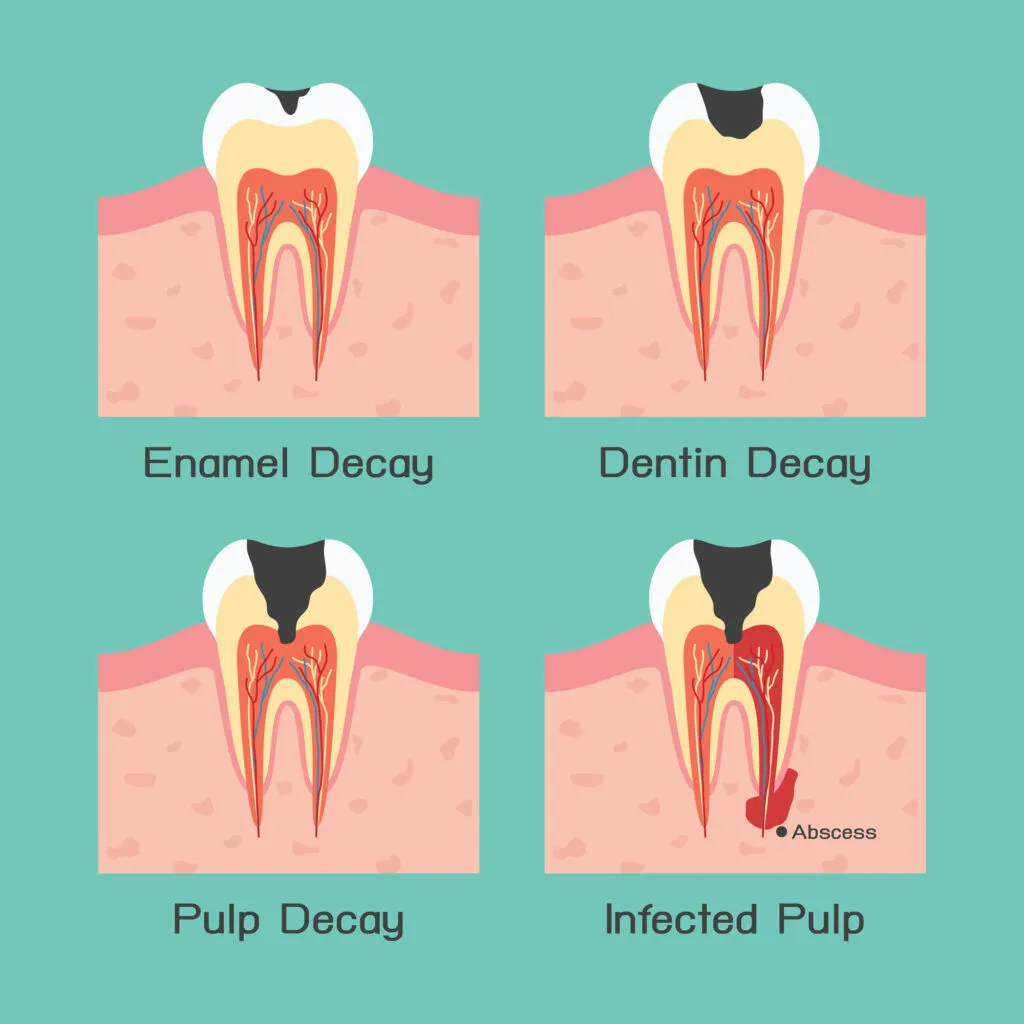
Tooth decay develops over time. The typical process looks like this:
Demineralization
Tooth decay starts when mouth bacteria produce acid. The acid attacks the tooth enamel, causing demineralization. You can avoid cavities by replenishing lost minerals at this stage. If the tooth decay process continues, a cavity forms.
Enamel Decay
The second stage of tooth decay occurs when enamel continues to break down. If a hole forms in your tooth, the cavity won’t heal without professional dental help.
Dentin Decay
Dentin is the soft tissue beneath the tooth enamel. The cavity will likely feel painful when tooth decay progresses into the dentin.
Pulp Decay
This major stage of decay happens when the infection reaches the nerves and blood vessels within your tooth (pulp). You’ll likely need a root canal at this point.
Abscess
A dental abscess can occur if the bacteria get trapped inside the pulp. This type of infection can cause swelling, discharge, and a pimple-like bump on the gums near the affected tooth.
Risks of Leaving a Cavity Untreated
Without treatment, a cavity will grow as the bacteria infect more of the tooth. Eventually, this can lead to the following:
- Tooth infection
- Nerve damage
- Root canal
- Tooth loss
- Dental abscess (can be deadly if it spreads to other parts of the body)
- Jaw bone damage
Dental Treatments for Cavities
Depending on the severity of the tooth decay, your dentist will use one or more of the following treatments:
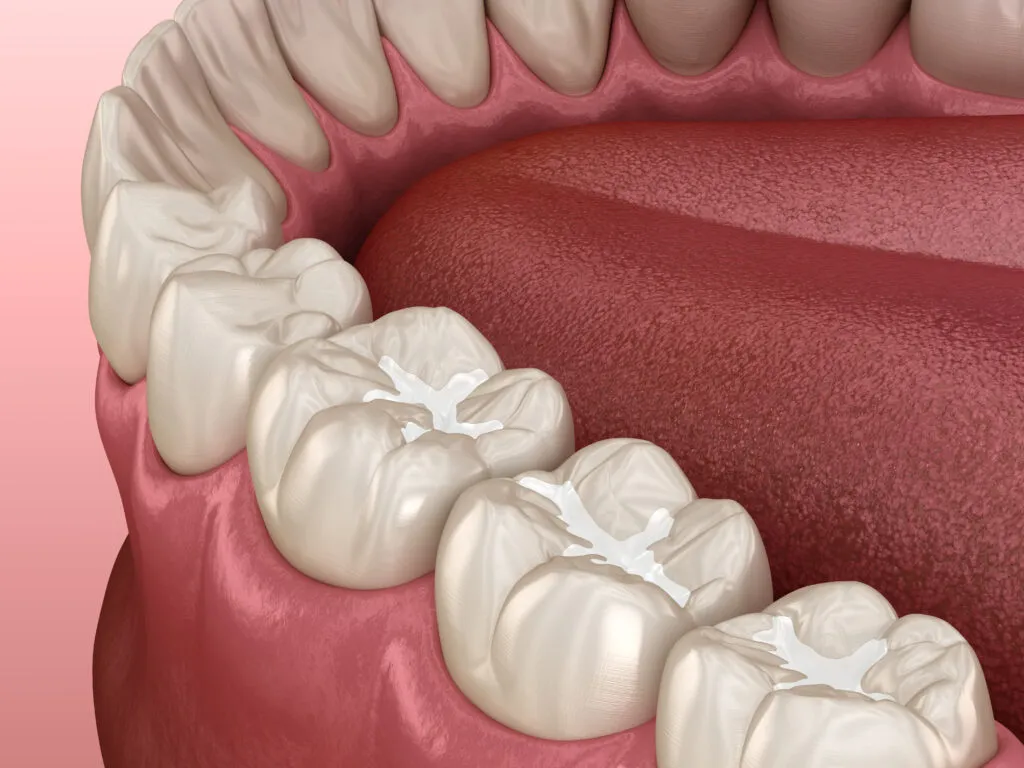
Fillings
Dental fillings are the most common treatment for smaller cavities. Most fillings use composite resin material.
Inlays or Onlays
If the cavity is too large for a regular filling, your dentist may recommend an inlay or onlay. These are usually made from gold, composite, or ceramic material.
Crowns
A larger cavity might require a dental crown. Crowns can be made with various materials, including metal, porcelain, and composite resin.
Root Canals
Root canal treatment may be necessary if tooth decay reaches the fourth stage and infects the pulp. You’ll need a crown restoration after the root canal procedure.
Extractions
If a cavity is too severe for treatment, your dentist may recommend an extraction.
How to Prevent Cavities From Developing
Even though early tooth decay is reversible, it’s best to prevent it. Good dental health practices can go a long way in preventing cavities.
Practice Good Oral Hygiene
Proper oral hygiene includes:
- Brushing and flossing your teeth at least twice daily
- Using a fluoride toothpaste or mouth rinse with added fluoride
- Seeing your dentist regularly for exams and cleanings
Eat Healthy Foods
Healthy foods lead to a healthy smile. Cavities begin when naturally occurring bacteria in your mouth mix with food particles and become acidic.
A diet good for dental health includes:
- Limiting sweet foods and sugary drinks
- Eating vegetables, whole fruits, lean protein, and whole grains instead of processed foods
- Avoiding snacks between meals and before bed
- Consuming alcohol in moderation or not at all
Try Supplements and Complementary Medicine
Various supplements and natural techniques can sometimes improve oral health and prevent tooth decay. These include:
- Oil pulling — this ancient Ayurvedic therapy involves swishing a tablespoon of coconut oil around your mouth for 20 minutes. Oil pulling can improve oral hygiene when practiced regularly.
- Dental probiotics — oral probiotic supplements can prevent cavities by increasing beneficial bacteria in your mouth. Dental probiotics also treat bad breath and reduce plaque buildup.
- Cranberry polyphenols — these supplements have been shown to target the bacteria that cause tooth decay without destroying helpful bacteria in your mouth.
- Vitamin D — studies show that people who take vitamin D supplements are less likely to have cavities than those who don’t.
Summary
- Cavities don’t go away, but they can be reversed at the earliest stages of tooth decay.
- Tooth decay begins when enamel starts to lose minerals (demineralization).
- You can prevent further tooth decay at this early stage by practicing good oral hygiene and getting more fluoride.
- If a cavity forms a hole in your tooth, you’ll need to see a dentist for treatment.
- Untreated cavities can lead to further infection, tooth loss, and even death.
Sources
- “Oral and Dental Health.” Centers for Disease Control and Prevention, 2022.
- “Cavity prevention approach effectively reduces tooth decay.” ScienceDaily, 2018.
- Srinivasan, M, et al. “High-fluoride toothpaste: a multicenter randomized controlled trial in adults.” Community Dentistry and Oral Epidemiology, 2013.
- “Tooth Decay.” National Institute of Dental and Craniofacial Research, 2019.
- “Dental Fillings.” National Institute of Dental and Craniofacial Research, 2018.
- Baik, A, et al. “Fluoride Varnishes for Preventing Occlusal Dental Caries: A Review.” Dentistry Journal, 2021.
- Zhang, JS, et al. “Oral Microbiome and Dental Caries Development.” Dentistry Journal, 2022.
- Hujoel, PP. “Vitamin D and dental caries in controlled clinical trials: systemic review and meta-analysis.” Database of Abstracts of Reviews of Effects (DARE): Quality-assessed Reviews, 2013.
- Philip, N, and Walsh, LJ. “Cranberry Polyphenols: Natural Weapons against Dental Caries.” Dentistry Journal, 2019.
- Karbalaei, M, et al. “Alleviation of Halitosis by Use of Probiotics and their Protective Mechanisms in the Oral Cavity.” New Microbes and New Infections, 2021.
- Shanbhang, VK. “Oil pulling for maintaining oral hygiene — A review.” Journal of Traditional and Complementary Medicine, 2017.

Board-certified general dentist specializing in patient education and preventive dentistry.

Experienced medical writer with background in biopsychology and public health.
Related Articles

Are Tonsil Stones Contagious?
Are Tonsil Stones Contagious? No, tonsil stones are not contagious, nor are they serious health problems. While tonsil s...

The Benefits of Dental Probiotics
Your body is home to a unique set of microbes, and about 700 species live in your mouth. 5, 7 These include microscopic...
How to Clean Your Mouth Guard
A mouthguard is an important piece of equipment when playing sports or participating in activities where there is risk o...

Should You Brush Your Teeth Before or After Breakfast?
Should you brush your teeth before or after breakfast? We discuss the pros and cons of each. We also give tips on how to...