Black Triangles Between Your Teeth


Reader-supported. We may earn a commission from links on this page. Advertising disclosure.
In this article
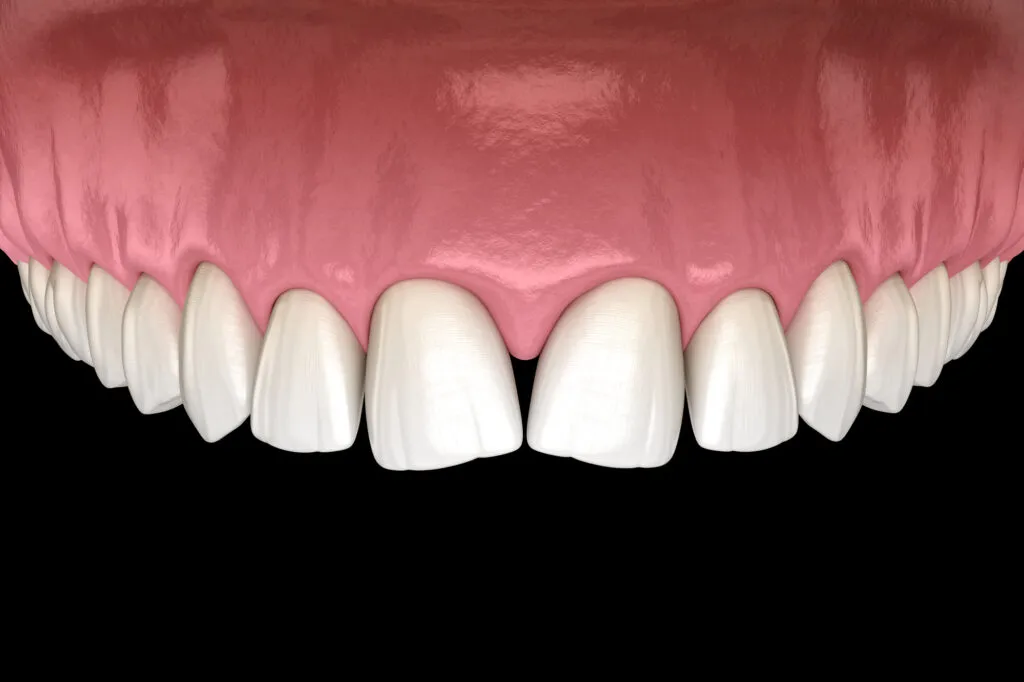
When you look in the mirror, you may notice small black triangles between your teeth. These are gaps that your gum tissue isn’t filling in.
Although everyone has gingival embrasures, about one-third of adults have open gingival embrasures. These cause the appearance of black triangles between the teeth. Sometimes, they are more than a minor cosmetic flaw. They can also be a sign of, and a risk factor for, deeper oral health issues.
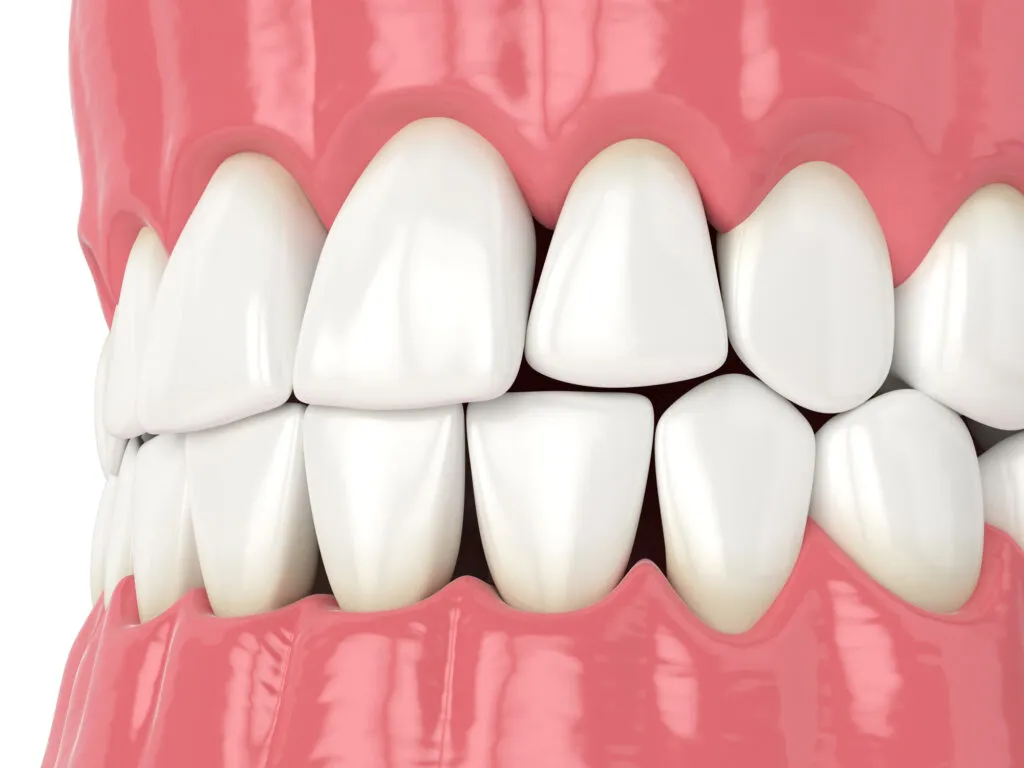
Treatment for black triangles will depend on the exact cause. Both surgical and non-surgical procedures can reshape or restore the gum line.
What Causes Black Triangle Teeth?
Typically, each gap between someone’s teeth is filled with a little bit of gum tissue, called a papilla. Loss of papillae results in open gingival embrasures or black triangles.
These gaps can form between teeth for various reasons, some more serious than others. Here are some of the most common causes:
Periodontal Disease
The most severe cause of interdental gaps is gum disease. Gum disease, or gingivitis, can cause gum recession. A receding gumline can begin to cause small black gaps between the teeth.
Severe gum disease (periodontitis) can have an even worse symptom—bone loss. As someone loses bone, their gums may pull away further, making the black triangles more noticeable.
Aggressive Oral Hygiene
Brushing or flossing your teeth too aggressively can damage your gums, leading them to pull back and create black triangles. Using interdental brushes (wand-like toothbrushes that go between the teeth) too aggressively may also be a contributing factor.
Orthodontic Treatment
Treatment with braces or clear aligners shifts teeth into new positions. Sometimes, these new positions create gaps between teeth that aren’t filled in by the gums.
Other Causes
Other reasons for gingival embrasures to open up between your teeth include:
- Gum recession due to aging
- Teeth that are naturally irregular or more triangular in shape
- Naturally thin gums
- Tooth roots that come in at an angle
- Dental restorations such as implants, crowns, or veneers
- Pathology, such as cancer
Oral Health Risks of Black Triangles
Black triangles between your teeth can result from gum recession or bone loss. In addition to oral health problems, black triangles can also contribute to oral health problems.
These small gaps can become traps for food debris and bacteria. Plaque and tartar can form, contributing to tooth decay and gum damage.
Can You Prevent Black Triangles Between Teeth?
Some of the factors that lead to black triangles can’t be prevented. Aging, the natural shape of your teeth, and the natural thickness of your gums can all play a role. Black triangles may also be an unfortunate result of necessary orthodontic treatment.
However, many of the common causes of these gingival gaps are preventable. You can reduce your risk of developing black triangles between your teeth by doing the following:
- Eating a healthy and balanced diet; excess sugar provides fuel for harmful oral bacteria
- Maintaining good oral hygiene, removing plaque and food debris with regular brushing and flossing
- Not brushing or flossing too aggressively, which wears away gum tissue
- Avoiding tobacco products, which can contribute to gum disease
Talk to your dentist or periodontist about what you can do to help prevent gingival embrasures.
5 Ways to Fix Black Triangle Teeth
Sometimes gum tissue grows to fill the spaces created by dental implants or other restorations. But this may not always occur, especially if other factors are involved, like poor oral hygiene.
There are several ways black triangles between teeth can be professionally treated, depending on the underlying cause:
1. Gentler Brushing and Flossing
Going easier on your teeth during brushing and flossing can help reduce the appearance of black triangles. You should clean your teeth thoroughly but gently.
Be especially mindful when using oral hygiene products between your teeth, like floss picks and interdental brushes.
2. Hyaluronic Acid
Hyaluronic acid is found naturally in your body, such as your skin and cartilage. It plays a key role in inflammation and repairing wounds.
Periodontists can help your gum and bone tissue regenerate by applying or injecting hyaluronic acid. This new growth of healthy periodontal tissue can reduce the black triangles between teeth.
3. Dental Restorations
Two common types of dental restoration can improve the shape of your teeth and fill in any gaps: bonding and veneers.
Dental bonding uses composite resin to fill in the black triangles. The resin may be colored to look like teeth or gum tissue (or both).
Veneers are thin shells made of ceramic, porcelain, or composite resin. Like composite bonding, veneers can give your teeth a more regular and esthetic shape by filling interdental spaces.
4. Orthodontic Treatment
While orthodontic treatment can sometimes contribute to black triangles, it can also be a way to treat them. If your teeth have gaps between them due to misalignment, braces (or clear aligners) can correct the underlying problem.
5. Periodontal Surgery
For people with severe gum disease, gum tissue and bone may need to be surgically added or reattached.
Periodontists and oral surgeons can provide a gum or bone tissue graft. This tissue is usually taken from another part of your body, cadavers, or animals. It can also be made synthetically.
Using minimally invasive techniques, your gums can also be lifted and reattached in a better position.
Summary
Many adults notice black triangular gaps between their teeth. Various things can cause these gaps to form, including gum recession, bone loss, and orthodontic treatment.
Black triangles can affect a person’s appearance, pose an oral health risk, and be a sign of gum disease. Fortunately, a variety of treatments exist.
See your dentist or periodontist if you’ve noticed these small gaps between your teeth. They can help you determine the underlying cause and the right course of treatment.
Black Triangles Between Your Teeth
NewMouth PodcastSources
- Al-Zarea, B.K., et al. "Black Triangles Causes and Management: A Review of Literature." British Journal of Applied Science and Technology, 2015.
- Ikbal, Aziz, et al. "Black Triangle and Vitiated Esthetic Vis-à-Vis Management: A Review." The Traumaxilla, 2022.
- Mostafa, Diana, and Nikhat Fatima. "Gingival Recession And Root Coverage Up To Date, A literature Review." Dentistry Review, 2022.
- Handelman, Chester S., et al. “Quantitative measures of gingival recession and the influence of gender, race, and attrition.” Progress in Orthodontics, 2018.
- Montevecchi, Marco et al. “Variables Affecting the Gingival Embrasure Space in Aesthetically Important Regions: Differences between Central and Lateral Papillae.” The Open Dentistry Journal, 2011.
- An, Sang Su, et al. “Risk factors associated with open gingival embrasures after orthodontic treatment.” The Angle Orthodontist, 2018.
- Rashid, Zhwan Jamal, et al. "Incidence of Gingival Black Triangles following Treatment with Fixed Orthodontic Appliance: A Systematic Review." Healthcare, 2022.
- Wishney, M. "Potential risks of orthodontic therapy: a critical review and conceptual framework." Australian Dental Journal, 2016.
- Belák, Šimon, et al. "The influence of gingival phenotype on the morphology of the maxillary central papilla." BMC Oral Health, 2021.
- Flanagan, Dennis. "Gingival Embrasure Fill In Fixed Implant-Supported Prosthetics: A Review." Journal of Oral Implantology, 2015.
- Tanwar, Jyotsana, and Shital A Hungund. “Hyaluronic acid: Hope of light to black triangles.” Journal of International Society of Preventive & Community Dentistry, 2016.
- Novelli, Claudio. “Restoration of gingival recession with periodontal preformed composite veneers.” Clinical Case Reports, 2021.
- Reddy, Saravanan Sampoornam Pape. “Pinhole Surgical Technique for treatment of marginal tissue recession: A case series.” Journal of Indian Society of Periodontology, 2017.

UCLA-trained dentist practicing in public health. Focuses on whole-body approach to dental care.

Experienced dental health writer dedicated to providing accurate, accessible information.
Related Articles

Bumps on the Back of the Tongue: What They Are and When to Worry
Do you have bumps on the back of your tongue? Read this article to see what they look like and learn about treatments, p...

Botox For Bruxism
Teeth grinding or bruxism causes pain, discomfort, and even sleep deprivation. Fortunately, there is an effective treatm...

Canker Sores vs Cancer
Get the facts on canker sores and mouth cancer, including their symptoms, causes, and treatments.
Can Wisdom Teeth Grow Back?
Wisdom teeth, also known as third molars, are the teeth that develop in the back of the mouth and often emerge during ea...