Black Tongue: Why Is My Tongue Black?


Reader-supported. We may earn a commission from links on this page. Advertising disclosure.
In this article
A black tongue is usually caused by a harmless condition called black hairy tongue. In this condition, the tiny bumps on your tongue grow too long and start trapping bacteria, yeast, and stains.
It can also be caused by a smooth stain from drinking coffee, using tobacco, or taking a bismuth-containing medicine such as Pepto-Bismol. Either way, you can usually get rid of a black tongue by brushing or scraping it every day, and avoiding whatever is causing the discoloration.
See your dentist or doctor if your tongue isn’t getting better after cleaning it twice a day, or if you have a flat dark spot that is new or changing.
What Is Black Hairy Tongue?
Black hairy tongue occurs when the tiny bumps on your tongue, called filiform papillae, stop shedding and start growing long like hairs.
Bacteria, yeast, food, or tobacco get trapped in these long papillae and stain them dark. Black hairy tongue is not an infection and is rarely treated with medicine.
Your tongue will usually be discolored toward the middle and back, in front of a row of bigger bumps at the back of your tongue. These big bumps are normal.
Depending on what’s trapped in the papillae, your tongue may turn brown, yellow, green, or white instead of black. Hairy tongue is a common cause of green tongue.
Symptoms of Black Hairy Tongue
Other symptoms of black hairy tongue may include:
- Your tongue looking furry or hairy
- Bad breath (halitosis)
- Bad or metallic taste in your mouth
- Gagging, or a tickling sensation, if the papillae grow very long
Who Gets Black Hairy Tongue
Black hairy tongue affects 0.6% to 11.3% of the population, depending on the group studied.2 It is more common in people who smoke, older people, and men.
Causes of a Black Tongue
Most causes either stop the papillae from shedding or stain your tongue’s surface. The first three below trigger black hairy tongue, while the last two only look like it.
Poor Oral Hygiene and a Soft Diet
Your papillae are normally worn down by chewing firm foods and brushing your tongue. If you don’t clean your tongue, eat a lot of soft foods, don’t eat much, or have a dry mouth, your papillae may grow too long.
Lifestyle Factors
Other things that can cause black hairy tongue include:
- Smoking or chewing tobacco
- Drinking a lot of coffee or black tea
- Drinking a lot of alcohol
- Using a mouthwash with peroxide or other oxidizing ingredients every day
Medication Side Effects
Certain medicines can cause black hairy tongue, likely by drying your mouth or changing the balance of bacteria and yeast in it. These medicines include:
- Antibiotics
- Some antipsychotic medicines
- Some cancer medicines, or radiation therapy to your head and neck
Talk to the doctor who prescribed your medicine before stopping it. They may be able to prescribe a different medicine.
Bismuth Medicines Like Pepto-Bismol
A medicine called bismuth subsalicylate (found in Pepto-Bismol and other products) can temporarily turn your tongue black. This happens because bismuth reacts with sulfur in your saliva to make a black substance.
This surface stain is not black hairy tongue. Your tongue will be discolored and smooth. It will go away when you stop taking the medicine.
Dark Spots and Natural Pigmentation
A flat dark spot in one place isn’t a coating. Many healthy tongues have natural brown or darker patches that don’t brush off, especially in people with darker skin.
You may also have darker spots on your gums. The veins under your tongue normally look dark blue or purple.
Biting your tongue can leave a dark blood blister, which usually goes away on its own. See your dentist or doctor if you have a spot on your tongue that is new, growing, raised, or bleeding.
Is a Black Tongue Serious?
Usually not. Most cases of black hairy tongue and surface stains are temporary and harmless. Once the cause is gone, you can get rid of the color and any bad breath by cleaning your tongue every day.
| What You See | Most Likely Cause | What to Do |
|---|---|---|
| A dark, furry coating on the top of your tongue | Black hairy tongue | Clean your tongue every day and cut back on the trigger |
| A smooth black stain after Pepto-Bismol, coffee or tea | Surface staining | Brush your tongue and let the color fade after you stop the trigger |
| A flat dark spot or patch in one place | Natural pigmentation, a bruise or another lesion | Have a dentist check any spot that’s new or changing |
| A dark tongue with pain, swelling, sores or fever | Irritation or another condition, with or without black hairy tongue | See a dentist or doctor. Get same-day care for a fever or swelling, and call 911 if swelling makes it hard to breathe, speak or swallow |
Get checked for oral cancer if you have a changing dark spot in your mouth, which in rare cases is an early sign.
Why Is My Tongue Black When I Wake Up?
One possible reason is that you recently took Pepto-Bismol or another bismuth-containing medicine. Or maybe you had coffee or tea later than usual and forgot to brush before bed.
Your saliva flow slows when you sleep. That allows a coating to form on your tongue overnight.
Brushing can clear both a stain and black hairy tongue. If it looks furry, it’s likely black hairy tongue. Have your dentist check it if it doesn’t clear or keeps coming back.
What Should a Healthy Tongue Look Like in the Morning?
Your tongue should be pink to dark pink with a thin whitish coating. Just like your skin, it can be darker or lighter depending on your body’s natural pigment.
The coating is a combination of keratin, a protein found in your tongue cells, and normal debris from your mouth. The tiny bumps on your tongue are called papillae. Some of them contain your taste buds.
How to Get Rid of a Black Tongue
Most cases of black hairy tongue respond well to daily tongue cleaning once the cause is gone. It rarely needs prescription treatment.
At-Home Treatments
You can get rid of black hairy tongue, and keep it from coming back, by:
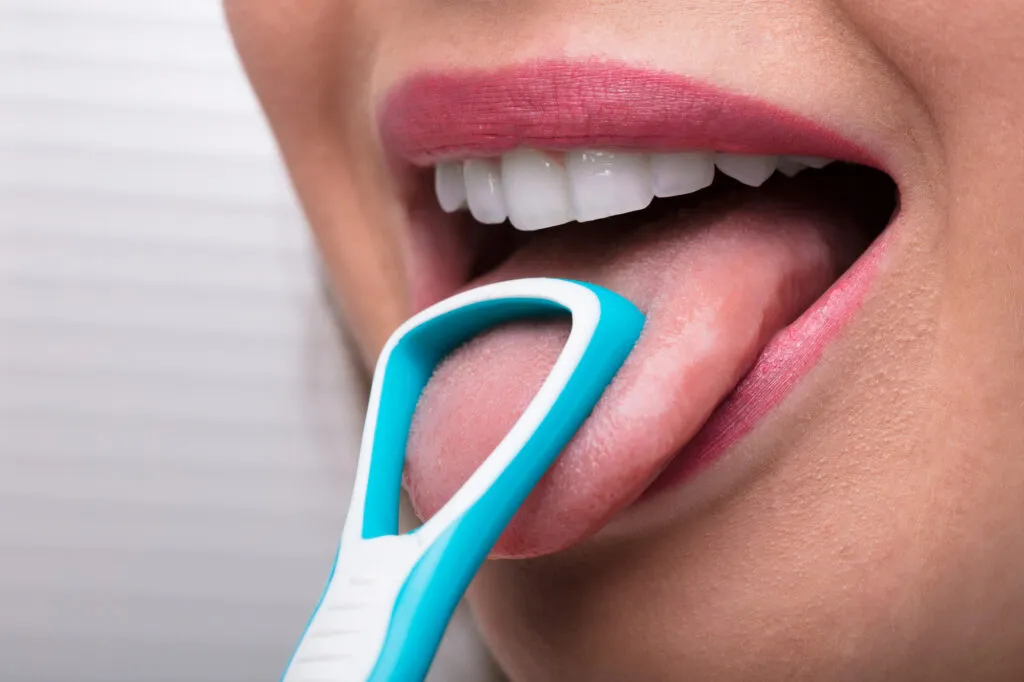
- Cleaning your tongue every time you brush your teeth. Use a soft-bristle toothbrush or a tongue scraper and start at the back of your tongue, pulling forward gently.
- Brushing your teeth twice a day with fluoride toothpaste and flossing once a day.8
- Reducing your use of tobacco, coffee, black tea and alcohol.
- Avoiding mouthwashes that contain peroxide until your tongue returns to normal.
- Sipping water throughout the day. Talk to your doctor or dentist about treating dry mouth if it’s caused by a medicine you take.
- Eating firm foods, such as raw fruits and vegetables, which can help wear down the lengthened papillae on your tongue.
Once your tongue is back to normal, keep doing these things to prevent black hairy tongue from coming back.
Professional Treatments
Your dentist or doctor can diagnose black hairy tongue by looking at your tongue and asking about your health. They can rule out other causes. If a medicine is the likely cause, the prescriber may suggest something else.
If an examination or tests show a separate fungal or bacterial infection, you’ll get treatment aimed at that.
When to See a Dentist or Doctor
See a dentist or doctor if the black color doesn’t improve even though you brush your teeth and tongue twice a day.3
A dentist is a good first stop, since they check your tongue at every exam. If it started after a new prescription, talk with the prescriber before you stop or change it.
Book an Appointment If You Notice
- A coating that keeps coming back after it clears
- Pain, burning or sores on your tongue
- A flat dark spot or patch that’s new, growing, raised or bleeding
- Bad breath or a bad taste that cleaning doesn’t fix
- A dark tongue that started with a new medicine
- Any black tongue in a baby or young child
Get Same-Day Care If You Have
- A fever
- Swelling in your face, jaw or neck
Go to the ER if swelling spreads fast or toward your eye or neck, or you have trouble opening your mouth. A swollen or painful eye, vision changes or a lot of swelling inside your mouth also need the ER.
Call 911 if swelling in your mouth, tongue, throat or neck makes it hard to breathe, speak or swallow. Also call 911 if you can’t swallow your saliva.
Why Do I Have a Black Under Tongue?
NewMouth PodcastSources
- "Hairy Tongue." American Academy of Oral Medicine, reviewed May 13, 2015.
- Gurvits GE, Tan A. "Black hairy tongue syndrome." World Journal of Gastroenterology, 2014.
- Mayo Clinic Staff. "Black hairy tongue: Symptoms and causes." Mayo Clinic, 2023.
- Schlager E, St Claire C, Ashack K, Khachemoune A. "Black Hairy Tongue: Predisposing Factors, Diagnosis, and Treatment." American Journal of Clinical Dermatology, 2017.
- Liccioli G, et al. "Black tongue in children: a possible drug hypersensitivity reaction?" Minerva Pediatrics, 2023.
- Mayo Clinic Staff. "Black hairy tongue: Diagnosis and treatment." Mayo Clinic, 2023.
- Godman H. "What color is your tongue? What's healthy, what's not?" Harvard Health Publishing, Harvard Medical School, 2023.
- "Oral Hygiene." National Institute of Dental and Craniofacial Research, National Institutes of Health.
- Zito, P., et al. “Oral Melanoma.” StatPearls, National Library of Medicine, 2022.

UCLA-trained dentist practicing in public health. Focuses on whole-body approach to dental care.

Experienced dental health writer dedicated to providing accurate, accessible information.
Related Articles

Are Tonsil Stones Contagious?
No, tonsil stones aren't contagious. They form from debris trapped in your own tonsils. Learn what kissing can spread, h...
Black Triangles Between Your Teeth
When you look in the mirror, you may notice small black triangles between your teeth. These are gaps that your gum tissu...

Bleeding Gums: Causes, Remedies & Treatment
Bleeding gums can be a sign of gum disease. They can also be caused by other things like brushing too hard or hormonal c...

Botox For Bruxism
Teeth grinding or bruxism causes pain, discomfort, and even sleep deprivation. Fortunately, there is an effective treatm...