The 4 Different Types of Dental Veneers


Reader-supported. We may earn a commission from links on this page. Advertising disclosure.
In this article
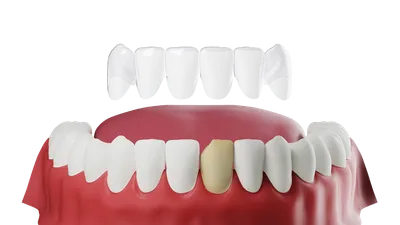
Dental veneers are custom, tooth-colored shells that fit over the front of your teeth. They’re a cosmetic dentistry procedure that changes your natural teeth’ shape, color, size, or appearance.
In cosmetic dentistry, veneers are sometimes called a “smile makeover.” Although they can’t replace missing teeth, veneers fix the following:
- Chipped teeth
- Inappropriately-sized teeth
- Slightly crooked teeth
- Discolored teeth
What are the 4 Types of Veneers?
There are different kinds of veneers available to fix your cosmetic concerns. They all have different pros and cons, so you must consider those before choosing which one to get.
The most common type of dental veneer is porcelain. Here are the different types of veneers:
1. Porcelain Veneers
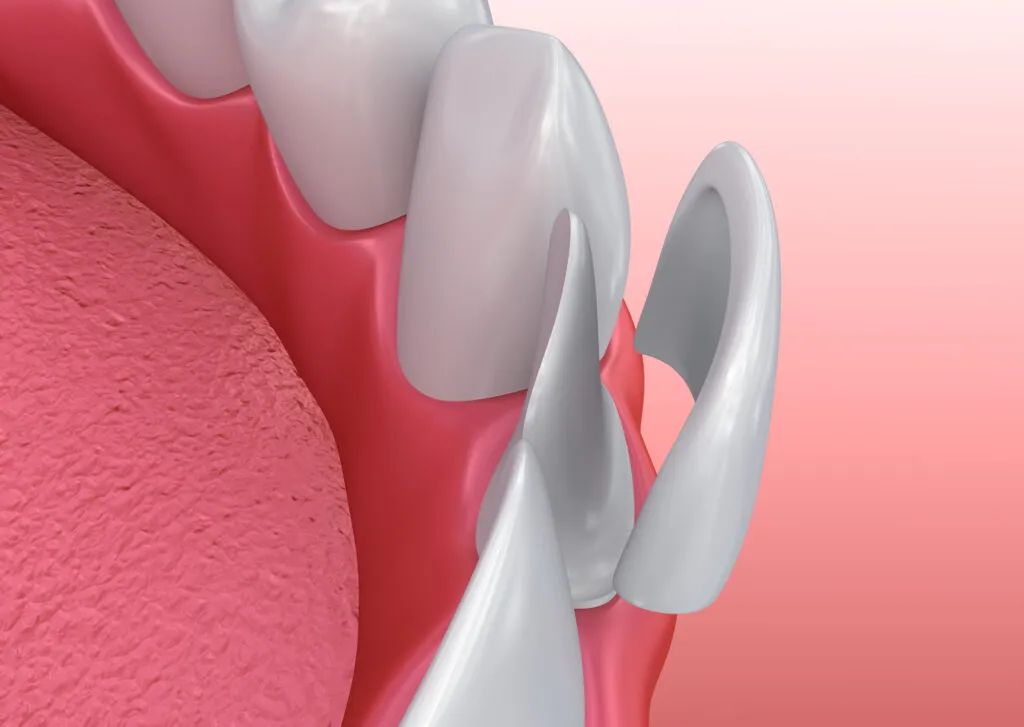
Porcelain is the most esthetic and least harmful material available for dental restorations. It’s also the strongest and longest-lasting of all veneer materials.
Porcelain laminate veneers are extremely biocompatible, so they rarely injure the gum tissues and surrounding soft tissues in the mouth. These veneers can significantly improve the appearance of your smile because porcelain is very natural-looking.
Porcelain veneers are a permanent solution and require some tooth shaving before placement.
| Pros of Porcelain Laminate Veneers | Cons of Porcelain Laminate Veneers |
|---|---|
| Blend in with your natural tooth color | Expensive ($925 to $2,500 per tooth) |
| Stain-resistant | Lengthy and invasive procedure |
| Have uniform or consistent smooth texture | May fracture, chip, break, or fall off, especially in people who grind their teeth |
| Don’t harm your gums or surrounding teeth | |
| Last 8 to 15 years with proper care |
CEREC® (Chairside Economical Restoration of Esthetic Ceramics) porcelain veneers are a new, popular option that provides same-day results. CEREC veneers use high-quality 3D software to design a new, beautiful smile in hours.
2. Composite Veneers
Composite veneers are a permanent solution and may require some tooth shaving before placement. They’re made of composite resin, a mixture of inorganic and organic materials:
- Natural materials — Includes the initiator, resin, and coupling agent
- Inorganic material — The primary inorganic material in composite resin is the filler
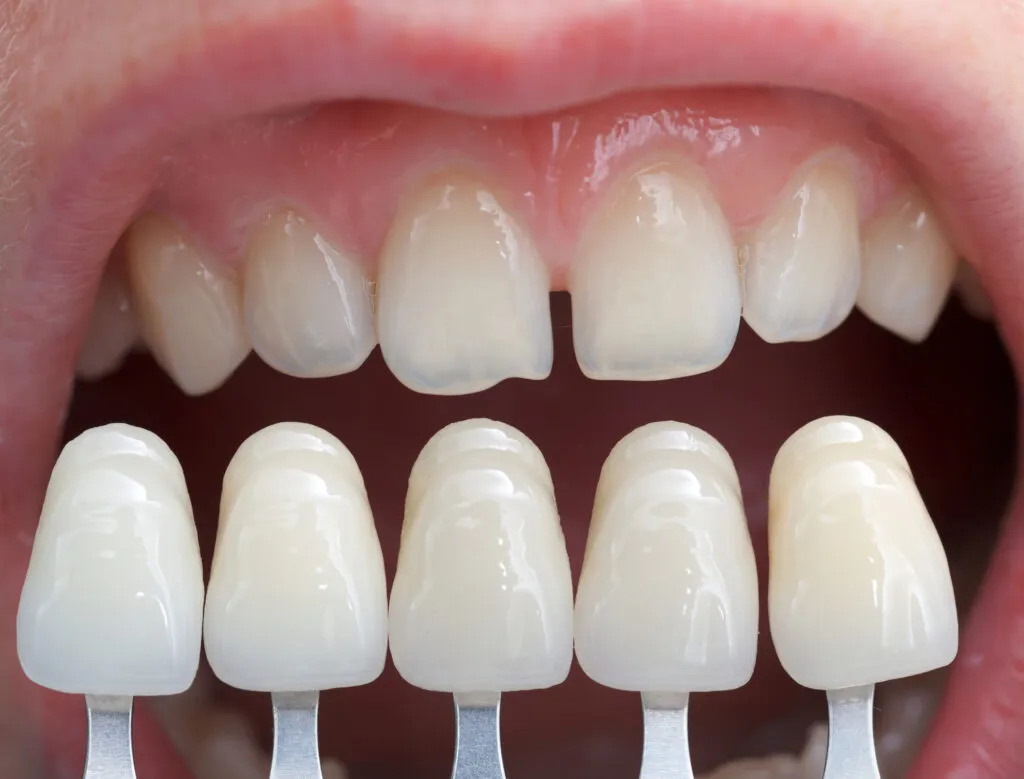
The bonding material to make composite resin veneers is the same as tooth-colored dental fillings. While strong, they aren’t as durable as porcelain.
| Pros of Composite Veneers | Cons of Composite Veneers |
|---|---|
| Less invasive procedure (less enamel removal) | Weaker and more prone to stains over time than porcelain veneers |
| They look natural | Don’t last as long as porcelain veneers |
| Has low chance of harming your gum tissue | Involves lengthy procedure |
| Easily repaired if chipped or broken | |
| Only requires a single visit and no temporary restorations | |
| Last up to 5 to 7 years | |
| Less expensive than porcelain veneers ($250 to $1,500 per tooth) |
3. Lumineers
Lumineers are a brand of veneers. They’re made of ultra-thin porcelain laminate material and require minimal preparation before placement.
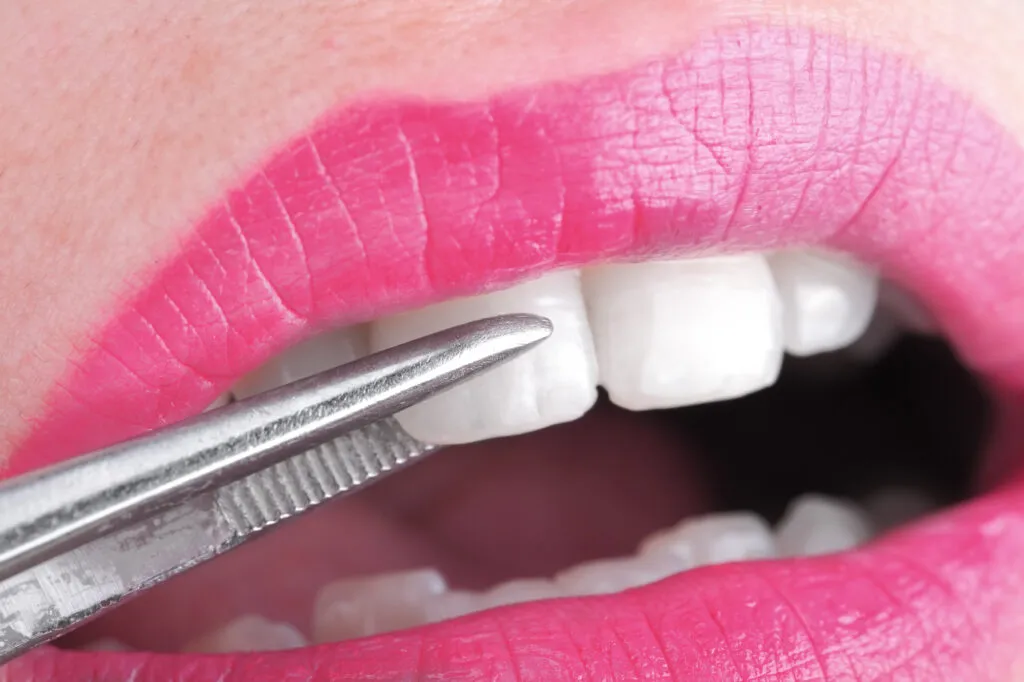
Unlike porcelain veneers, dentists remove less natural tooth structure before placing a lumineer over your tooth enamel. Lumineers commonly treat discolored and irregularly shaped teeth.
| Pros of Lumineers | Cons of Lumineers |
|---|---|
| Smooth to the touch Look and feel natural They are reversible | Have shorter lifespan than traditional veneers |
| Require less tooth preparation before placement | Less natural-looking than veneers |
| Slightly less expensive than porcelain veneers ($800 to $2,000 per tooth) | More prone to fracture and damage |
4. Removable Veneers (Temporary Veneers)
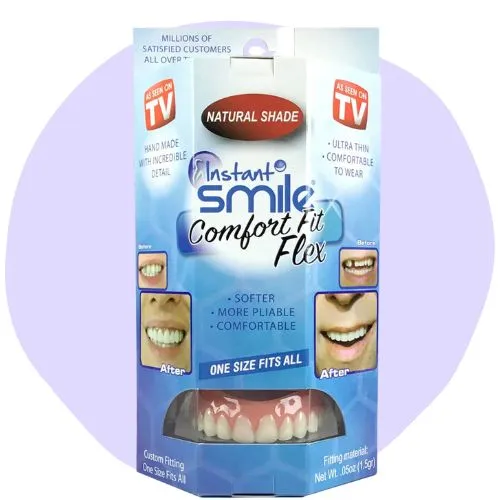
Removable veneers, or snap-on or temporary veneers, come in two types:
- Instant veneers — You fit them into your mouth by placing them in hot water and pressing your teeth into the soft-fitting material.
- Custom-made clip-on veneers — Making them starts with creating an impression of your teeth that you’ll send to a dental lab. Technicians create a custom-fit set of veneers for you, which you’ll receive by mail.
Dentists always recommend permanent veneers over temporary alternatives. As such, instant ones aren’t ideal for daily use or as a long-term dental solution.
| Pros of Removable Veneers | Cons of Removable Veneers |
|---|---|
| Little to no preparation | Prone to plaque build-up |
| They are much cheaper than other options | Can harm gums overtime |
| Not as natural looking | |
| Short-term option | |
| May mask more serious issues |
Read more about snap-on veneers.
How Much Do Veneers Cost?
A single veneer can cost anywhere between $600 and $2,500. Insurance doesn’t cover this cost because they’re for cosmetic purposes, not a medical necessity.
Veneer treatment price depends on various factors, including:
- The type of veneer material chosen
- How many veneers you get
- Your dentist’s location
How Can You Take Care of Your Veneers?
Taking proper care of your veneers can help them last longer and maintain their natural appearance. Here are some tips to keep in mind:
- Maintain good oral hygiene — Brush and floss your teeth regularly, including the area around the veneers. Use a non-abrasive toothpaste to avoid damaging their surface.
- Avoid biting or chewing on hard objects — Veneers are strong but not invincible. Avoid biting or chewing on hard objects, such as ice, pens, or fingernails, to prevent damage.
- Limit stain-causing foods and drinks — Dark-colored foods and drinks like coffee, tea, and red wine can cause stains on your veneers over time. Limit your consumption of these to maintain the brightness of your veneers.
- Wear a mouthguard if you grind your teeth — If you have a habit of grinding or clenching your teeth, talk to your dentist about getting a custom-fitted mouthguard. This can help protect both your natural teeth and veneers from damage.
- Schedule regular dental check-ups — Regular dental check-ups can ensure that your veneers are in good condition and identify any potential issues early on. Your dentist may also recommend a professional cleaning to remove any plaque or tartar buildup around the veneers.
Sources
- Goldstein et al. “Ronald. E. Goldstein’s Esthetics in Dentistry.” ResearchGate, 2019.
- “Removable Veneers.” Shiny Smile Veneers.
- Alothman et al. “The Success of Dental Veneers According To Preparation Design and Material Type.” Open Access Macedonian Journal of Medical Sciences, 2018.
- Suresh et al. ”A Detailed Overview on Veneers -Diagnostic and Clinical Considerations.” Challenges in Disease and Health Research, 2020.
- Smielak et al. “A prospective comparative analysis of the survival rates of conventional vs no-prep/minimally invasive veneers over a mean period of 9 years.” Clinical Oral Investigations, 2021.
- El-Mowafy et al. “Porcelain veneers: An update.” Dental and Medical Problems, 2018.
- Ferdinand, T. “Pros and Cons of Removable Veneers for Teeth.” Veneers Dubai.

UCLA-trained dentist practicing in public health. Focuses on whole-body approach to dental care.

Journalism graduate specializing in clear, factual dental and medical content.
Related Articles
What Are Veneers?
Dental veneers can help fix many cosmetic dental problems. Learn the five types, how they work, costs, and side effects.

Brighter Image Lab Snap On Veneers Review (2026)
Brighter Image Lab makes realistic veneers, but are they worth the cost? Get the answer in our review as we examine its...

Veneers Before and After
Veneers are a popular cosmetic dental procedure that can dramatically improve the appearance of your smile. Different ki...
Instasmile Snap On Veneers Review
Are Instasmile snap-on veneers right for you? Find out as we investigate customer reviews and compare its features with...