Plaque Disclosing Tablets


Reader-supported. We may earn a commission from links on this page. Advertising disclosure.
In this article
Effective dental plaque removal can be challenging, especially for children and people with braces. Disclosing tablets can help show where the plaque has accumulated, making it easier to remove the plaque.
Studies show orthodontic patients who use plaque disclosing tablets at home have less plaque and healthier gums than those who don’t.
You may have received plaque disclosing tablets at a dentist appointment. Hygienists often use them to check how well people clean their teeth at home.
What are Plaque Disclosing Tablets?
Dental disclosing tablets contain a harmless pink or purple dye that reacts with plaque on your teeth. Chewing a tablet activates the dye, temporarily revealing plaque that remains in your mouth after you brush and floss.
Disclosing tablets help develop good brushing habits by revealing areas where plaque has accumulated on the teeth. They make it easier to see places you missed during brushing and flossing.
Plaque disclosing tablets are particularly helpful for:
- People with fixed orthodontic treatments like braces
- Parents cleaning their child’s teeth or teaching their child how to brush and floss
- Caretakers cleaning the teeth of people with special needs
- Adults who want to improve the effectiveness of their brushing and flossing
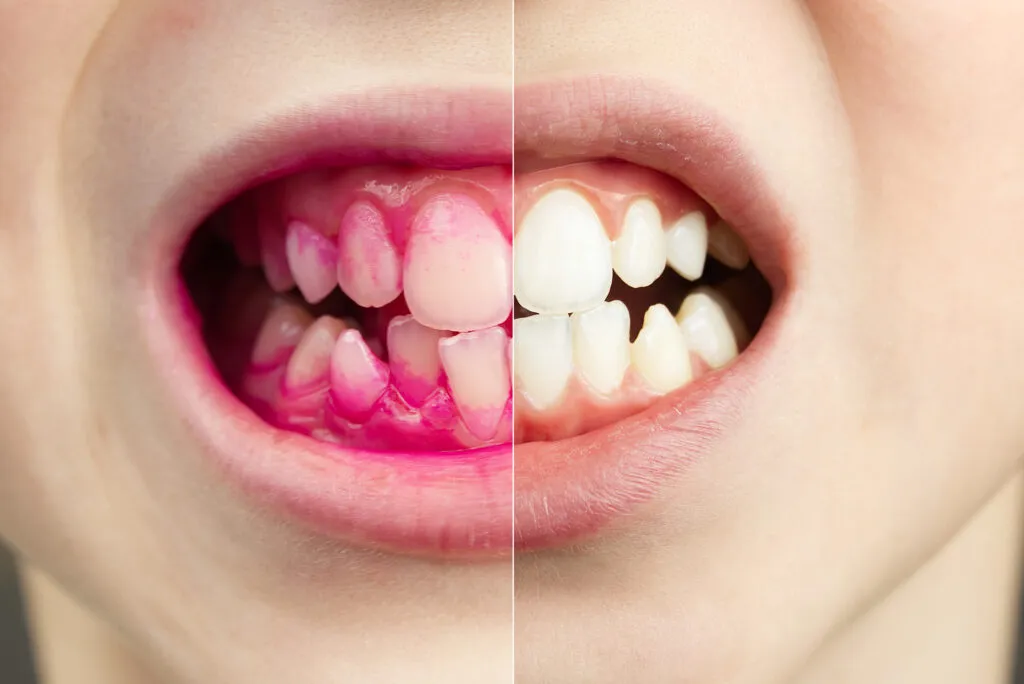
A study examining three groups of orthodontic patients found that those who used disclosing tablets for self-examination at home had less dental plaque than those who didn’t.
Of the other two groups, one had a chairside demonstration at the dentist’s office with a plaque disclosing tablet. The second one received conventional oral hygiene instructions.
How to Use Plaque Disclosing Tablets
Plaque disclosing tablets are a simple way to check how well you or your child are cleaning your teeth.
Here’s how to use them:
- Brush your teeth for at least 2 minutes, cleaning all tooth surfaces and along the gums.
- Floss your teeth.
- Chew one disclosing tablet and swish it with the saliva in your mouth. Use your tongue to help spread the dye along your upper and lower teeth.
- Spit into the sink with the water running. Be careful because the dye can stain surfaces. Rinse it away immediately.
- Examine your teeth and gums in the mirror, checking for stains left by the disclosing tablet.
- Take your toothbrush and re-brush stained areas more thoroughly until the dye disappears.
- Rinse your mouth and spit out the dye. If any dye gets on your lips or the skin around your mouth, clean it immediately to prevent stains.
- Use a fluoridated rinse afterward if your dentist recommends it. Rinsing right after brushing can reduce the anti-cavity benefit of fluoride toothpaste.
How Often Should You Use Them?
Your dentist may recommend plaque disclosing tablets to enhance your home oral hygiene routine. You can use them as often as every day to ensure you remove all the plaque from your teeth.
Pros and Cons of Disclosing Tablets
Plaque disclosing tablets have many benefits, but they also come with some disadvantages.
Pros of Plaque Disclosing Tablets
Advantages of dental disclosing tablets include:
- Helps you brush and floss your teeth in a way that removes plaque more effectively
- Encourages kids to develop good brushing habits
- Promotes clean teeth and plaque removal in people undergoing orthodontic treatments
- Highlights areas in which plaque may hide, especially around the wires and brackets of braces
- Reduces plaque buildup that can cause gum disease and tooth decay
Cons of Plaque Disclosing Tablets
The main downside of plaque disclosing tablets is their ability to stain clothes, skin, and surfaces. Make sure to rinse any areas the dye touches before a stain develops.
Types of Plaque Disclosing Products
Disclosing tablets aren’t the only product containing a special dye that reveals plaque. Factors to consider when choosing a plaque disclosing product are the age of the person using it and the strength of the dye.
Options include:
1. Plaque Disclosing Tablets
Tablets are the easiest product for many people. This is because they contain a more potent dye, making it easier to see dental plaque on the teeth.
Plaque disclosing tablets typically come in a pack of 50 to 100. Remove one tablet from the pack when you’re ready to use it. Simply chew the tablet and swish it with your saliva, then spit any remaining dye into the sink.
2. Plaque Disclosing Toothpaste
Plaque disclosing toothpaste is less common and often costs more per use because it runs out faster.
3. Plaque Disclosing Mouth Rinse
Mouth rinses often use a less visible dye, which can make plaque harder to spot.
Brushing the stains away right after rinsing can also reduce the rinse’s anti-cavity benefit.
Are They Safe?
Yes, plaque disclosing tablets are safe for kids and adults. The only potential risk of using them is their ability to stain your clothing or bathroom fixtures.
They’re very safe if you don’t chew and swallow the tablets. If you worry your child may be swallowing the dye, supervise them when they use disclosing tablets.
Other Oral Health Tips
Plaque disclosing tablets are a great way to boost your oral hygiene routine, but they don’t clean teeth. The dye shows plaque you missed while brushing, which can help lead to cleaner teeth.
Other ways to remove plaque and keep your teeth clean include:
- Brush your teeth for at least 2 minutes twice daily
- Clean between teeth with dental floss or a water flosser
- Brush in gentle, circular motions and focus on the gum line
Where to Buy Disclosing Tablets
Your dentist may recommend a particular type of plaque disclosing tablets. Otherwise, there are many options available. Some of our favorites include:
Fresh Knight Dental Tru-Clean Purple Chews
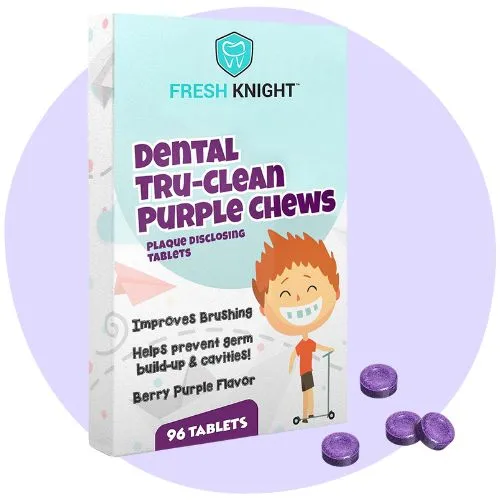
These plaque disclosing tablets have a kid-friendly berry flavor. The purple dye makes it easy to see plaque and bacteria hiding on the teeth and tongue.
Buy Fresh Knight Dental Tru-Clean Purple Chews on Amazon
Dental Check Plaque Disclosing Tablets
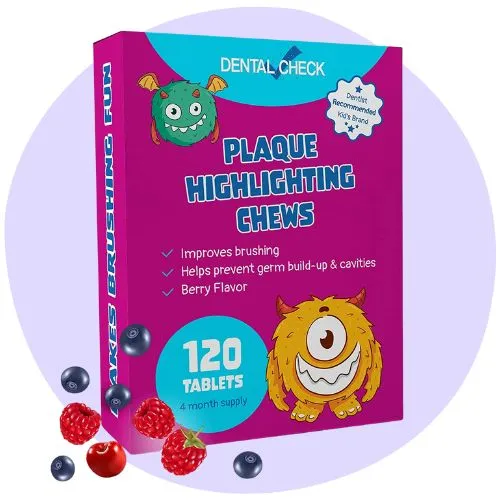
This pack of 120 plaque disclosing tablets is a 4-month supply for one person when used daily. The berry flavor and pink dye make plaque removal fun, particularly for kids.
Buy Dental Check Plaque Disclosing Tablets on Amazon
JJ Care Disclosing Tablets for Kids and Adults
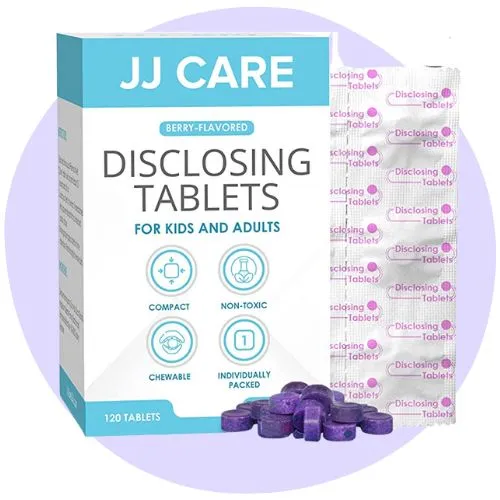
These plaque disclosing tablets are also berry-flavored with a purple dye. The sealed individual packaging makes these tablets easy to travel with.
Buy JJ Care Disclosing Tablets on Amazon
What is Dental Plaque? Why is it Harmful?
Plaque is a sticky film of bacteria that covers your teeth. When you eat sugary or starchy foods, the bacteria in dental plaque release acids that attack tooth enamel.
Over time, dental plaque can lead to:
- Tooth decay
- Cavities (dental caries)
- Bad breath (halitosis)
- Gum disease
- Tooth loss
Summary
Plaque disclosing tablets contain a special dye that shows plaque left behind after regular brushing and flossing. Effective plaque removal helps prevent tooth decay and gum disease.
Plaque disclosing tablets are safe for kids and can help children learn better brushing habits. They’re also helpful for orthodontic patients who have trouble removing plaque around their braces.
The biggest risk of plaque disclosing tablets is their ability to stain clothing, lips, and surfaces.
Sources
- Yavan, MA, et al. “The Effects of Using Plaque-Disclosing Tablets on the Removal of Plaque and Gingival Status of Orthodontic Patients.” Turkish Journal of Orthodontics, 2019.
- Fasoulas, A, et al. “Detection of dental plaque with disclosing agents in the context of preventive oral hygiene training programs.” Heliyon, 2019.
- Schäfer, F, et al. “The effect of oral care feed-back devices on plaque removal and attitudes towards oral care.” International Dental Journal, 2014.
- Memon, AB, et al. “Plaque Score During Orthodontic Treatment in Relation to Age and Gender.” J Pak Dent Assoc, 2015.
- Mensi, M, et al. “Plaque disclosing agent as a guide for professional biofilm removal: A randomized controlled clinical trial.” International Journal of Dental Hygiene, 2020.(6) Rose, J, et al. “A visual evaluation of oral plaque removal utilizing an adjunct enzyme pre-rinse in orthodontic subjects.” The Angle Orthodontist, 2020.

UCLA-trained dentist practicing in public health. Focuses on whole-body approach to dental care.

Experienced medical writer with background in biopsychology and public health.
Related Articles

What Is Mouth Breather Face and How Do I Fix It?
How to Fix Mouth Breather Face Treatment for mouth breather face depends on when it's diagnosed and its underlying cause...

Mouth Breathings vs Nose Breathing
You probably don't think about how you breathe or whether you're doing it correctly. You typically breathe without consc...
The Best Tongue Scrapers for Fresher Breath & Improved Health
A tongue scraper is an oral hygiene tool that cleans your tongue. Read on to learn about its benefits, how to use it, an...
Why Does the Roof of My Mouth Hurt?
A sore spot on the roof of your mouth can make eating, drinking, and talking uncomfortable. Although most causes are min...