8 Tips to Keep Your Teeth Healthy While Traveling

Reader-supported. We may earn a commission from links on this page. Advertising disclosure.
In this article
Travel can throw off your routine, but your teeth do not have to suffer. Whether you’re packing for a quick vacation or traveling long-term, a few simple habits can keep your mouth healthy on the road.
Oral health is a vital part of your overall health. Neglecting it can lead to severe consequences, including:
- Cavities
- Gum disease
- Dental abscesses
- Oral cancer
- Diabetes
- Heart disease
- Weakened immune system
So you definitely don’t want to stop taking care of your teeth just because you’re hitting the road. The good news is that it’s actually pretty easy to keep up with your oral health while traveling.
Here are our top 8 tips to keep your teeth healthy while traveling:
8 Tips to Keep Your Teeth Healthy While Traveling
1. Schedule a check-up before you leave
The first step is to schedule a cleaning and check-up with your local dentist. This is especially important if you’re planning on traveling extensively.
But even if you’re only leaving for a week or two, it’s a good idea to schedule your cleaning a week or two before you leave. That way, you have some time to schedule any necessary follow-up appointments.
It’s much more convenient to take care of any unforeseen dental problems before you pack your bags. Plus, your dentist can recommend or supply you with everything you need for your trip.
2. Buy everything you need (plus a backup) before you leave
When you’re making your packing list, be sure to include:
- A toothbrush
- Toothpaste
- Floss
- Mouthwash
- Any teeth whitening products you use
You can also pack two of everything, just in case you leave one behind accidentally.
These products are generally available in other countries. Still, if you have a favorite brand, special formulas, an electric toothbrush, or a teeth whitening regimen, you might not be able to find them.
If you’re checking your bag, you can bring any size of liquid you want. If you’re traveling with a carry-on only, you can only bring a travel-sized mouthwash (3.4 ounces/100 ml).
Travel tip: Always travel with a full-sized tube of toothpaste in your toiletries bag, even if you only have a carry-on. This technically goes against TSA regulations, but it rarely gets confiscated. Travel-sized toothpastes are often a waste of money.
3. Keep Your Mouth Clean During Travel Hours
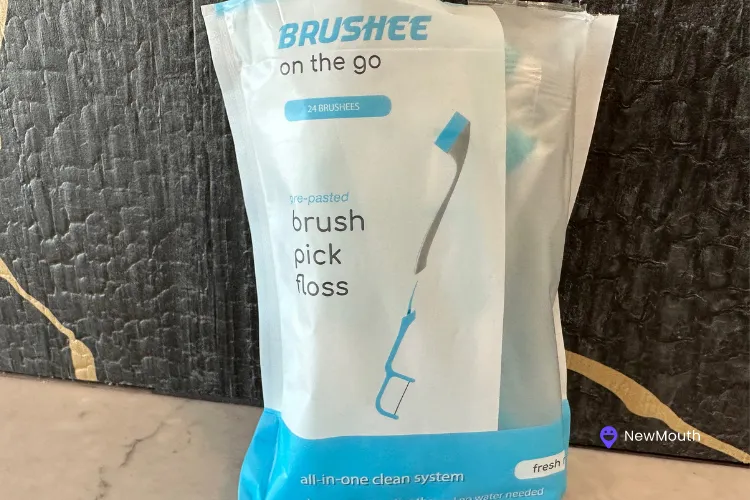
Your mouth can dry out whether you’re on a bus, train, plane, or road-tripping. It’s best to pack some travel-size items to take care of your oral health.
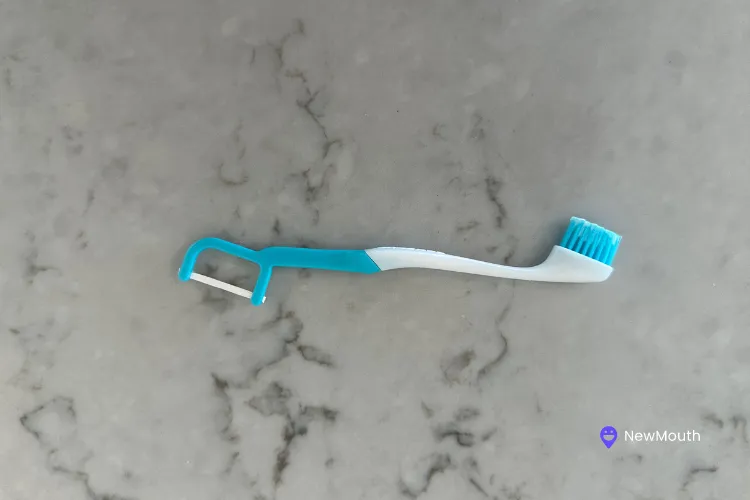
Brushee
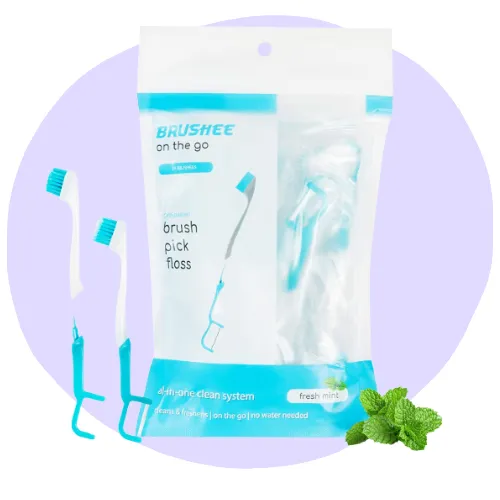
- All-in-one on the go solution
- Pre-pasted brush
- Tooth pick
- Floss pick
4. Always travel with a toothbrush case
Not keeping your toothbrush clean can lead to harmful bacteria getting into your mouth. A toothbrush case is a simple and effective way to keep it clean and sanitized.
If you can, give your toothbrush proper time to dry before putting it back in the case. If you have to pack it wet, unpack it and clean it as soon as you get the chance at your next destination.
5. Bring sugar-free gum
Chewing sugar-free gum can help neutralize acids and minimize bacteria. It also increases saliva production and helps to wash away food particles after a meal.
If you can’t brush your teeth, sugar-free gum can be a good substitute to hold you over until you can.
6. Don’t forget to floss
Whether you’re on the road or at home, always floss your teeth at least once a day. Not flossing can lead to:
- Plaque
- Gum disease
- Bad breath
- Cavities
It might even increase your chances of heart disease.
Multiple studies have linked gum disease to a higher risk of heart disease.1,2 More research is needed to understand this link.
However, the connection is so strong that both the American Dental Association and the American Heart Association have acknowledged the connection between gum disease and heart disease.
Moral of the story: don’t forget to floss.
7. You can whiten on the go
Teeth whitening is one of the most popular cosmetic dental procedures. And thanks to new technology, you can whiten your teeth at home and get results similar or equal to in-office treatment from your dentist.
These at-home whitening kits are safe and convenient. You can easily fit them in your toiletry bag and whiten your teeth wherever you go.
8. Don’t be afraid of dentists in (most) other countries
In many popular tourist destinations, dentists have modern capabilities. And since most medical texts are in English, it’s common for them to speak it.
For cleaning procedures and minor issues like cavities or a chipped tooth, they should be able to help you.
According to one study, cross-border dental care may help some patients, but it can also expose others to substandard care because training, licensing, and regulation vary widely.3
There are a lot of expat forums online and on Facebook that can help you navigate medical scenarios. Be sure to check the dentist’s qualifications and, if possible, customer reviews.
For major procedures such as extractions, root canals, or any surgeries, you might want to fly home to get these done. However, in certain modern cities, you may be able to find help.
References
- Heart Disease and Oral Health. American Dental Association / MouthHealthy. https://www.mouthhealthy.org/all-topics-a-z/heart-disease-and-oral-health/
- Poor Oral Health Linked to Higher Blood Pressure. American Heart Association. https://newsroom.heart.org/news/poor-oral-health-linked-to-higher-blood-pressure-worse-blood-pressure-control
- Cross-border dentistry: Risks and benefits. British Dental Journal / Nature. https://www.nature.com/articles/sj.bdj.2008.403
How to Keep Your Teeth Healthy While Traveling
NewMouth PodcastSources
- Chang, Yoonkyung, et al. “Improved Oral Hygiene Care Is Associated with Decreased Risk of Occurrence for Atrial Fibrillation and Heart Failure: A Nationwide Population-Based Cohort Study.” SAGE Journals, European Journal of Preventive Cardiology, 1 Dec. 2019.
- Dhadse, Prasad, et al. “The Link between Periodontal Disease and Cardiovascular Disease: How Far We Have Come in Last Two Decades?” Journal of Indian Society of Periodontology, Medknow Publications, July 2010.
- Turner, L. “Cross-Border Dental Care: 'Dental Tourism' and Patient Mobility.” Nature News, Nature Publishing Group, 24 May 2008.

Head content writer focusing on scientifically-based, accessible dental information.
Related Articles

Cuts on Your Tongue: Causes and Treatment
Most cuts on the tongue heal quickly, but deep bleeding wounds and swelling need prompt care. Here is what to do, what t...

Alzheimer's and Oral Health
A recent study has linked gum disease to Alzheimer's. This article talks about these two conditions and their connection...

The Effects of Anxiety and Depression on Oral Health
What are the effects of anxiety and depression on oral health? Read on to find out and learn some oral health tips for p...

Are Tonsil Stones Contagious?
No, tonsil stones aren't contagious. They form from debris trapped in your own tonsils. Learn what kissing can spread, h...