Are Teeth Naturally Yellow?


Reader-supported. We may earn a commission from links on this page. Advertising disclosure.
In this article
The natural color of teeth tends to range from white to light yellow. This is because of two layers of dental tissue: enamel and dentin.
Enamel is the hard, whitish outer layer of your teeth. Dentin lies just beneath the enamel to support it. Dentin is naturally yellow.
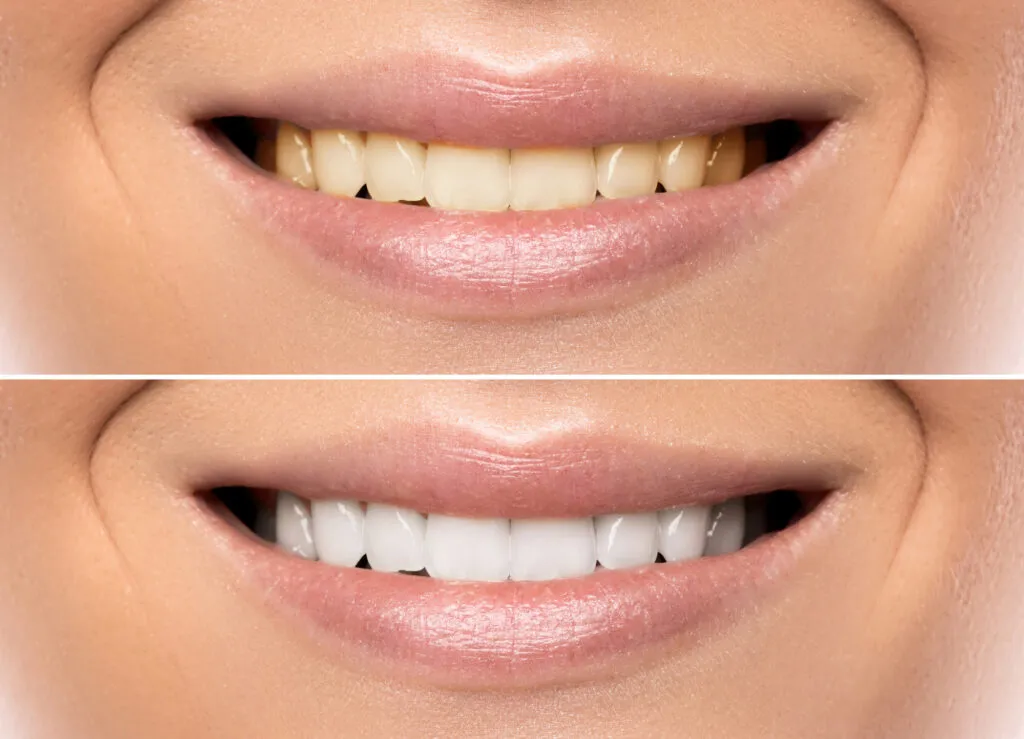
While enamel can have a slightly bluish-white color, it’s also somewhat translucent. This allows some of the yellow dentin to show through.
What Causes Yellow Teeth?
Some people have thinner enamel or yellower dentin for genetic reasons, which may cause you to have naturally yellow teeth.
Alternatively, teeth may develop a more noticeable shade of yellow over time. Staining and enamel wear are two main reasons your teeth may become more yellow with time.
Staining
Enamel or dentin can become stained, resulting in yellow or discolored teeth. Some common causes of tooth stains include:
- Dark foods and drinks such as chocolate, red wine, tea, and coffee
- Tobacco products
- Certain medications, such as tetracycline antibiotics
Staining can be either extrinsic (surface-level) or intrinsic (deep within the tooth). Extrinsic stains aren’t permanent, but they can be difficult to remove with routine oral hygiene practices.
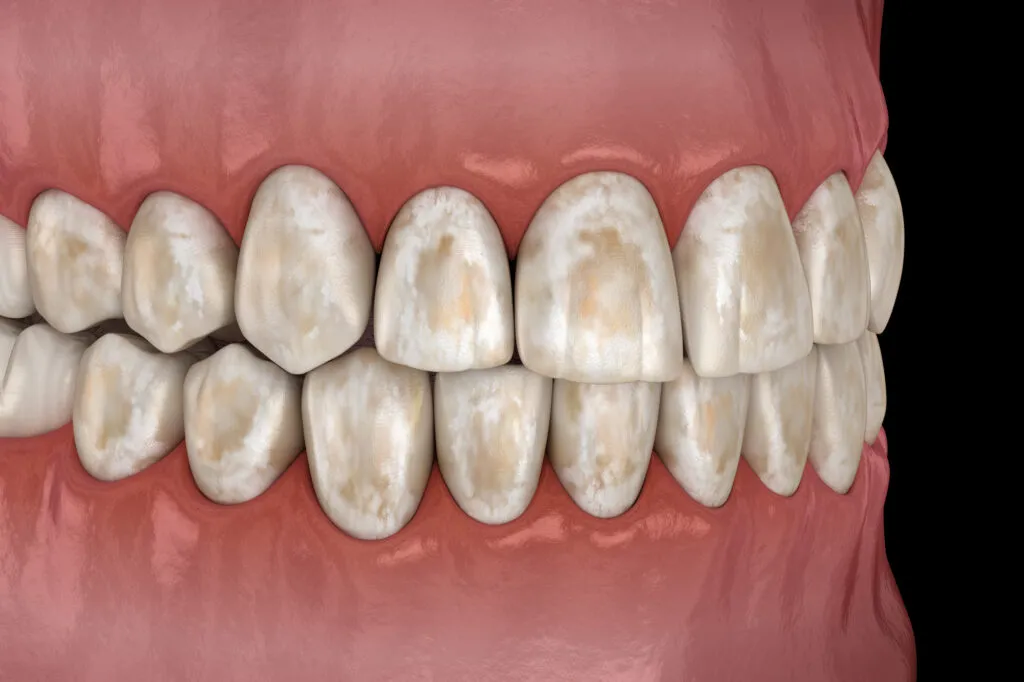
Intrinsic stains, like those caused by tetracycline or fluorosis, are more likely to be permanent. Instead of removing them, dental professionals can cover them up with cosmetic restorations as a first-line option.
Enamel Wear
Enamel wear, or enamel erosion, can also affect teeth color. Not only does it expose the natural yellow color of dentin, but it also leaves your teeth more vulnerable to staining.
Your enamel may be worn down over time by:
- Acidic foods and drinks, such as lemonade and soda
- Sugary foods, which feed bacteria that release acids of their own
- Poor oral hygiene, which allows oral bacteria and plaque to accumulate
- Excessive or aggressive brushing, which damages teeth and gums
- Bruxism (teeth grinding and clenching)
- Age (some enamel thinning is a common part of aging)
While worn enamel won’t grow back on its own, you can strengthen it through a process known as remineralization (see below).
When Shouldn’t Teeth Be Whitened?
If a tooth stain is intrinsic, it won’t be as likely to respond to whitening treatment. Intrinsic stains may be caused by:
- Tetracycline antibiotics
- Excess fluoride exposure (fluorosis)
- Pulp necrosis (dead pulp inside the tooth)
In some cases of tetracycline antibiotic use, professional bleaching can remove intrinsic stains. However, it may take multiple sessions, and the results may need improvement.
At-home whitening products that use abrasives will not affect intrinsic stains. These products can only eliminate extrinsic stains that don’t penetrate deeply into the teeth.
Can You Whiten Dentin?
Research has shown that dentin can respond to bleaching treatments. However, enamel bleaching seems to be more important in changing the overall appearance of your teeth.
One study found that enamel bleaching made more of a color difference than dentin bleaching, even when dentin was more affected by staining. This is good news if you’re concerned about discoloration affecting your dentin.> Get your brightest smile with NewMouth’s top teeth whitening picks for 2026.
5 Ways to Fix Yellow Teeth
Professional whitening, veneers, bonding, crowns, and at-home whitening products can all improve yellow or discolored teeth:
1. Professional Whitening Treatment
Many dentists offer professional whitening treatment with hydrogen peroxide or carbamide peroxide. These are often referred to as bleaching agents because they cause chemical changes in stained enamel.
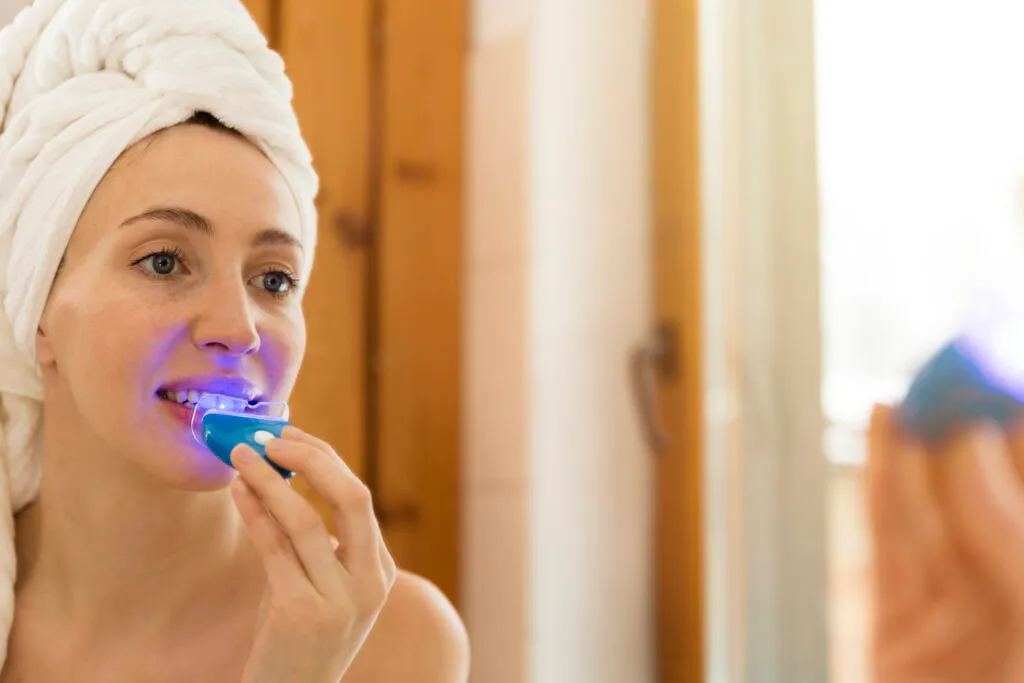
These substances can damage the soft tissues of your mouth at high concentrations. They can also cause tooth sensitivity if left on too long. Having a dentist perform the procedure reduces these risks.
Professional bleaching is the safest and most reliable method for lifting tooth stains.
2. At-Home Whitening Products
Many teeth whitening products are available in stores and online. These are typically grouped into two major categories:
- At-home bleaching treatments, which contain the same bleaching agents that dentists use
- Abrasives, which rub and scrape against the teeth to lift away surface stains
At-home whitening products can effectively remove stains, but they aren’t risk-free. Bleaching agents can cause sensitivity and irritation, and abrasives can damage enamel if they’re too strong or overused.
We at NewMouth have tested and reviewed dozens of at-home whitening products to help you make an informed decision.
3. Oral Hygiene
Keeping your teeth clean can help reduce or remove light staining. Brush, floss, and rinse your mouth to keep food particles and bacteria from accumulating.
Do not brush your teeth too aggressively, as this can cause enamel erosion and worsen staining. Instead, brush thoroughly but gently with a soft-bristled toothbrush.
4. Diet
Your diet plays a significant role in the color of your teeth. You may be able to reduce staining by cutting down on the following:
- Acidic foods and drinks, such as lemonade and soda
- Foods and drinks that are high in sugar, which feed enamel-damaging bacteria
- Dark foods and drinks that can easily stain your enamel
The combination of acid and dark-colored compounds is likely to stain your teeth. Be careful with red wine, dark soda, wine, tea, and coffee.
Another thing to consider is how frequently you consume these foods and drinks. Regarding staining, it’s better to have a glass of wine with dinner than to sip on wine throughout the day.
5. Veneers
If you have intrinsic stains that won't respond to whitening treatments, veneers may be an option.
Veneers are thin, porcelain shells that fit over your teeth. They can improve your teeth’s appearance by giving them a different color, shape, and/or size.
However, veneers won’t last forever, and because they’re purely cosmetic, insurance won’t cover them. Discuss the pros and cons with your dentist to determine if veneers are a suitable option for you.
Other Remedies
There are other remedies for yellow teeth. These include:
- Quitting tobacco use, including smoking and chewing it
- Staying hydrated and rinsing after drinking dark or acidic beverages
- Chewing sugar-free gum to stimulate saliva production and help protect your teeth from bacteria
- Getting crowns or implants if your yellow teeth are damaged internally and need treatment that isn’t just cosmetic
How to Prevent Future Yellowing
To keep your teeth from becoming yellow or losing the results of whitening treatment, you can:
- Maintain a balanced diet high in essential nutrients and low in refined sugars
- Brush and floss your teeth regularly, thoroughly, and gently
- Rinse your mouth after eating or drinking anything acidic or stain-causing
- Avoid tobacco products
- Avoid excessive coffee, tea, and soda consumption
- Stimulate saliva production by staying hydrated and chewing sugar-free gum
None of these things guarantee your teeth will never yellow. But consistently doing all of them will significantly lower your likelihood of tooth staining.> See NewMouth’s top 10 teeth whitening products of 2026.
Summary
The natural color of your teeth may vary from slightly off-white to light yellow. However, your teeth may become yellower over time due to staining or enamel erosion.
Worn enamel won’t return on its own, and some tooth stains are permanent. However, options are available to help restore the color of your teeth.
Teeth whitening, remineralizing enamel, and veneers can improve the appearance of yellow teeth. If you’re concerned about the color of your teeth, talk to your dentist about what treatments might work best for you.
Sources
- Pustina-Krasniqi, Teuta et al. “The relationship between tooth color, skin and eye color.” European Oral Research, 2018.
- Epple, Matthias, et al. "A Critical Review of Modern Concepts for Teeth Whitening." Dentistry Journal, 2019.
- Nogueira, Jhones-Suelone-Pontes, et al. “Does [consumption] of staining drinks compromise the result of tooth whitening?” Journal of Clinical and Experimental Dentistry, 2019.
- Santana, Tauan Rosa, et al. “Role of enamel and dentin on color changes after internal bleaching associated or not with external bleaching.” Journal of Applied Oral Science, 2020.
- Jiang, T et al. “Hydrogen Peroxide Might Bleach Natural Dentin by Oxidizing Phosphoprotein.” Journal of Dental Research, 2018.
- McCaslin, A J et al. “Assessing dentin color changes from nightguard vital bleaching.” Journal of the American Dental Association, 1999.
- Newton, J.T. "The impact of tooth colour on the perceptions of age and social judgements." Journal of Dentistry, 2021.
- Estay, J., et al. "The change of teeth color, whiteness variations and its psychosocial and self-perception effects when using low vs. high concentration bleaching gels: a one-year follow-up." BMC Oral Health, 2020.
- Baharvand, Maryam. "Colors in tooth discoloration: A new classification and literature review." International Journal of Clinical Dentistry, 2014.
- Hassel, Alexander J., et al. "Predicting tooth color from facial features and gender: Results from a white elderly cohort." The Journal of Prosthetic Dentistry, 2008.
- Yu, Bin, et al. "Measurement of translucency of tooth enamel and dentin." Acta Odontologica Scandinavica, 2009.
- Rajan, Nimy, et al. "Shade Selection – Basic for Esthetic Dentistry: Literature Review." International Journal of Contemporary Research and Review, 2020.

UCLA-trained dentist practicing in public health. Focuses on whole-body approach to dental care.

Experienced dental health writer dedicated to providing accurate, accessible information.
Related Articles
Charcoal Toothbrushes: What Are They & Do They Work?
Are charcoal toothbrushes safe? Find out everything you need to know, including what they are, the science behind them,...
Does Baking Soda Whiten Teeth?
Does baking soda whiten teeth? Get the facts on baking soda and hydrogen peroxide for whiter teeth, plus the risks and b...

Why Do Coffee and Tea Stain Your Teeth?
Some food and beverages can cause teeth stains. Coffee and tea are common drinks that do this. Read on to find out how t...
Does Charcoal Toothpaste Work?
Does charcoal toothpaste work? Read on to learn about their claimed benefits and determine if charcoal is bad for your t...