Best Kids' Mouthwash in 2026

Reader-supported. We may earn a commission from links on this page. Advertising disclosure.
In this article
Kids’ mouthwash is not essential for every child. Brushing with fluoride toothpaste matters more. But mouthwash can still be a useful add-on for some kids, especially those with braces, higher cavity risk, or a hard time reaching every surface well while brushing.1,2
The main rule is simple: only use mouthwash when your child is old enough to swish and spit reliably. For most families, that means waiting until at least age 6 unless a dentist gives you a different plan.1
Who Might Benefit From Kids’ Mouthwash?
Kids’ mouthwash can make sense for:
- Children age 6 and older who can spit reliably
- Kids with braces or other orthodontic appliances
- Children who are prone to cavities
- Families looking for a low-friction add-on after brushing
It is not a substitute for brushing, flossing, or regular dental care.
Our Top Picks for 2026
| Product | Best For | Fluoride | What to Know |
|---|---|---|---|
| ACT Kids Anticavity Fluoride Rinse | Best overall | Yes | Strong fit for simple once-daily cavity support |
| Listerine Smart Rinse | Best plaque-focused pick | Yes | Useful for kids who need more help after brushing |
| Tom’s of Maine Children’s Anticavity Fluoride Rinse | Best dye-free pick | Yes | Better for families avoiding extra dyes and artificial flavors |
| Amazon Basics Kids Anticavity Fluoride Rinse | Best budget option | Yes | Practical lower-cost choice |
| Hello Kids Fluoride-Free Rinse | Best fluoride-free option | No | Best only for families that specifically want fluoride-free |
| TheraBreath for Kids Oral Rinse | Best gentler flavor profile | Yes | Good for kids who dislike harsh mint or alcohol-style burn |
| Spry Kids Mouthwash | Best xylitol-based fluoride-free pick | No | More niche than mainstream cavity rinses |
| Firefly Anticavity Fluoride Rinse | Best fun packaging pick | Yes | Works best for kids motivated by themed bottles |
Best Kids’ Mouthwash
ACT Kids Anticavity Fluoride Rinse
ACT Kids is the best overall pick because it is easy for parents to use, easy for kids to understand, and clearly built for cavity prevention rather than novelty.
Why we like it
- Straightforward once-daily routine
- Good fit for families starting mouthwash
- Better default pick than more gimmicky products
What to know
- Fluoride mouthwash is best only for kids who can spit well
- Flavor preference still matters
Listerine Smart Rinse
Listerine Smart Rinse is the best plaque-focused pick in this group. It makes the most sense when a child needs a stronger-feeling add-on after brushing, especially with braces or messy brushing habits.
Why we like it
- Useful for kids who need extra cleanup support
- Familiar brand for many families
- Good fit for orthodontic routines
What to know
- Some children will dislike the stronger taste profile
- It is still an add-on, not the main event
Tom’s of Maine Children’s Anticavity Fluoride Rinse
Tom’s of Maine is the best dye-free pick. It works well for parents who want fluoride cavity support without the brighter colors or more artificial-style ingredient presentation.
Why we like it
- Better fit for ingredient-conscious families
- Still keeps fluoride in the routine
- Good middle ground between mainstream and specialty
What to know
- Flavor still has to work for your child
- It may cost more than basic store brands
Amazon Basics Kids Anticavity Fluoride Rinse
This is the best budget option because it covers the basics at a lower cost. It is a reasonable choice if you need a simple cavity-support rinse for multiple children in one household.
Why we like it
- Lower-cost practical pick
- Easy for family stocking
- Good fit when price matters most
What to know
- It is more of a value play than a premium product
- Some families will prefer a better-known dental brand
Hello Kids Fluoride-Free Rinse
Hello Kids is the best fluoride-free option here. It only makes sense if your family has already decided to avoid fluoride and still wants a kids-specific rinse format.
Why we like it
- Better fluoride-free kids option than adult natural rinses
- Kid-friendly flavor approach
- Useful for families committed to a fluoride-free routine
What to know
- Fluoride-free is not the strongest cavity-prevention choice for many children
- It is more of a preference pick than a default pick
TheraBreath for Kids Oral Rinse
TheraBreath is the best gentler-flavor pick because it tends to appeal to kids who hate harsh or overly medicinal rinses. That can matter more than anything if taste is the main barrier.
Why we like it
- Better chance of daily compliance for flavor-sensitive kids
- Good fit for families avoiding stronger-tasting rinses
- Easy add-on after brushing
What to know
- Flavor preference still varies a lot by child
- It may not offer enough “fun” factor for kids who need that motivation
Spry Kids Mouthwash
Spry is the best xylitol-based fluoride-free pick in this lineup. It works best for families who want a fluoride-free, more niche ingredient approach and understand the tradeoffs.
Why we like it
- Distinct alternative for fluoride-free households
- Child-focused flavor profile
- Useful for parents who specifically want xylitol-based support
What to know
- Not the obvious first choice for high-cavity kids
- More niche than the mainstream cavity rinses above
Firefly Anticavity Fluoride Rinse
Firefly is the best fun-packaging pick because motivation matters. If a themed bottle gets a reluctant child to cooperate with brushing and rinsing, that is a practical benefit.
Why we like it
- Better for kids motivated by packaging and characters
- Fluoride cavity-support angle still matters
- Good for turning oral care into a repeatable routine
What to know
- Packaging alone should not decide the purchase
- Kids can outgrow novelty quickly
How to Use Kids’ Mouthwash Safely
Keep the routine simple.
- Have your child brush and, if needed, floss first.
- Measure the amount listed on the bottle.
- Supervise swishing and spitting.
- Put the bottle away after use.
Do not leave mouthwash where young children can treat it like a drink.
Does Your Child Need Mouthwash?
Usually, no. Plenty of children do well with just fluoride toothpaste and good brushing supervision.
Mouthwash is most useful when:
- A dentist recommends extra cavity support
- Braces make cleaning harder
- Your child is old enough to use it safely
- You need an easier way to add one more layer to the routine
If your child is under 6 or still swallows toothpaste, skip mouthwash for now and focus on brushing habits first.
Sources
- American Dental Association. Fluorosis. MouthHealthy. https://www.mouthhealthy.org/all-topics-a-z/fluorosis
- American Dental Association. Healthy Habits: Babies and Kids. MouthHealthy. https://www.mouthhealthy.org/life-stages/babies-and-kids/healthy-habits-babies-and-kids
- American Dental Association. ACT Smart From the Start. https://pages.ada.org/hubfs/ACT%20Kids%20act_smart_from_the_start.pdf
Sources
- “Mouthrinse (Mouthwash).” American Dental Association, 2021.
- “How Fluoride Helps to Prevent Tooth Decay.” American Dental Association, nd.
- Azarpazhooh, A, et al. “Xylitol for preventing acute otitis media in children up to 12 years of age (Review).” Cochrane Database of Systematic Reviews, 2016.
- Karimi, M, and Dehghan, H. “Comparison of the Efficacy of Plaque Removal of Listerine Smart Rinse Kids and Vi-One Junior Fluoridated Mouthwash in Children Aged 6 to 10 Years.” Interventions in Pediatric Dentistry Open Access Journal, 2019.
- Shahidulla, SM, et al. “Herbal Mouthwash: An Innovative Approach.” International Journal of Pharmaceutical Sciences & Medicine, 2022.
- Bellini, A, et al. “Efficacy of Sea Salt-Based Mouthwash and Xylitol in Improving Oral Hygiene among Adolescent Population: A Pilot Study.” International Journal of Environmental Research and Public Health, 2021.

Experienced medical writer with background in biopsychology and public health.
Related Articles
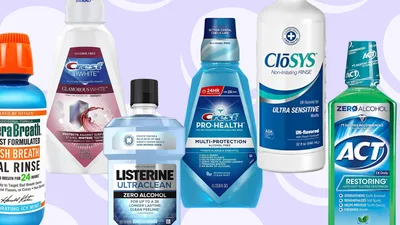
Best Mouthwashes of 2026
Looking for the best mouthwashes of 2026? Here are 7 dentist-approved options that will leave your mouth feeling fresh a...

Inflamed Taste Buds - Causes, Symptoms & Treatments
Swollen and Inflamed Taste Buds A healthy tongue is covered in taste buds. Each taste bud contains 50 to 100 sensory cel...
When Do Kids Start Losing Teeth?
When Do Kids Start Losing Teeth? Children usually begin losing their baby teeth, also known as primary teeth, around 5 o...
5 Ways to Fix a Sharp Tooth
If you feel a sharp or jagged edge in your mouth after crunching into hard food or suffering an injury, you may have a b...