Swollen and Inflamed Taste Buds: Causes and Treatment


Reader-supported. We may earn a commission from links on this page. Advertising disclosure.
In this article
Swollen taste buds appear as tiny, painful bumps on your tongue. They’re usually caused by burning your tongue, eating spicy or acidic foods, or biting your tongue. They’re almost always harmless, and they typically go away in a few days to a week.
See your dentist or doctor if a swollen taste bud doesn’t go away after two weeks, keeps coming back, or comes with a fever or a lump.
If your whole tongue is puffy, you have a swollen tongue, which has different causes. Here are 11 causes of swollen taste buds.
What Are Swollen Taste Buds?
Taste buds are clusters of taste cells on top of your tongue that live inside bumps called papillae. Swollen taste buds are really swollen papillae.
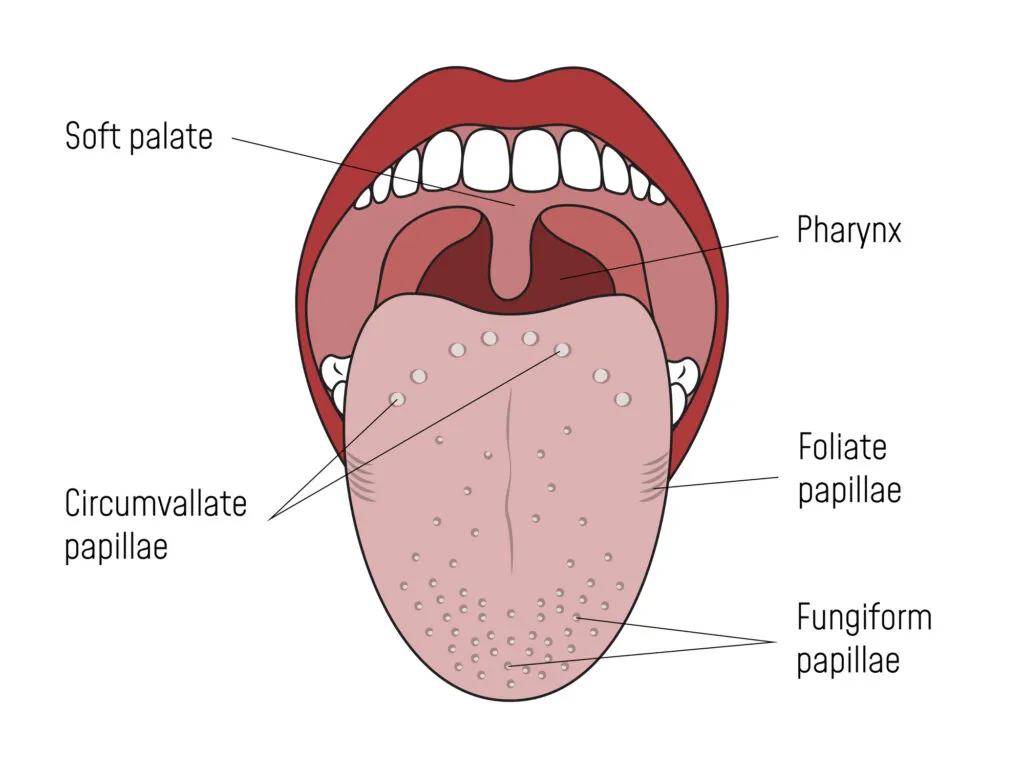
The bigger bumps with taste buds on the tip and sides of your tongue (fungiform papillae) are where you’ll usually see swelling. The rest of your tongue is covered with tiny threadlike bumps (filiform papillae) that don’t have taste buds.
Each taste bud has 50 to 100 taste cells, which are constantly being replaced. The average life span of a taste cell is only about eight to 12 days.2
The big bumps at the back of your tongue that look like a V are normal.
Transient lingual papillitis, or lie bumps, are a common, harmless condition that causes swollen taste buds. Lie bumps appear suddenly and can be painful. They look like small, red or white bumps.
Symptoms of Inflamed Taste Buds
A swollen taste bud is a small, raised dot on your tongue that sticks out more than the other bumps. Signs and symptoms include:
- One or a few red or white bumps
- Pain or tenderness when you eat, drink, or brush your teeth
- Burning, tingling, or itchy feelings
- Increased sensitivity to hot, spicy, or acidic foods
Swollen taste buds are bumps, not open sores. A round sore with a white or yellow center and a red border is probably a canker sore.
Common Causes of Swollen Taste Buds
The first six causes below are common. Remove the source of irritation, and the taste buds will usually go down.
1. Burning Your Mouth
When you burn your tongue on coffee, soup or pizza, the papillae turn red, raised and tender. Taste in that spot can go dull for a while.
2. Spicy and Acidic Foods
Spicy and acidic foods can irritate your papillae, even if they’re not hot. Once you stop eating them, the papillae usually settle down. Frequent culprits include:
- Hot peppers and hot sauce
- Citrus fruits and juices
- Sour or spicy candy
3. Lie Bumps (Transient Lingual Papillitis)
No one knows what causes lie bumps, but they may be due to:
- Biting your tongue or injuring it
- Stress
- Changes in hormone levels
- A viral infection
- An allergy or sensitivity to certain foods
- Braces, toothpaste, or mouthwash
Lie bumps usually go away in a few days to a week.3
There’s also a version of lie bumps called eruptive lingual papillitis that may be contagious. It mainly affects young kids and can come with a fever and swollen glands. If your child has those symptoms, see their doctor.
4. Irritation From Dental Appliances or Teeth
A chipped or sharp tooth, a braces wire, or a denture edge can rub on your tongue and cause the papillae to swell. Apply orthodontic wax to a wire that’s poking you, or see your dentist to have a sharp tooth smoothed or a denture adjusted.
5. Dry Mouth
Your saliva keeps your tongue coated and protected, so if you have dry mouth, little irritations are more likely to inflame your papillae. Many medications can cause dry mouth, so tell your dentist or doctor if you have it.
6. Smoking
Tobacco smoke can irritate your papillae and dry out your mouth, so if you smoke, quit to remove the source of irritation and lower your risk of oral cancer.
Other Causes of Inflamed Taste Buds
These five causes are less common, and you’ll need to see your dentist or doctor to treat the underlying condition.
7. Allergies and Food Sensitivities
Some allergies can cause the papillae or entire tongue to become inflamed. Common triggers include:
- Certain foods
- Toothpaste, mouthwash, or breath fresheners
- Certain medicines
If your tongue becomes itchy after eating a certain food, you may have a food allergy. Call 911 if you develop signs of a severe allergic reaction. These include sudden swelling of the tongue, mouth, or throat, as well as trouble breathing or swallowing.
8. Infections
People tend to call a white, sore bump an infected taste bud, but it may be an irritated papilla or a lie bump. You can’t rule out an infection just by how it looks.
Scarlet fever is an infection caused by strep bacteria. It causes your tongue to become red and bumpy (known as “strawberry tongue”), along with fever, sore throat, swollen tonsils, and a rash that feels like sandpaper.
See your doctor right away if you think you may have scarlet fever. You’ll need to be tested for strep, and if you test positive, you’ll need to take antibiotics.
9. Acid Reflux (GERD)
Stomach acid that frequently backs up into your esophagus and throat is known as gastroesophageal reflux disease (GERD). If stomach acid reaches your mouth, it can irritate your tongue. Treat the acid reflux with your doctor’s help to relieve this irritation.
10. Vitamin Deficiencies
If your body doesn’t have enough iron or certain B vitamins, like vitamin B12 or folate, you can develop glossitis. This can leave your tongue red, sore, and smooth, with shrunken or missing papillae rather than a single swollen bump. A blood test can confirm a vitamin or mineral deficiency, and treatment will address the underlying cause.
11. Oral Cancer
Oral cancer can cause a sore that won’t heal, a lump that doesn’t go away, or a red or white patch on your tongue. Get any of these checked, even if you have no other symptoms. Smoking and heavy drinking increase your risk.
How to Get Rid of Swollen Taste Buds
There’s no guaranteed way to shrink a swollen taste bud overnight. However, you can try the following to relieve soreness until the swelling goes away.
Easing Symptoms at Home
Try the following at home:
- Rinse your mouth with warm saltwater a few times per day.
- Suck on ice chips or drink cold water.
- Avoid hot, spicy, and acidic foods until the taste bud heals.
- Stop using a new toothpaste or mouthwash.
- Don’t pick at or pop the swollen taste bud.
- Take an over-the-counter pain reliever as directed, if needed.
Professional Treatments
Your dentist or doctor will examine the bump if it hasn’t healed. Tests may include a strep test, blood tests, or a biopsy (a small tissue sample). Treatment for an underlying cause may include:
- Antibiotics, if you have scarlet fever or another bacterial infection
- Iron or vitamin supplements, if you have a confirmed deficiency
- Saliva substitutes or a change in medications, if you have dry mouth
Prevention
You can reduce your risk by:
- Waiting until hot food and drinks cool down
- Limiting spicy and sour foods
- Sipping water if you often have a dry mouth
- Not smoking
When to See a Dentist or Doctor
Most swollen taste buds heal on their own. See a dentist or doctor if a swollen taste bud, bump or sore lasts more than two weeks.1
Start with a dentist for a bump that won’t heal, but see a doctor first if you also have a fever, sore throat or rash.
Call 911 for These Symptoms
Call 911 right away if your tongue, lips, mouth or throat suddenly swells, especially with any of these signs of anaphylaxis, a severe allergic reaction:
- Trouble breathing, wheezing or a tight throat
- Trouble swallowing
- Dizziness or fainting
- A widespread itchy rash or hives
If you have an epinephrine auto-injector, use it right away, then call 911.6
Book an Appointment If You Notice
- A bump or sore that hasn’t healed after two weeks
- A bump that keeps growing
- Swollen taste buds that keep coming back
- A red or white patch that doesn’t wipe or scrape off
- Bleeding or numbness in your tongue
- A lump in your tongue or neck
- Pain that makes it hard to eat, drink or swallow
- A red, bumpy tongue with a fever, sore throat or rash
- Unexplained weight loss
Inflamed Taste Buds - Causes, Symptoms & Treatments
NewMouth PodcastSources
- "Swollen Taste Bud: Causes, Symptoms & Treatments." Cleveland Clinic, 2022.
- Feng P, et al. "Taste Bud Homeostasis in Health, Disease, and Aging." Chemical Senses, 2014.
- "Transient Lingual Papillitis (Lie Bumps): Causes & Treatment." Cleveland Clinic, 2023.
- "Glossitis." MedlinePlus Medical Encyclopedia, National Library of Medicine, US Department of Health and Human Services, 2025.
- "Xerostomia (Dry Mouth)." American Dental Association, 2026.
- "Anaphylaxis." American Academy of Allergy, Asthma & Immunology, 2026.
- "Clinical Guidance for Scarlet Fever." Centers for Disease Control and Prevention, US Department of Health and Human Services, 2026.
- "Symptoms & Causes of GER & GERD." National Institute of Diabetes and Digestive and Kidney Diseases, National Institutes of Health, 2020.
- "Signs and Symptoms of Oral Cavity and Oropharyngeal Cancer." American Cancer Society, 2026.
- "Oral Cavity and Oropharyngeal Cancer Causes, Risk Factors, and Prevention." American Cancer Society, 2026.

UCLA-trained dentist practicing in public health. Focuses on whole-body approach to dental care.

Experienced dental health writer dedicated to providing accurate, accessible information.
Related Articles

Are Tonsil Stones Contagious?
No, tonsil stones aren't contagious. They form from debris trapped in your own tonsils. Learn what kissing can spread, h...

Black Tongue: Why Is My Tongue Black?
Most black tongues are black hairy tongue or a stain from bismuth medicine, coffee or tobacco. Learn the causes, how to...
Black Triangles Between Your Teeth
When you look in the mirror, you may notice small black triangles between your teeth. These are gaps that your gum tissu...

Bleeding Gums: Causes, Remedies & Treatment
Bleeding gums can be a sign of gum disease. They can also be caused by other things like brushing too hard or hormonal c...