Exposed Tooth Root - Symptoms, Causes & Treatments


Reader-supported. We may earn a commission from links on this page. Advertising disclosure.
In this article
Key Takeaways
- Exposed tooth roots occur when the gum tissue around the tooth recedes, exposing the root
- Gum disease, aggressive brushing, smoking, and natural aging can lead to exposed tooth roots
- Treatment includes dental procedures such as fillings, root canals, veneers, crowns, and/or soft tissue grafting
- Preventing gum disease and practicing good oral hygiene can reduce the risk of exposed tooth roots
Exposed Tooth Root
A tooth’s root is the portion of the tooth that anchors it in the jawbone. The root is covered by enamel and cementum, which are hard, protective tissues. It also contains the dental pulp, a soft tissue that provides nutrients and nerves to the tooth.
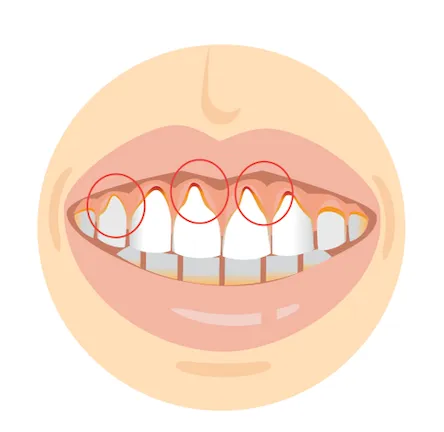
If the gum tissue around a tooth recedes, the root will become exposed. This can happen naturally with aging, gum disease, trauma, or smoking. When the root is exposed, it’s prone to sensitivity to hot and cold temperatures, pain, and decay.
See a dentist if you have an exposed tooth root, as it can lead to dental problems. Treatment options include dental restorations and soft tissue grafting.
When to See a Dentist
If you have any signs or symptoms of an exposed tooth root, visit the dentist. Early warning signs include red, swollen, and bleeding gums or sensitive teeth.
Your dentist can take x-rays and perform a periodontal examination to check for gum disease and other oral health problems. If they find an issue, they will recommend treatment.
An exposed tooth root can indicate a serious dental issue requiring prompt attention to prevent negative consequences.
Common Signs and Symptoms
You may have no symptoms if gum recession is mild. However, as it progresses, you can experience:
- Gums that feel tender and swollen
- Sensitivity to hot and cold temperatures
- Pain when eating or drinking
- Bleeding and pain while brushing teeth
- Teeth that move or feel loose
Is an Exposed Tooth Root Normal?
Yes, in some cases. People may develop exposed tooth roots as the gums recede in the normal aging process.
However, exposed tooth roots can also be caused by smoking, plaque buildup, and poor dental hygiene or habits.
Without treatment, you may have tooth sensitivity. In addition, gum recession may cause cosmetic concerns since it makes the affected tooth look longer and yellower. It may also signify gum disease (periodontal disease), which can cause tooth loss.
What Does an Exposed Tooth Root Look Like?
Healthy gums should look smooth and even across the teeth, with no notable differences in shape or thickness.
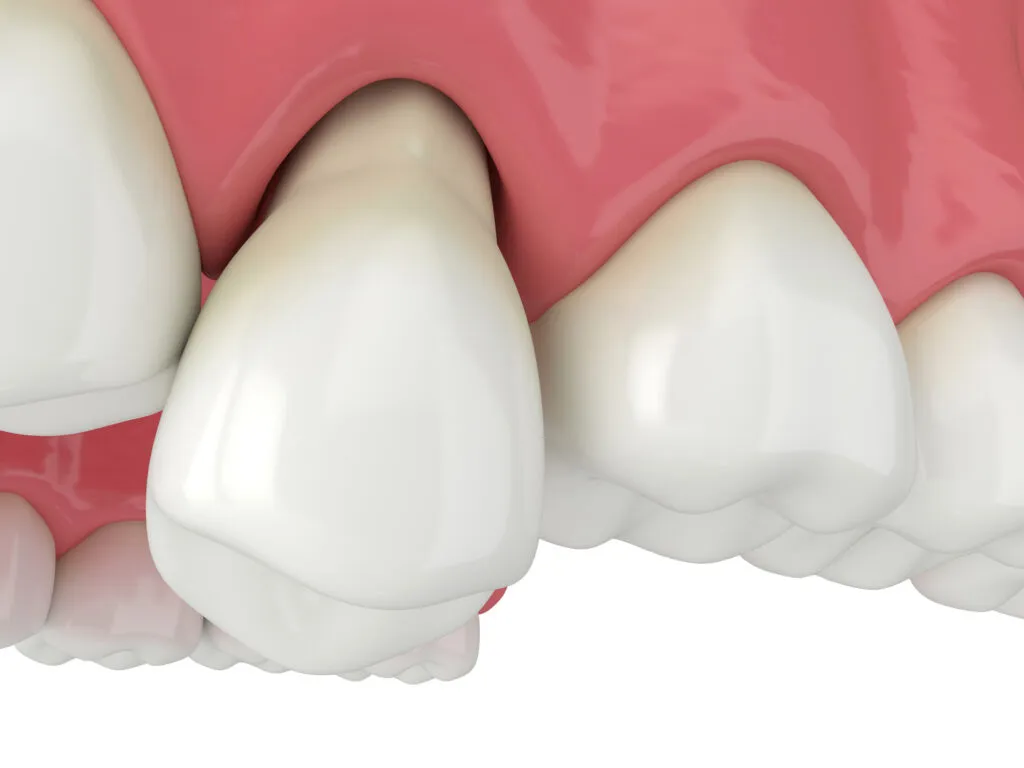
Exposed tooth roots make the gums look uneven as they pull away from the teeth. You may see the yellow root beneath the gum line, and the tooth may look longer than others.
What Causes Exposed Tooth Roots?
Exposed tooth roots have various causes:
Gum disease
Gum disease often happens because of poor dental hygiene, which causes plaque to build up on the teeth. Plaque is a sticky, bacterial film that forms continuously. If it’s not removed, it can cause infections.
In severe gum disease (gingivitis), the gums become inflamed and cover a larger extent of the tooth. Treatments that reduce the inflammation may expose the tooth roots and make them more susceptible to decay.
Receding gums
Receding gums are a common sign of gum disease but can also happen due to aging, anatomical variations, or habits such as aggressive toothbrushing or smoking. As gums recede, they expose more of the tooth root.
Aggressive brushing
Research shows that using a hard- or medium-bristled toothbrush can cause receding gums. Brushing your teeth with a heavy hand is another risk factor.
Tooth grinding
You may inadvertently clench or grind your teeth (bruxism) while sleeping or during stressful times. This can cause defects in the teeth, referred to as abfractions, which go hand in hand with gum recession.
Injury
Trauma to the mouth (such as getting punched or hit in the face with a ball) can damage the teeth and gums. Dental devices like braces or oral piercings can also rub against the gums, causing trauma and gum recession.
Misaligned teeth
Pressure from misaligned teeth may make them more susceptible to gum recession.
How to Treat an Exposed Tooth Root
See a dentist for treatment if you have an exposed tooth root. They may recommend one or more of the following:
- Scaling and root planing — If your exposed tooth root is a symptom of a larger problem (gum disease), removing plaque and bacteria from beneath the gum line can treat the gum disease. However, it may not necessarily solve the problem of the exposed tooth root.
- Gum graft — A dentist takes a piece of healthy gum tissue and grafts it onto the area.
- Filling/ bonding — Bonding a resin over the exposed tooth root can mask the problem.
- Root canal — This treatment may be indicated in cases where an exposed tooth root is causing severe, intolerable sensitivity.
- Veneers — Porcelain veneers can be used to cover the exposed tooth root and improve the appearance of your smile.
- Crown — A crown covers or caps the entire tooth and can be used to protect and strengthen it. A dentist may be able to cover exposed roots with a crown.
- Gingival mask — This removable, artificial gum covers receding gums. It’s an option if you have several teeth with gum recession and exposed roots and is a temporary cosmetic solution.
- Misaligned teeth — Orthodontic treatments such as braces or invisible aligners can help align teeth when the misalignment is the cause of the exposed tooth root(s).
Can an Exposed Tooth Nerve Fix Itself?
Exposed tooth nerves typically need dental treatment. It’s unlikely that an exposed tooth nerve can heal itself or that at-home treatments will be effective.
If you have an exposed tooth nerve, see a dentist as soon as possible. If the cause is left untreated, the problem can worsen over time.
How to Prevent Tooth Root Exposure
You can take steps to prevent tooth root exposure, including:
- Practice good oral hygiene — Brush your teeth twice daily with fluoridated toothpaste and floss daily. But don’t brush aggressively, as this can harm your gums. Some electric toothbrushes have pressure sensors, so you know when you are brushing too hard.
- Get regular dental checkups — Seeing your dentist every 6 months allows them to catch problems early. Regular cleanings also help prevent gum disease, which can cause tooth root exposure.
- Don’t smoke — Smoking can cause gum disease and other oral health problems. More than 40% of people between the ages of 20 to 64 who smoke have untreated gum disease. This is three times as high as people who have never smoked.
- Use a mouthguard — A mouthguard can protect your teeth from sports injuries and tooth grinding (bruxism).
Exposed Tooth Root - Symptoms, Causes & Treatments
NewMouth PodcastSources
- “Gum Recession.” Cleveland Clinic.
- Sarpangala, M., et al. "Etiology and occurrence of gingival recession - An epidemiological study." Journal of Indian Society of Periodontology. 2015.
- Pradeep, K., et al. "Gingival Recession: Review and Strategies in Treatment of Recession." Case Reports in Dentistry. 2012.
- Khocht, A., et al. "Gingival recession in relation to history of hard toothbrush use." Journal Periodontol. 1993.
- Shenava, A., et al. "Gingival mask: A case report on enhancing smiles." Journal of Oral Research and Review. 2014.
- "Brushing Your Teeth.” American Dental Association.
- "Talking to Your Patients about Tobacco Use." Centers for Disease Control. 2024.

UCLA-trained dentist practicing in public health. Focuses on whole-body approach to dental care.

Public health expert and copywriter covering various health topics, including dentistry.
Related Articles

6 Causes of Itchy Gums - Treatments & Prevention
Why are My Gums Itchy? Itchy gums can be frustrating and uncomfortable, and they are more common than you think. There a...

Gum Boils: Symptoms, Causes, Home Remedies & Treatments
What is a Gum Boil? A gum boil, or periodontal abscess, is a small, pus-filled bump on the gums. Often, it happens when...

What Is an Adenoidectomy?
Learn what an adenoidectomy is, how it's done, and the risks involved. Get to know the surgery's side effects and when i...

Tongue Burn vs Burning Tongue Disease
What Causes Tongue Burns? If you've ever burned your tongue, you know how painful it can be. Unfortunately, it's a commo...