Gold Crowns


Reader-supported. We may earn a commission from links on this page. Advertising disclosure.
In this article
What are Gold Crowns for Teeth?
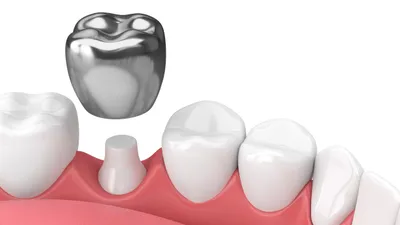
Dental crowns are fitted caps that cover damaged or decayed teeth. They can improve the appearance and structure of a tooth. Porcelain and gold are the two main materials used to make dental crowns.
Gold has been used in dental restorations for over 4,000 years. Gold is a strong material that doesn’t chip easily and can last for decades.
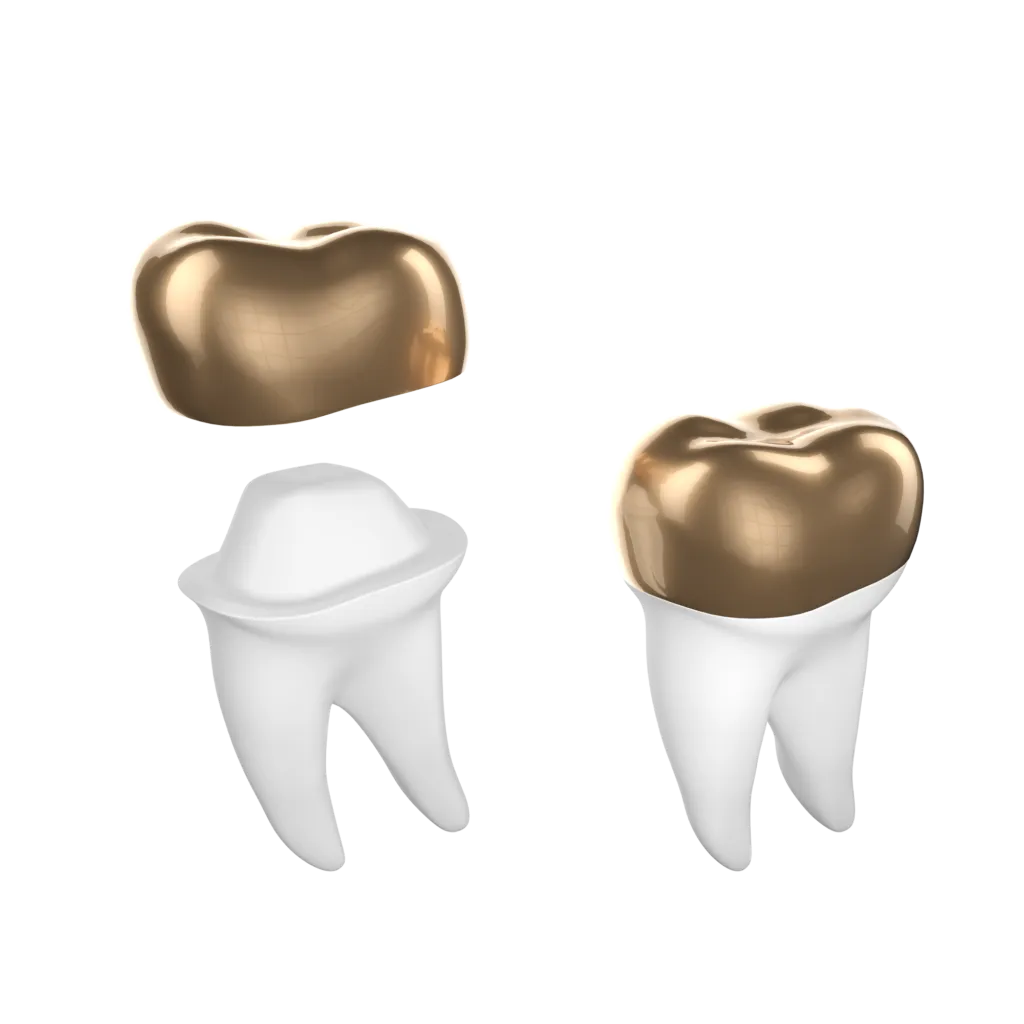
Today, gold and gold alloy dental crowns still exist. However, they are not as popular because of their high price and metallic appearance.
How Much Do Gold Crowns Cost?
Gold crowns range in cost from $800 to $1,400 per tooth, depending on the area of your mouth. Without insurance, a gold crown may cost up to $2,500.
Your dental insurance plan may cover all or part of the cost of the procedure. Coverage depends on whether your crowns are considered cosmetic or medically necessary.
Gold Crown vs. Porcelain Crown
Here are the main differences between gold and porcelain crowns:
Strength
Gold is stronger than porcelain and can withstand significant forces. Porcelain crowns will wear down or fracture more quickly, especially in people who grind their teeth.
Gold crowns are ideal for molars. Less tooth structure needs to be removed than with porcelain. A thin crown made of gold is enough to protect your tooth.
Durability
Gold is more durable than porcelain and can last decades, if not a lifetime. It’s an excellent material for people who have TMJ or grind their teeth. Studies show it wears down enamel less than other materials.
Porcelain crowns have a greater potential of breaking down and fracturing. They react more to chewing forces that may cause craze lines and fractures on the crowns and opposing teeth.
Cost
Gold and porcelain crowns are costly but beneficial oral health investments.
Gold crowns may cost anywhere from $800 to $2,500. Porcelain crowns typically range from $800 to $2,000 per tooth.
Lifetime
With proper maintenance, gold crowns can last several decades or even your entire life. Porcelain crowns can last anywhere from 1 to 5 years.
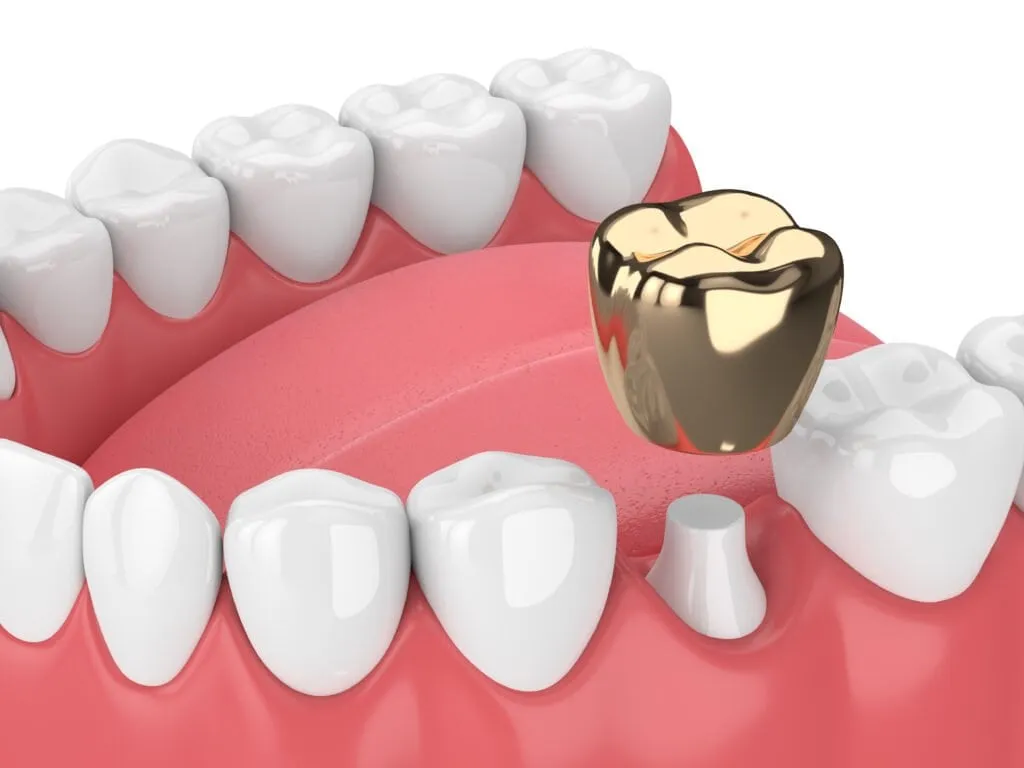
Gold Crown
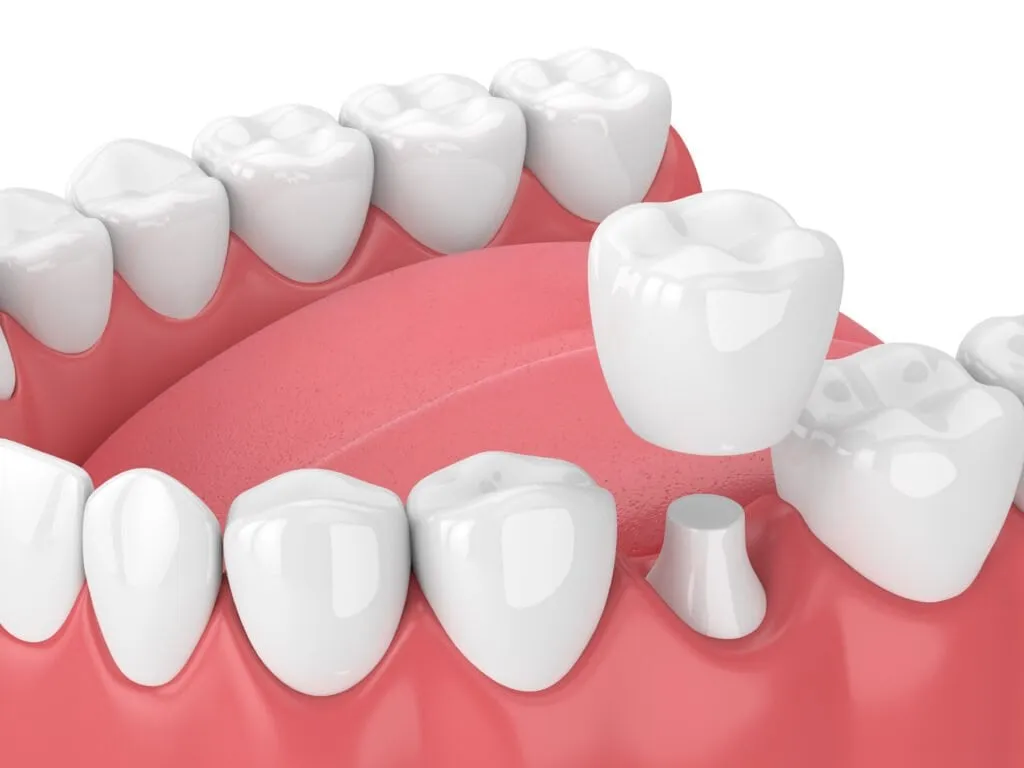
Porcelain Crown
When Should You Get a Gold Crown?
A gold crown is ideal for a tooth that needs structural support. It benefits teeth prone to damage or those that can’t withstand traditional fillings. Other situations where gold crowns may be necessary include:
- A tooth that needs full coverage after a root canal
- Loss of tooth structure from trauma or worn-down teeth
- Severe tooth decay
- Coverage for a dental bridge or implant
Gold Crown Procedure Step-by-Step
The steps of a gold crown procedure include:
- Consultation – Your dentist will evaluate your need for a gold crown through an examination, dental X-rays, and your medical history.
- Local anesthetic – Your dentist will administer local anesthetic to numb the area.
- Tooth preparation – Your dentist will remove/shape your tooth to make space for the crown. Gold crowns typically require the least tooth reduction compared to other crown types.
- Dental impression – A putty impression and bite registration will be taken to create a mold of your teeth. They will be sent to the laboratory to fabricate your custom gold crown.
- Temporary crown – Your dentist will install a temporary crown chairside to protect your tooth until your gold crown is ready.
- Permanent cementation – At your second visit, your dentist will check the fit and bite of your gold crown. If no changes are needed, they will permanently cement it.
Pros and Cons of Gold Crowns
Like any dental treatment, gold crowns have their advantages and disadvantages. Knowing them is vital in making an informed decision about your oral health.
Pros of Gold Crowns
Gold crowns are strong, durable, and long-lasting. Their other advantages include:
- They won’t irritate your gums
- They are highly resistant to corrosion
- They rarely fracture or chip
- They won’t wear down your surrounding teeth
- They are very malleable and can seal the margin of a tooth to prevent further decay
Cons of Gold Crowns
The most common downsides of a gold crown include:
- They don’t look as natural as a porcelain crown
- They can be expensive
- Alloys can cause allergic reactions, especially if you have any metal allergies
What to Do if a Gold Crown Falls Out
If a gold crown falls out, call your dentist to re-cement, repair, or replace it to avoid side effects. If you cannot get an immediate appointment, try a temporary over-the-counter cement before getting it permanently cemented.
Remember in the meantime to:
- Avoid hard, crunchy foods to prevent harm to the underlying tissues.
- Clean the crown gently with soap and water. Keep it in a safe place to bring to your dentist.
- Gently brush your teeth to keep the area clean and void of plaque and irritants.
- Chew on the opposite side of your mouth if possible.
Summary
Gold dental crowns are still in use today. The fitted caps are made of gold or a gold alloy. They cover damaged or decaying teeth.
Many people prefer porcelain dental crowns for their natural look. However, gold crowns are strong and durable. They require less tooth reduction than their porcelain counterparts.
While expensive, gold crowns can last a lifetime with proper care.
Gold Teeth
NewMouth PodcastSources
- Knosp, H., et al. “Gold in Dentistry: Alloys, Uses, and Performances.” Gold Bulletin, Springer Link, 2003.
- Kwon, M., et al. “Two-body wear comparison of zirconia crown, gold crown, and enamel against zirconia.” Journal of the Mechanical Behavior of Biomedical Materials, National Library of Medicine, 2015.
- Barlett, D., et al. “Complex multiple fixed and combined fixed and removable prosthodontics.” Advanced Operative Dentistry, Elsevier, B.V., 2011.(4) “Gold Tooth Crown Facts and History.” Colgate, Colgate-Palmolive Company, 2022.
- “What are crowns made of, anyway?” Penn Dental Medicine, University of Pennsylvania, 2018.
- Wagner J., et al.. “Long-term clinical performance and longevity of gold alloy vs ceramic partial crowns.” Clinical Oral Investigations, National Library of Medicine, 2003.

UCLA-trained dentist practicing in public health. Focuses on whole-body approach to dental care.

Content contributor with health coaching background, skilled at simplifying dental concepts.
Related Articles
Temporary Crowns
Temporary crowns help replace a tooth until a permanent crown is made. This article offers you an in-depth explanation o...
What to Know About Dental Crowns
What are dental crowns, and when they're necessary? Our article covers everything from types of dental crowns to the pro...

Overdentures: Types, Pros and Cons
Learn about overdenture implants and how it differs from standard dentures. Get information on the types of overdentures...
Dental Implant Failure: Signs, Causes, and Treatment
Dental implant failure is uncommon but possible. Learn what causes a dental implant to fail, how to spot the signs, and...