The 7 Symptoms of a Cavity


Reader-supported. We may earn a commission from links on this page. Advertising disclosure.
In this article
Cavities, or tooth decay, are common dental problems that can lead to significant pain, discomfort, and even tooth loss if left untreated. Here we discuss the various symptoms of cavities, their causes, and effective prevention and treatment methods.
7 Symptoms of a Cavity
Cavities can take months or even years to spread to the dentin and/ or pulp, causing symptoms like:
- Tooth sensitivity to hot, cold, and sweet foods and beverages
- Tooth pain ranging from mild to severe when eating or drinking
- Toothache ranging from mild to severe when not eating
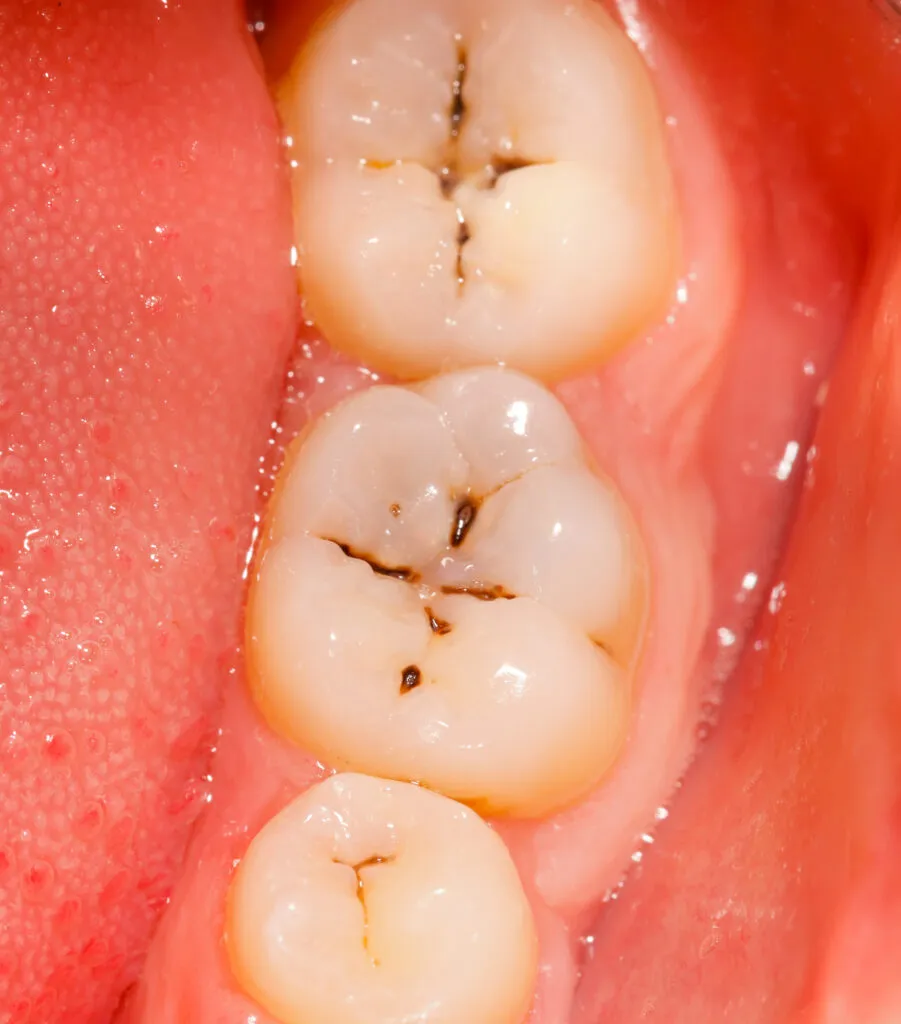
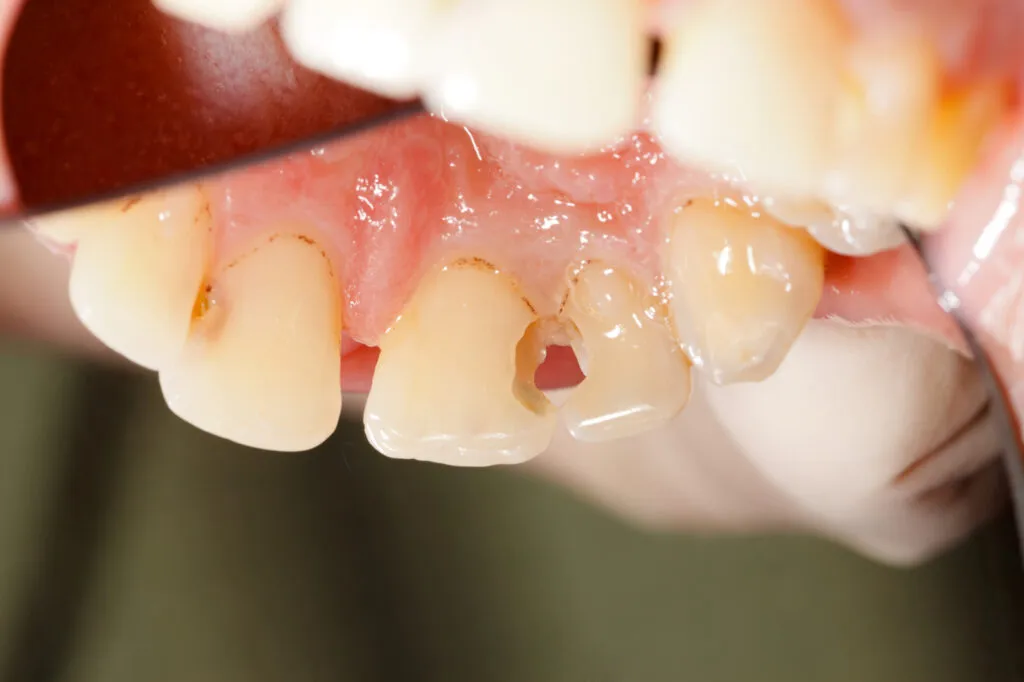
- Changes in tooth color
- Visible holes or pits
- Bad breath
- Bleeding gums
- Difficulty chewing
Dental professionals recommend regular checkups and cleanings to catch tooth decay early. If you experience any of these symptoms, you should see a dentist.
What Do Experts Think?
According to Dr. David Chen, DDS, “the symptoms of dental cavities will vary depending on the stage and size of the cavity. For small cavities in the early stages, there are usually no symptoms, which is why most people are unaware that they even have them.”
“For medium-sized cavities that have grown beyond the enamel and into the dentin of the tooth, patients will start to feel sensitivity to either sweet, cold, or hot,” he adds. “For large cavities that have grown beyond the dentin and into the nerve of the tooth, symptoms such as a constant dull ache or a throbbing pain becomes common.”
Dr. Chen recommends seeking early treatment for cavities. This is a great decision for your oral health and a great financial decision.
What Causes Cavities?
Bacteria thrive off the sugar particles left on teeth after eating and drinking. One of the byproducts of bacteria is acid, which erodes tooth enamel over time.
If a dentist doesn’t treat a cavity in the enamel, tooth decay can spread to the tooth’s inner layers, causing pain and dangerous infection that can travel to other parts of the body.
Common risk factors associated with the formation of cavities include:
- Sugary/acidic foods and beverages
- Dental plaque build-up
- Frequent snacking
- Lack of good oral hygiene
- Bedtime breastfeeding or bottle feeding
- Lack of fluoride
- Dry mouth
- Heartburn
- Eating disorders
How are Cavities Diagnosed
During a routine dental exam, the dentist will take X-rays and look in your mouth for visible signs of cavities and gum disease.
According to Dr. David Chen, an early cavity is nearly undetectable to the naked eye and dental X-rays. It is not until the cavity achieves approximately 30% of tooth demineralization that it starts to appear on X-rays.
Once it reaches this threshold, dentists can detect a visual change in the enamel to one of two colors, white or brown. As the cavity progresses, it turns into a darker shade of brown until it forms a cavitation or hole in the tooth.
How are Cavities Treated?
Cavities can’t heal on their own, so they need proper treatment. In the early stages, prescription-based fluoride toothpaste to help slow decay progression.
Treatment will depend on the type of cavity and tooth location. Common options include:
- Dental fillings — Fillings fill cavities in enamel and dentin with various materials (silver, gold, composite resin, glass ionomer).
- Root canals — Needed for cavities that have reached the pulp. It involves removing the pulp from the affected tooth and taking out the nerve endings that cause pain.
- Tooth extraction — This procedure removes the entire tooth if the cavity has progressed to the point where it can no longer be replaced.
If left untreated, cavities can cause irreversible tooth damage, resulting in tooth loss. Tooth decay can also cause severe pain, infection, and abscess.
A tooth abscess (or pocket of pus) can form and spread to other areas in the body; an untreated abscess can be fatal.
How to Prevent Cavities?
Oral health is a critical part of overall health. Regular dental checkups are recommended to prevent cavities. Other tips on preventing tooth decay include:
- Brush your teeth with fluoridated toothpaste at least twice a day
- Avoid sugary foods and drinks
- Floss daily to remove plaque build-up
- Get dental sealants to protect the chewing surfaces of teeth
- Limit snacking between meals
By understanding the symptoms of cavities, their causes, and the importance of prevention, people can take proactive steps to maintain oral health and avoid the complications associated with tooth decay.
Sources
- Rathee M. & Sapra A. “Dental Caries.” Treasure Island (FL): StatPearls Publishing, 2023.
- “Tooth decay.” National Institute of Dental Craniofacial Research, 2024.
- Hennessy, B. “Cavities.” Merck Manual.
- “Cavities: What are they and how do we prevent them?” American Dental Association.
- “The tooth decay process: How to reverse it and avoid a cavity.” National Institute of Dental Craniofacial Research.
- “Overview: Tooth decay.” Cologne, Germany: Institute for Quality and Efficiency in Health Care (IQWiG), 2023.

UCLA-trained dentist practicing in public health. Focuses on whole-body approach to dental care.

Related Articles

Teeth Fillings
What is cavity filling? Find out what it's for and learn more about cavities, including symptoms, causes, and treatment...
How Much Does Wisdom Tooth Removal Cost?
Find out how much it costs to have your wisdom teeth extracted. Our simple guide will discuss the cost of wisdom tooth e...

Teeth Cleaning Costs
Regular dental cleanings help prevent gum disease and tooth decay. Find out how much you'll pay for each type of cleanin...

Dental Anesthesia
Dental anesthesia eliminates pain and reduces anxiety during procedures. Here are the three types, their benefits, and p...