LED Teeth Whitening Kits: Safety and Efficacy

Reader-supported. We may earn a commission from links on this page. Advertising disclosure.
In this article
Light Emitting Diode System (LED) teeth whitening treatments are becoming a more popular teeth whitening method. They speed up the whitening process so you can achieve a brighter smile in less time.
However, there are many concerns regarding the safety of LED teeth-whitening lights. We discuss them in this article.
What Are the Safety Considerations for LED Teeth Whitening?
Current research shows that LED teeth whitening is safe and effective for at-home use. Users shouldn’t experience adverse side effects if they follow the manufacturer’s instructions.
LED light on your teeth is safer than ultraviolet (UV) light. UV light can cause cell mutations, while LED lights don’t. LED teeth whitening kits speed up the whitening reaction without the risks associated with UV light.
Remember that the results from any teeth whitening treatment will depend on the user’s lifestyle and the cause of their teeth discoloration. Always talk to a dental professional to know whether you’re a good candidate for whitening treatments.> Get your brightest smile with NewMouth’s top teeth whitening picks for 2026.
How Does LED Teeth Whitening Work?
The bleaching agent in teeth whitening is usually made from carbamide or hydrogen peroxide. LED lights accelerate the chemical reactions that whiten your teeth by breaking down the peroxide faster, activating the whitening gel.
This light is provided in your teeth whitening kit. The average time to use the kit ranges from 10 to 20 minutes. However, this will vary according to the manufacturer’s instructions.
Potential Side Effects of LED Teeth Whitening
While LED teeth whitening systems are safe when used properly, you must know their potential side effects. These include:
- Teeth sensitivity
- Mild gingival irritation
- Tingling sensations
- Uneven whitening on the teeth
How Do Results and Risks Compare to Other Whitening Methods?
Here’s a comparison of the results and risks of LED teeth whitening and other teeth whitening treatments:
| LED Teeth Whitening | At-Home Teeth Whitening (Strips, Toothpaste, or Gels) | Professional In-Office Whitening | |
|---|---|---|---|
| How It Works | Uses LED lights to speed up the teeth whitening process | Uses abrasives or low amounts of peroxide | Involves the supervision of dental professionals |
| Safety | Generally safe when you follow the manufacturer’s instructions | Generally safe, but can lead to sensitivity with improper use | Safe for most people since it involves a dental professional’s supervision |
| Efficacy | More effective than other at-home whitening treatments like whitening strips or toothpaste | Results are gradual but still effective | Uses higher concentrations of hydrogen or carbamide peroxide, making the treatment more effective |
Precautions to Take with LED Lights for Teeth Whitening
If you’re planning to use LED teeth whitening, you must take note of the following precautions:
- Follow the package instructions on how often to use the LED lights
- Apply a protective barrier (like dental resin or petroleum jelly) on your gums before LED teeth whitening
- Choose a reputable product from trusted brands to ensure safety and effectiveness
- Visit a dental professional if you experience pain and gum irritation from the treatment
Summary
- LED teeth whitening kits are becoming a popular method to whiten teeth at home.
- These kits are generally safe, but you should always follow the manufacturer’s instructions.
- Tooth sensitivity and gum irritation are the most common side effects of using LED teeth whitening kits.
- Choose a reputable product and use a protectant around your gums to minimize the side effects of teeth whitening kits.
- It’s always best to consult a dental professional before starting treatment with LED teeth whitening.
Sources
- Carey, C.M. “Tooth whitening: what we now know.” J Evid Based Dent Pract, 2014.
- Sholom et al. “UV effects in tooth enamel and their possible application in EPR dosimetry with front teeth.” Health Phys, 2010.
- Zhao et al. “Treatment Durations and Whitening Outcomes of Different Tooth Whitening Systems.” Medicina (Kaunas), 2023.
- Yoshino, F., Yoshida, A. “Effects of blue-light irradiation during dental treatment.” Jpn Dent Sci Rev, 2018.
- Hayward et al. “A clinical study of the effectiveness of a light emitting diode system on tooth bleaching.” Open Dent J, 2012.
- Tredwin et al. “Hydrogen peroxide tooth-whitening (bleaching) products: review of adverse effects and safety issues.” Br Dent J, 2006.
- “Whitening.” American Dental Association.

Web content writer specializing in making dental research accessible to diverse audiences.
Related Articles
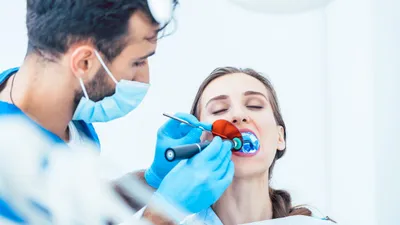
LED Teeth Whitening Reviews
Want to know everything about LED teeth whitening? This guide has got you covered – learn about LED teeth whitening, how...
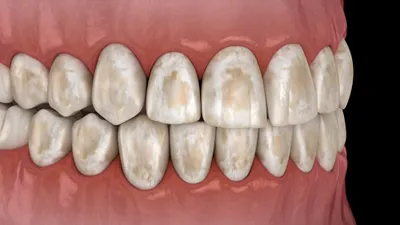
How to Deal with Extrinsic Tooth Stains
What Are Extrinsic Stains? Extrinsic stains, or surface stains, are the easiest to remove with whitening. These stains a...
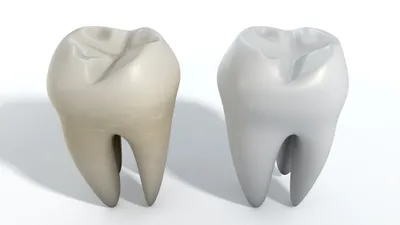
How to Deal with Intrinsic Tooth Stains
Intrinsic stains are deeper than surface stains and harder to eliminate. Rather than a pigmented substance leaching into...
Teeth Whitening Swabs: Pros, Cons, and Cost
Want whiter teeth without the hassle (and expense) of a trip to the dentist? Find out everything you need to know about...