Teeth Whitening Treatment


Reader-supported. We may earn a commission from links on this page. Advertising disclosure.
In this article
Everyone wants the perfect smile for a big day. If you’re looking for a safe, fast, and budget-friendly way to brighten your smile, you can try a few proven teeth whitening methods.
These methods can deliver noticeable results without damaging your enamel or leaving you with an overly artificial look. Let’s sort through your options.
Types of Teeth Whitening Treatment
When choosing a whitening method, consider three main factors: cost, speed, and sensitivity. Here’s how your options stack up.
Over-the-Counter Products
Most over-the-counter (OTC) teeth whitening products use hydrogen peroxide concentrations ranging from 3% to 14%. Expect these to lighten your teeth by one to three shades on average.
-
Pros — Affordable (around $20 to $60 per kit), easy to buy, and convenient for home use.
-
Cons — Results can be uneven due to inconsistent gel contact, and it usually takes one to two weeks to notice significant improvement.
Some experience mild tooth sensitivity or gum irritation, particularly if the strips are left on longer than recommended. Using toothpaste formulated with potassium nitrate (often labeled as “sensitive toothpaste”) for a few weeks before and during treatment can significantly reduce these side effects.
A 2023 systematic review confirmed that top-rated OTC strips could deliver results comparable to professional at-home treatments, provided they’re used consistently according to instructions.
Professionally Supervised At-Home Kits
Professionally supervised at-home kits use custom trays filled with carbamide peroxide gels at concentrations typically ranging from 10% to 22%. These systems often produce a brighter, more uniform smile, with results averaging three to five shades lighter.
-
Pros — Custom trays offer better contact with teeth, enhancing effectiveness and reducing gum irritation.
-
Cons — More expensive upfront ($150 to $400), though the trays can be reused, lowering the cost of touch-ups in the long run.
Your dentist monitors your progress and adjusts treatment if you experience sensitivity or gum irritation. Treatments usually require nightly application for two to four weeks.
The gradual process helps you manage sensitivity while still getting professional-level results at home. Research has consistently shown that at-home kits provide lasting whitening benefits, often comparable to in-office treatments, with fewer relapses.
In-Office Chairside Whitening
In-office whitening treatments use powerful hydrogen peroxide gels (25% to 40%) applied professionally. Some offices also promote lasers or LED lights, but evidence suggests these do not substantially improve the final outcome.
-
Pros — Provides immediate and dramatic results, often up to eight shades brighter after a single session.
-
Cons — The highest cost ($300 to $800 per session), and more intense but temporary tooth sensitivity is common.
In-office treatments usually involve one to three visits lasting about an hour each. Dentists typically apply desensitizing agents post-treatment to manage discomfort.
Before choosing in-office whitening, make sure you have no active tooth decay, exposed roots, or gum disease. Addressing these issues first helps prevent complications or increased sensitivity during whitening.
Get your brightest smile with NewMouth’s top teeth whitening picks for 2026.
Cost Breakdown and Decision Guide
Here’s a quick comparison of popular whitening methods to help you choose the best option for your situation:
| Method | Typical Shade Gain | Cost Range | Time Frame |
|---|---|---|---|
| Over-the-counter strips | 1–3 shades | $20–$60 | 1–2 weeks |
| Professional at-home kits | 3–5 shades | $150–$400 | 2–4 weeks |
| In-office chairside whitening | Up to 8 shades | $300–$800+ | 1–3 sessions |
Keep in mind, whitening treatments aren’t covered by insurance because they’re considered cosmetic procedures.
How to Minimize Sensitivity from Teeth Whitening
Peroxide-based whiteners penetrate tooth enamel to break down stains without stripping or permanently damaging it.
Sensitivity is the most common temporary side effect, affecting roughly half of whitening users, especially with higher peroxide concentrations. It usually resolves within a few days after treatment ends.
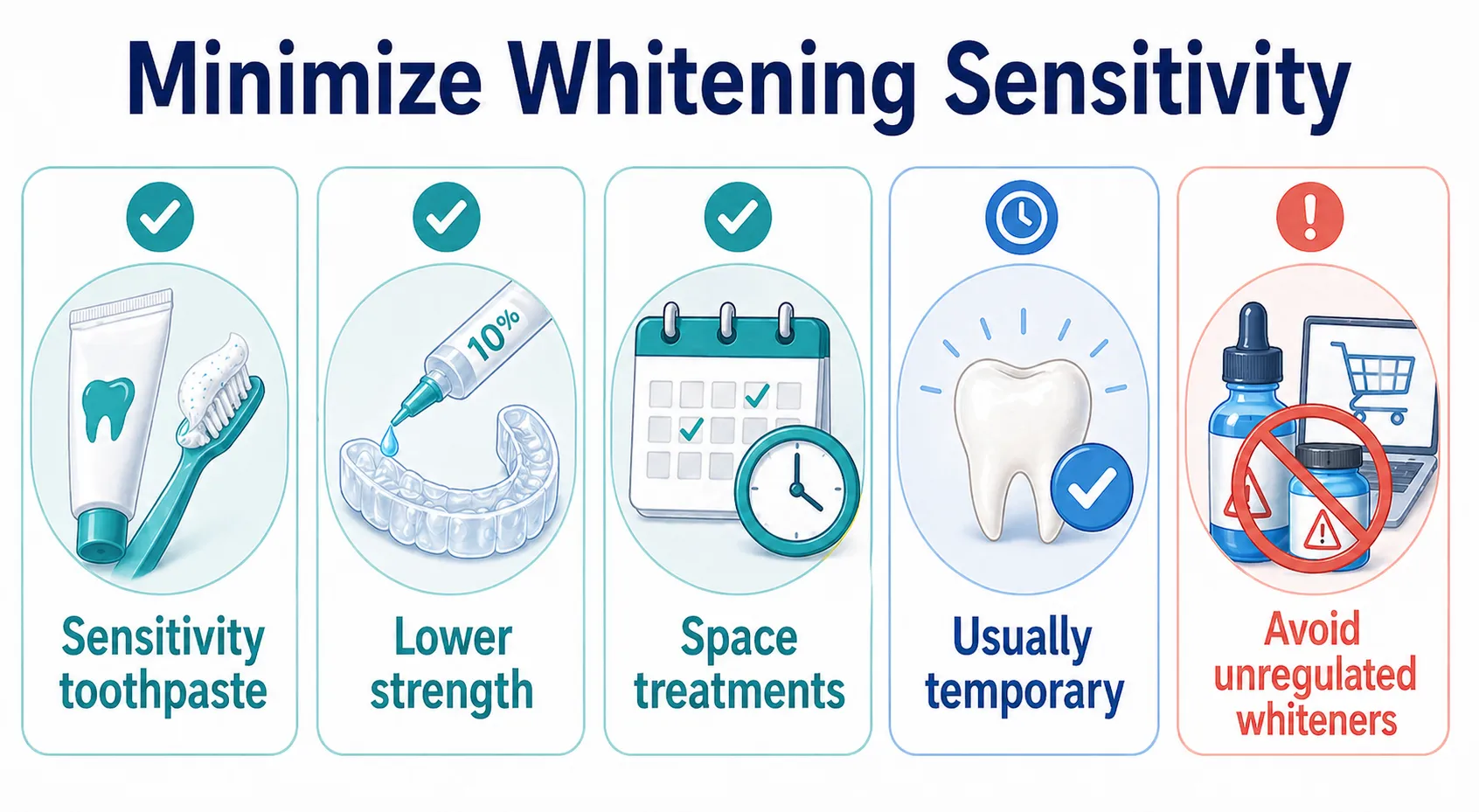
Here’s how you can minimize discomfort:
-
Use sensitivity toothpaste — Potassium nitrate formulas soothe nerves and reduce sensitivity.
-
Lower peroxide concentrations — Opting for lower strengths (like 10% carbamide peroxide) can ease discomfort without compromising effectiveness.
-
Space out treatments — Taking short breaks between applications helps your teeth recover.
Studies confirm that properly used whitening products don’t harm enamel permanently. A 2024 dental study found that minor enamel softening from peroxide gels fully reverses within weeks, especially if you maintain good oral hygiene and use fluoride products.
Stay cautious about buying unregulated whiteners online. They might contain unsafe ingredients or overly high peroxide levels, which can damage your teeth or gums.
See NewMouth’s top 10 teeth whitening products of 2026.
How to Maintain Teeth Whitening Results
Your brighter smile can typically last six months to a year, depending on your lifestyle and habits. Coffee, red wine, and tobacco speed up the return of stains, so moderation helps extend results.
To maintain a white smile longer:
-
Use a straw — Drinking beverages like coffee or tea through a straw limits contact with your front teeth.
-
Rinse regularly — Swishing water immediately after consuming staining foods reduces discoloration.
-
Touch-up periodically — Keep your custom whitening trays handy and apply a mild peroxide gel every few months for a budget-friendly maintenance routine.
With simple upkeep, you can keep your brighter smile for much longer.
Myths and Natural Alternatives for Teeth Whitening
Many natural and DIY whitening methods circulate online, but scientific research casts doubt on their effectiveness:
-
Charcoal toothpaste — Mostly abrasive, so it removes surface stains but does not whiten deeply.
-
Baking soda — Mildly abrasive, so it offers limited stain removal but no significant bleaching effect.
-
Coconut oil pulling — Little evidence supports significant whitening.
-
Lemon juice — Acidic DIY remedies like lemon juice can erode enamel and cause permanent damage.
Stick to methods backed by dental research for safe, reliable results. Choosing the right teeth whitening method comes down to your personal priorities—budget, speed, and sensitivity tolerance.
Before starting, schedule a quick dental check-up to ensure your teeth and gums are healthy, setting you up for optimal results.
Sources
- Aidos M, Marto C M, Amaro I, et al. “Comparison of In-Office and At-Home Bleaching Techniques: An Umbrella Review of Efficacy and Post-Operative Sensitivity.” Heliyon, 2024.
- Krayem E, Banerjee A, Milly H. “Evaluating the Efficiency of Two Different Over-the-Counter Tooth-Whitening Systems: A Randomized Controlled Clinical Trial.” BDJ Open, 2024.
- Agarwal R, Vasani N, Mense U S, et al. “Effects of Online Marketplace-Sourced Over-the-Counter Tooth-Whitening Products on Colour, Microhardness, and Enamel Surface Topography: An In Vitro Study.” BDJ Open, 2024.
- Santos M E, da Silva R O, Cavalcanti Y W, et al. “At-Home Bleaching Versus Whitening Toothpastes for Treatment of Tooth Discoloration: A Cost-Effectiveness Analysis.” Journal of Applied Oral Science, 2024.
- de Boa P W M, Santos K S, de Oliveira F J D, et al. “Can Carbamide Peroxide Be as Effective as Hydrogen Peroxide for In-Office Tooth Bleaching and Cause Less Sensitivity? A Systematic Review.” Restorative Dentistry & Endodontics, 2024.
- American Dental Association. “Whitening.” ADA.org, 2022.
- FDI World Dental Federation. “Dental Bleaching Materials (Policy Statement).” FDI World Dental Federation, 2011.

UCLA-trained dentist practicing in public health. Focuses on whole-body approach to dental care.

Experienced dental health writer dedicated to providing accurate, accessible information.
Related Articles

Are Teeth Naturally Yellow?
The natural color of teeth tends to range from white to light yellow. This is because of two layers of dental tissue: en...
Why Whitening Treatment Can Burn Your Gums
It's expected for people to prefer straight, white teeth. Orthodontic treatment can improve the alignment of your teeth,...
Teeth Whitening Costs
Unsure about how much teeth whitening costs? This article breaks down the average cost of teeth whitening options, payme...
Laughland Teeth Whitening Review (2026)
Getting whiter teeth at home can feel empowering—until sensitivity, confusing directions, or unclear expectations make y...