Colgate Optic White Product Reviews


Reader-supported. We may earn a commission from links on this page. Advertising disclosure.
In this article
With more people searching for affordable and effective ways to brighten their smiles, at-home teeth whitening solutions have soared in popularity.
Colgate Optic White offers several products: teeth whitening toothpaste, a convenient whitening pen, and a high-tech LED whitening device. Each promises noticeable results.
But how do these options stack up against professional treatments, and which method best suits your needs? Let’s break down the science behind Optic White and help you set realistic expectations.
Everything We Recommend
- Optic White® Renewal Toothpaste
- Optic White® Advanced Toothpaste
- Optic White® Pro Series Toothpaste
- Optic White® Express Whitening Pen
- Optic White® ComfortFit LED Kit
How Colgate Optic White Works
All Colgate Optic White products use hydrogen peroxide, the gold-standard active ingredient in teeth whitening. Peroxide concentrations vary, impacting whitening speed and intensity:
-
Toothpaste contains about 2% hydrogen peroxide, gently reducing everyday surface stains.
-
Whitening pens contain 5% hydrogen peroxide, suitable for targeted stain removal.
-
LED kits deliver about 9% hydrogen peroxide for more rapid whitening, approaching professional-strength treatments.
When applied, hydrogen peroxide breaks down, releasing oxygen that penetrates tooth enamel. This oxygen reaction breaks apart and dissolves yellow and brown stain molecules (chromogens), visibly brightening teeth.
What is the LED Mouthpiece For?
Colgate’s LED whitening device features a violet light (~405 nm), marketed to “amplify” the effects of peroxide. However, research indicates the actual benefits of the LED component are limited:
-
Minimal extra whitening — Studies have found little to no significant difference in results when using LED lights compared to peroxide alone.
-
Enhanced motivation — Despite limited clinical benefits, LED devices may encourage consistent use, indirectly improving whitening outcomes.
Get your brightest smile with NewMouth’s top teeth whitening picks for 2026.
Colgate Optic White Product Reviews
The NewMouth team put together a list of Colgate’s best Optic White products. Read below for our full review:
Optic White® Renewal Toothpaste
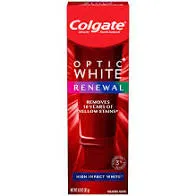
Based on our research, the Optic White® Renewal Toothpaste uses a 3 % hydrogen peroxide formula combined with fluoride. It’s designed to remove surface stains like those from coffee, tea, and wine.
Colgate indicates it can tackle up to 15 years’ worth of such stains with twice-daily brushing for two weeks while being enamel-safe and containing cavity-fighting fluoride. It’s also been lauded for a gentle, minty flavor.
| Pros | Cons |
|---|---|
| Gentle yet effective 3% hydrogen peroxide formula | Whitening toothpastes aren’t effective on intrinsic stains |
| Fluoride protects against cavities and supports enamel | May not be suitable for sensitive teeth |
| Hydrogen peroxide is a professionally recommended ingredient for teeth whitening | Does not repair long-term enamel damage |
| Smooth mint flavor that doesn’t irritate |
Optic White® Advanced Toothpaste
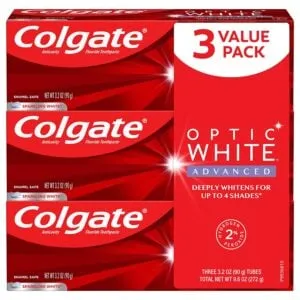
We recommend the Optic White® Advanced Toothpaste for those seeking a reliable daily maintenance option. It delivers a mild 2 % hydrogen peroxide strength, which is enough to remove surface stains over time while remaining enamel-safe.
Users appreciate its everyday wearable strength, affordability, and that it’s still dentist-approved for whitening maintenance.
| Pros | Cons |
|---|---|
| Mild whitening suitable for everyday use | Whitening is gradual; not ideal for quick, dramatic results |
| Contains fluoride to remineralize and protect enamel | May not suffice for deeper, intrinsic stains |
| Budget‑friendly and widely available |
Optic White® Pro Series Toothpaste
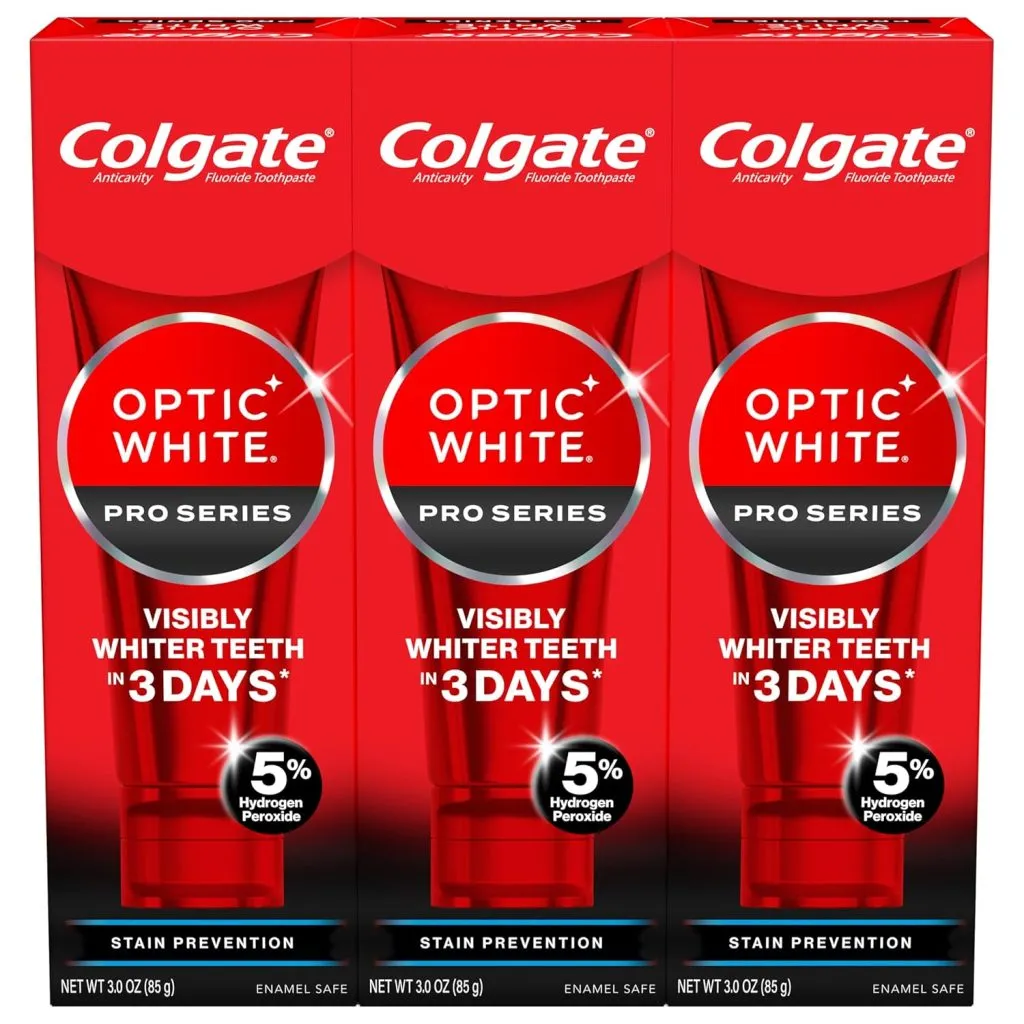
The Optic White® Pro Series Toothpaste is Colgate’s most potent OTC option, containing a 5 % hydrogen peroxide formula. It’s marketed to whiten deeply, with claims of removing up to 15 years of stains when used as directed.
This formula manages to be enamel-safe while also being vegan, gluten- and sugar-free, expanding its appeal to a wider audience.
| Pros | Cons |
|---|---|
| Highest peroxide concentration among OTC Colgate options | Stronger peroxide taste may be off-putting to some |
| Delivers rapid whitening results | Higher price per ounce than milder alternatives |
| Easy to remove (through toothbrushing) | |
| Enamel-safe and allergen-friendly (gluten-free, sugar-free, vegan) |
Optic White® Express Whitening Pen
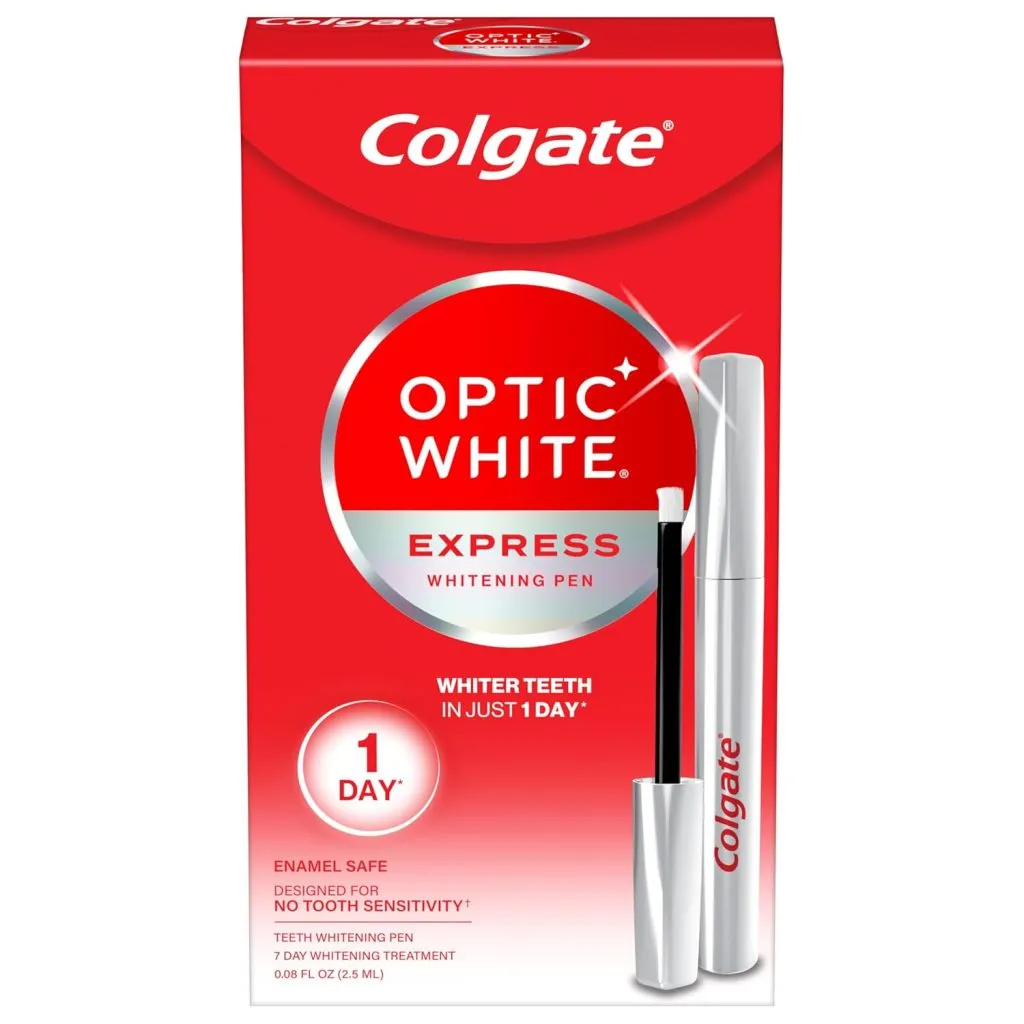
The Optic White® Express Whitening Pen is a hydrogen peroxide gel in a precision-tip pen. Colgate states it provides visible whitening after just three applications—potentially achieving noticeable results in one day.
The gel is enamel-safe and designed to avoid tooth sensitivity. Users value its precision and convenience, though volume per use is small, and it may tingle slightly.
| Pros | Cons |
|---|---|
| Fast-acting; visible results may appear in as little as one day | Contains only a week’s worth of product at standard usage |
| Portable and precise application | Possible temporary tingling or sensitivity |
| Convenient for on-the-go touch-ups | Whitening effect may be temporary and require repeat application |
Optic White® ComfortFit LED Kit
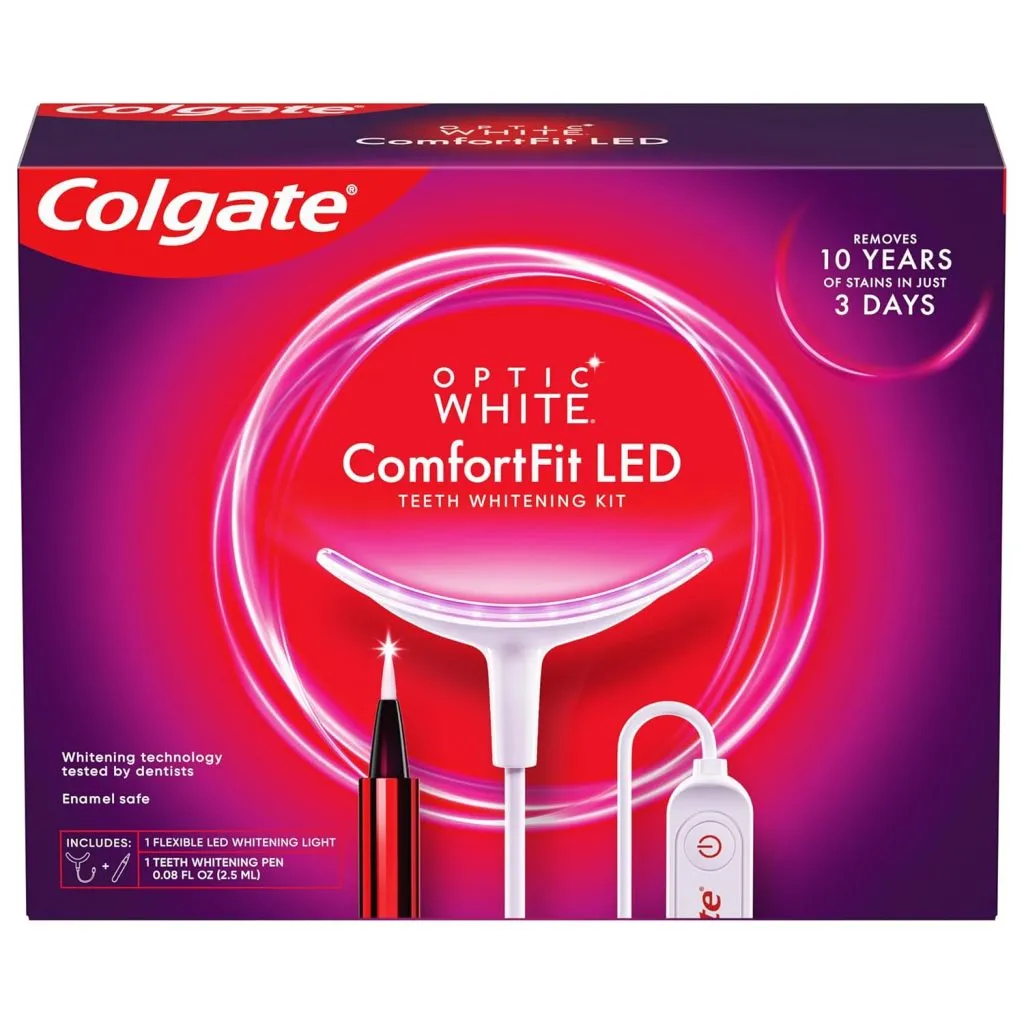
The Optic White® ComfortFit LED Kit is a great option if you’re after high-impact whitening. This kit includes a flexible LED light device plus a whitening pen containing hydrogen peroxide serum.
The application takes 10 minutes daily, with users reporting an even whitening. While purchasing the kit can be an investment upfront, users appreciate the dentist-tested sensitivity claims and rechargeable flexibility.
| Pros | Cons |
|---|---|
| Combines light technology with whitening gel for potentially faster results | Higher initial cost than standalone pastes or pens |
| Uniform application thanks to LED mouthpiece | Requires daily commitment for full treatment |
| Low sensitivity and rechargeable design | Does not work on dental fixtures (crowns, veneers, fillings, or dentures) |
How Effective is Each Optic White Product?
The effectiveness of Colgate Optic White depends on the product chosen and how consistently it’s used. Here’s what you can typically expect:
-
Toothpaste (2% peroxide) — Results visible after two to four weeks of daily use; typically improves teeth by two to three VITA shades
-
Whitening Pen (5% peroxide) — Noticeable whitening usually after about 10 nightly applications, achieving three to four shades of improvement
-
LED Kit (9% peroxide) — Faster results are often noticeable within one week, delivering similar shade improvements (three to four VITA shades) but in a shorter period
Other factors influencing your results include stain severity, how strictly you follow the recommended routine, and whether you have existing dental work (like fillings or crowns) that won’t whiten with these products.
Is Colgate Optic White Safe?
Teeth whitening, including Colgate Optic White, is generally safe, but being aware of possible side effects helps you use these products responsibly.
Tooth Sensitivity
Short-term sensitivity is common and typically mild, resulting from peroxide temporarily irritating tooth nerves. Manage this by:
-
Spacing sessions — Allowing a day or two between treatments.
-
Using desensitizing toothpaste — Brushing with a potassium nitrate toothpaste can significantly reduce discomfort.
-
Reducing wear time — Following instructions carefully and not exceeding recommended exposure.
Gum and Soft-Tissue Concerns
When peroxide contacts gums, mild irritation can occur. Prevent or minimize discomfort by:
-
Applying gel carefully — Keep gel away from gumlines and lips.
-
Wiping away excess — Promptly remove gel from gums or skin to avoid chemical irritation.
-
Checking for irritation — If you notice prolonged discomfort, pause use until gums heal.
Enamel Integrity
Research consistently shows that enamel damage from Colgate Optic White products is minimal, provided they’re used correctly:
-
Neutral pH formula — Products formulated at neutral or near-neutral pH prevent enamel erosion.
-
Fluoride inclusion — Fluoride products help remineralize and protect enamel during whitening.
-
Limited duration — Temporary and short-term use significantly reduces enamel risks.
When Should You Stop Teeth Whitening?
If you feel the following symptoms, pause the use of teeth whitening products and seek a consultation with your dentist:
-
Severe or prolonged sensitivity lasting over 48 hours
-
Visible gum sores or ulcers developing
-
Persistent or worsening enamel roughness noticed by tongue or visually
-
Signs of allergic reaction, such as significant swelling or rash> See NewMouth’s top 10 teeth whitening products of 2026.
Choose the Right Product for Your Needs
Balancing your specific goals, sensitivity concerns, and budget can help you pick the right teeth whitening method confidently. However, if you’re still unsure which Colgate Optic White product suits you best, we’ve provided a simple breakdown:
-
Toothpaste — Ideal for gradual whitening, daily maintenance, and budget-friendly stain removal.
-
Whitening pen — Best for targeted, overnight whitening—easy to apply precisely without mess.
-
LED whitening device — Offers faster results but at a higher cost, with slightly increased sensitivity risks.
Keep in mind that teens, people with significant dental work (crowns, fillings), or severe discoloration should consult dental professionals before starting at-home whitening.local dentist’s office. It has a patented whitening formula and LED device to give people whiter smiles.
Sources
- Barbosa L M M, Centenaro G G, Cordeiro D C F, et al. “Effect of Light-Activation Systems Associated With Whitening Pens in the Bleaching Efficacy and Hydrogen Peroxide Permeability.” Journal of Dentistry, 2025.
- Krayem E, Banerjee A, Milly H. “Evaluating the Efficiency of Two Different Over-the-Counter Tooth-Whitening Systems: A Randomised Controlled Clinical Trial.” BDJ Open, 2024.
- Mehrgan S, Kermanshah H, Ranjbar Omrani L, et al. “Comparison of Charcoal-Containing, Hydrogen-Peroxide-Containing, and Abrasive Whitening Toothpastes on Color Stability of a Resin Composite: An In Vitro Study.” BMC Oral Health, 2021.
- Elias-Boneta A, Mateo L, Delgado E, et al. “Clinical Investigation of Whitening Efficacy on Colgate Optic White Dentifrice.” IADR/AADR/CADR Annual Meeting, 2014.
- International Organization for Standardization. “ISO 28399:2021 Dentistry — External Tooth Bleaching Products.” International Organization for Standardization, 2021.
- American Dental Association. “Whitening (Oral Health Topics).” American Dental Association, 2022.
- Scientific Committee on Consumer Products. “Opinion on Hydrogen Peroxide, in Its Free Form or When Released, in Oral Hygiene Products and Tooth Whitening Products.” European Commission, SCCP/1129/07, 2007.

Licensed dental specialist focusing on personalized dental content writing and blogging.

Experienced content writer dedicated to delivering accurate, unbiased dental information.
Related Articles
Hydrogen Peroxide for Teeth Whitening: Is It Safe?
Is hydrogen peroxide safe for teeth whitening? Learn more about hydrogen peroxide teeth whitening, how it works, and the...
Teeth Whitening Swabs: Pros, Cons, and Cost
Want whiter teeth without the hassle (and expense) of a trip to the dentist? Find out everything you need to know about...

Teeth Whitening Treatment
Teeth whitening can lighten teeth and remove stains and discoloration. Learn more about it—including what to expect, the...

Arc Teeth Whitening Kit Review (2026)
Learn everything about the ARC teeth whitening kit, including how it works, costs, and how it compares to other popular...