How to Maintain Dental Veneers


Reader-supported. We may earn a commission from links on this page. Advertising disclosure.
In this article
How to Maintain Dental Veneers
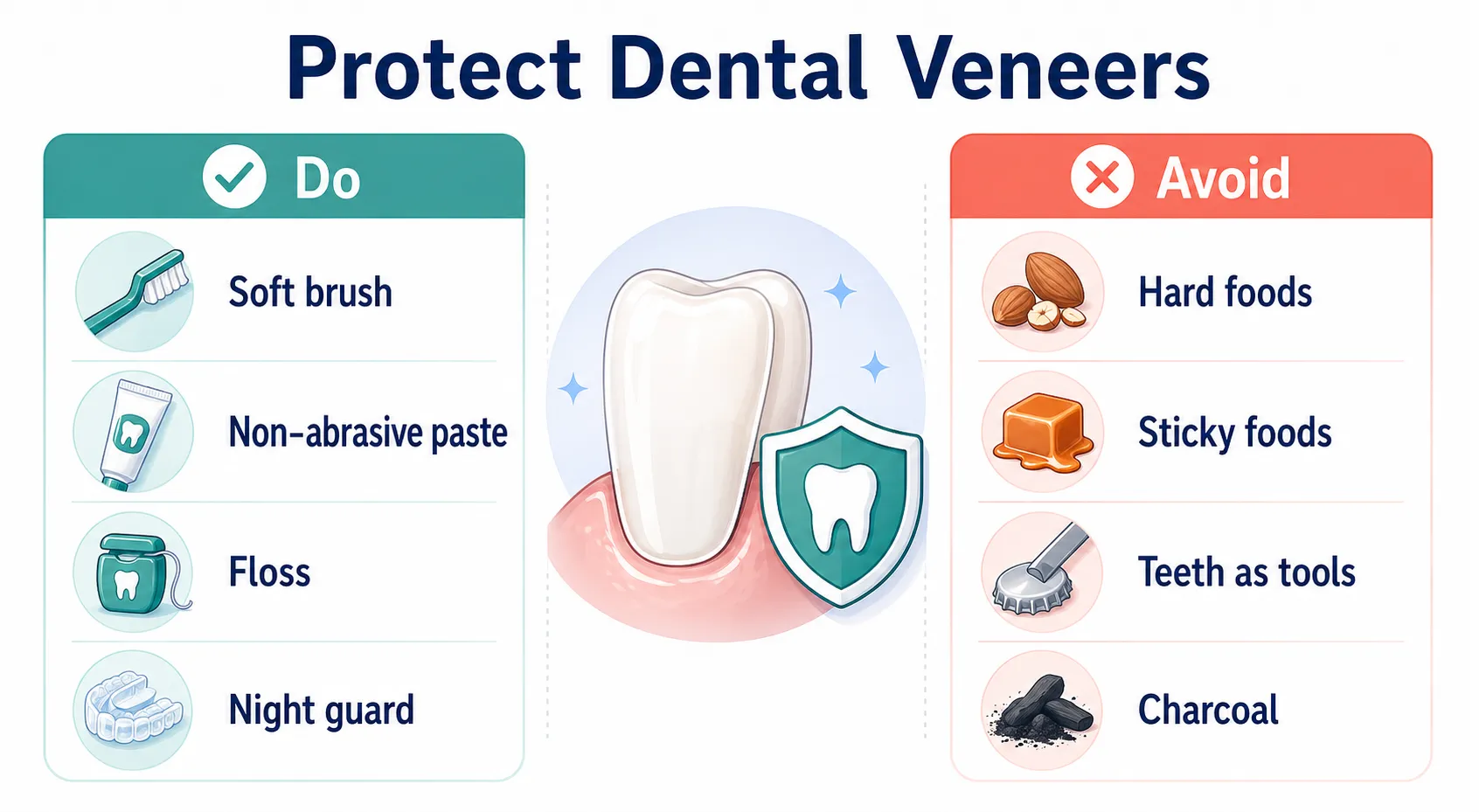
Dental veneers are durable, but they can get damaged by harsh brushing. Use a soft-bristled toothbrush and brush your teeth twice daily with light, circular motions. Make sure you get under the gumline to clean plaque buildup.
Consider using non-abrasive toothpaste to avoid scratching your veneers. It’s also important to clean between your veneers by flossing and using mouthwash to clear away food particles.
Regular dental visits and cleanings can improve oral health while maintaining veneers. They can help remove plaque buildup and prevent potential problems before they get worse. They can even give you special polishing power to keep your veneers shiny.
When Should You See a Dentist About Your Veneers?
Veneers shouldn’t hurt or feel loose. If you notice any of these, it’s time for a check-up. Here are some other signs that you need to see a dentist
- Chips or cracks
- Rough edges
- Stains or discoloration
- Gaps and gum problems
How to Avoid Damaging Your Veneers
Aside from carefully brushing and flossing your teeth, there are a number of ways to avoid damaging your veneers. Here’s how:
-
Avoid smoking
-
Avoid grinding and clenching your teeth or wear a night guard
-
Avoid eating anything with charcoal or baking soda
-
Avoid biting down on hard foods like nuts, candies, or ice
-
Avoid sticky foods like caramel or taffy
-
Avoid acidic foods or drinks
-
Be careful with foods that stain your teeth (coffee, tea, red wine, etc.)
-
Don’t use your teeth to open packages or bottles
-
Don’t bite your nails
-
Wear a mouthguard when playing sports
What Are Dental Veneers
Veneers are wafer-thin shells that cover the front of your teeth. They’re custom-made to fit your teeth perfectly and, in some cases, provide a natural-looking smile.
Your dentist may need to gently reshape the tooth’s surface to make it fit and bond better. There are different types of dental veneers, each with its own benefits.
These include:
| Veneer Type | Description |
|---|---|
| Porcelain veneers | Porcelain veneers are very durable and look like real teeth. They typically last for 10 to 15 years or more. |
| Composite resin veneers | Composite veneers are cheaper and easier to repair. However, they might not last as long as porcelain veneers. |
| No-prep or minimal-prep veneers | These super-thin veneers often need little to no teeth shaping of your natural tooth, making it a less invasive process. |
| Palatal veneers | These are customized for the backsides of teeth, primarily helping repair worn or damaged surfaces. |
| Removable veneers | These go over your natural teeth and can be removed as needed. |
What Are the Benefits of Dental Veneers?
Dental veneers can be a great way to improve your smile and boost your confidence. If you’re thinking about getting them, talk to your dentist. They can determine the right type for you.
However, there are other benefits of using veneers. These include:
- Fixing chips, gaps, or discoloration
- Providing a protective layer for your teeth
- Stain resistance
- Strong and durable protection
- Customizable for your preference
How to Choose the Right Dentist
First of all, it’s important to look for dentists with the right certifications in cosmetic dentistry. You should also ask about their experience with veneers and other forms of cosmetic procedures.
Ask to see before-and-after photos to see how well the dentist works. Seeing recommendations and reviews from other patients is also a good sign.
However, there are other factors that you might want to consider before choosing a dentist. This includes:
- Cost and insurance coverage
- Comfort and communication
- The quality of their materials
- Tools and equipment
Sources
- Kam Hepdeniz, O. & Temel, U.B. “Clinical survival of No-prep indirect composite laminate veneers: a 7-year prospective case series study.” BMC Oral Health, 2023.
- Malathi Suresh et al. “A Detailed Overview on Veneers -Diagnostic and Clinical Considerations.” ResearchGate, 2020.
- Korkut B. “Smile makeover with direct composite veneers: A two-year follow-up report.” J Dent Res Dent Clin Dent Prospects, 2018.
- Pini et al. “Advances in dental veneers: materials, applications, and techniques.” Clin Cosmet Investig Dent, 2012.
- “Veneer Longevity and Maintenance Tips.” Cosmetic Dentistry of Murfreesboro.
- Ye et al. “Research Progress and Clinical Application of All-Ceramic Micro-Veneer.” Materials (Basel), 2023.

Board-certified general dentist specializing in patient education and preventive dentistry.

Web content writer specializing in making dental research accessible to diverse audiences.
Related Articles
Pop On Veneers Review (2026)
Pop On Veneers are cheap, but are they worth the investment? Check out our review and comparison with other brands of re...
What Are Veneers?
Dental veneers can help fix many cosmetic dental problems. Learn the five types, how they work, costs, and side effects.
Veneers Before and After
Veneers are a popular cosmetic dental procedure that can dramatically improve the appearance of your smile. Different ki...

Brighter Image Lab Snap On Veneers Review (2026)
Brighter Image Lab makes realistic veneers, but are they worth the cost? Get the answer in our review as we examine its...