How Much Are Dental Implants & How Can You Pay for Them?


Reader-supported. We may earn a commission from links on this page. Advertising disclosure.
In this article
Dental implants are a great way to replace missing teeth. They can help keep your smile while preventing structural changes to your face.
But it’s not exactly the most affordable dental procedure available. Let’s unpack why implants can seem pricey, what contributes to the overall expense, and how you can make them more affordable.
Why are Dental Implants Expensive?
The average cost of a single dental implant can range from $3,000 to $4,800. Meanwhile, a full set for the upper and lower jaw can cost between $60,000 and $90,000.
The overall cost of dental implants will vary depending on the type you’re getting. Lastly, a complete dental implant procedure is broken down into various steps.
Essentially, you’ll be paying for:
- Dental exam
- The tooth extraction (if necessary)
- Surgical fee
- X-rays or CT scans
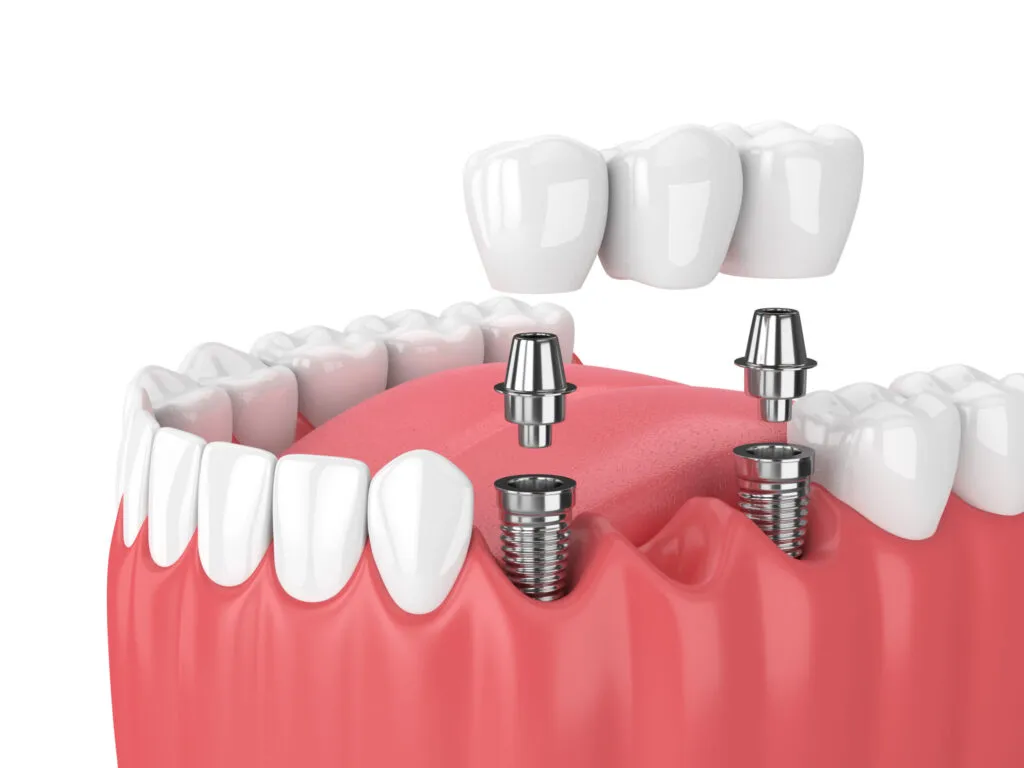
- The abutment (the part that connects the implant to the fake tooth)
- The crown (the fake tooth)
- The dental office visits
- Pre- and post-op care
These additional costs will vary depending on your dentist. But these bring up the average cost to the $3,000 to $4,800 range for a single implant.
Different Types of Implants and Their Cost
| Implant Type | Cost |
|---|---|
| Single Tooth Implant | $3,000 to $4,800 |
| Implant-Supported Bridge | $4,000 to $16,000 |
| Implant-Retained Denture | $2,000 up to $8,000 |
| 3-on-6 Dental Implant | $10,000 to $15,000 |
| Full-Mouth Dental Implant | $60,000 to $90,000 |
| All-on-4 Implant | $24,000 to $50,000 |
| Zygomatic Implant | $32,000 and $36,000 |
What Affects the Overall Cost of a Dental Implant?
Aside from the type of implant and the procedure itself, other factors can also contribute to the cost of a dental implant. These include:
- Your location — A city’s cost of living is much higher than that of a smaller town. To make up for the price, dental procedures in the city can be expensive.
- Implant materials — Dentists use various materials, such as titanium or zirconium, to make implants. The cost can depend on the type.
- Dentist’s experience level — Dentists with years of experience typically charge more than newer dentists. Most people don’t mind the extra cost.
- Procedure complexity — Bone grafting or sinus lifts for insufficient jawbone add hundreds to thousands of dollars.
- Sedation — Sedation can be used during the procedure. Stronger sedation medication typically costs more than milder forms of sedation.
Does Dental Insurance Cover Implants?
Your dental insurance plan can cover implants at up to 50 percent for major restorative procedures. However, consult your insurance provider to see if your plan covers part or all of the cost.
You can use an online comparison tool to find a dental plan that covers the procedure. While dental insurance rarely covers the entire procedure, it typically covers related costs, such as radiographs, dental extractions, and removable and fixed dental appliances.> Calculate your dental savings now with a DentalPlans plan. Visit DentalPlans.
How to Get Dental Implants Without Insurance
If you don’t have dental insurance, there are various payment options to reduce the cost of the procedure. Ask your dentist if they accept alternative financing options.
These options include:
- Dental discount plans — These plans offer discounts on treatments at a fixed annual price. This means you only pay what you need when you need it. They usually don’t have an annual limit, and it’s easy to get.
- Care credit/lending club — These allow you to pay for expensive medical and dental treatments not covered by insurance. They work like credit cards but only for medical expenses.
- University clinic programs — Many university dental programs offer discount dental services to help students gain experience. A professional dentist monitors the procedure to ensure it’s done correctly.
- FSA & HSA — You can use a flexible spending account (FSA) and a health savings account (HSA) to cover the expenses for a dental implant. These special accounts allow you to set aside pre-tax funds for medical expenses.
- Dental office installments — Many practices set up in-house monthly payments or “membership plans” with discounted treatments.
Sources
- Gupta et al. “Dental Implants.” StatPearls Publishing, 2023.
- D'Souza, K. and Aras, M. “Types of Implant Surgical Guides in Dentistry: A Review.” Journal of Oral Implantology, 2012.
- Wang et al. “Public perceptions of dental implants: a qualitative study.” Journal of Dentistry, 2015.
- Hollins, C. “Basic Guide to Dental Procedures.” John Wiley & Sons, Inc., 2015.
- Misch, C. “Dental Implant Prosthetics.” Mosby, 2014.
- Syrbu, J. “The Complete Pre-Dental Guide to Modern Dentistry.” CreateSpace Independent Publishing Platform, 2013.
- “Types of Implants and Techniques.” American Academy of Implant Dentistry.
- Aparicio et al. “Zygomatic implants: indications, techniques and outcomes, and the zygomatic success code.” Periodontology 2000, 2014.
- Soto-Penaloza et al. “The all-on-four treatment concept: Systematic review.” Journal of Clinical and Experimental Dentistry, National Library of Medicine, 2017.
- Taruna et al. “Prosthodontic perspective to all-on-4® concept for dental implants.” Journal of Clinical and Diagnostic Research, National Library of Medicine, 2014.

Board-certified general dentist specializing in patient education and preventive dentistry.

Experienced content writer dedicated to delivering accurate, unbiased dental information.
Related Articles
Types of Dental Implants & How They Work
What are dental implants, and how do they work? We cover the basics—from the types of implants to the procedure, costs,...
Should I Get All-on-4 Dental Implants?
If you have missing teeth and want full functionality of your mouth back, All-on-4 dental implants may be right for you....
3 on 6 Dental Implants
3 on 6 dental implants are recommended for people who are missing most of their teeth. Learn more about 3 on 6 implants,...

Does Dental Insurance Cover Implants?
Dental implants have many benefits, but they can be expensive. Find out how much dental insurance will cover for dental...