What is an Abutment for Dental Implants?


Reader-supported. We may earn a commission from links on this page. Advertising disclosure.
In this article
Dental abutments are essential components in dental implant procedures. This article covers the main types of dental abutments, their functions, and how they are placed.
It also covers the materials used for abutments and how to choose the most suitable one for your needs.
What is a Dental Abutment?
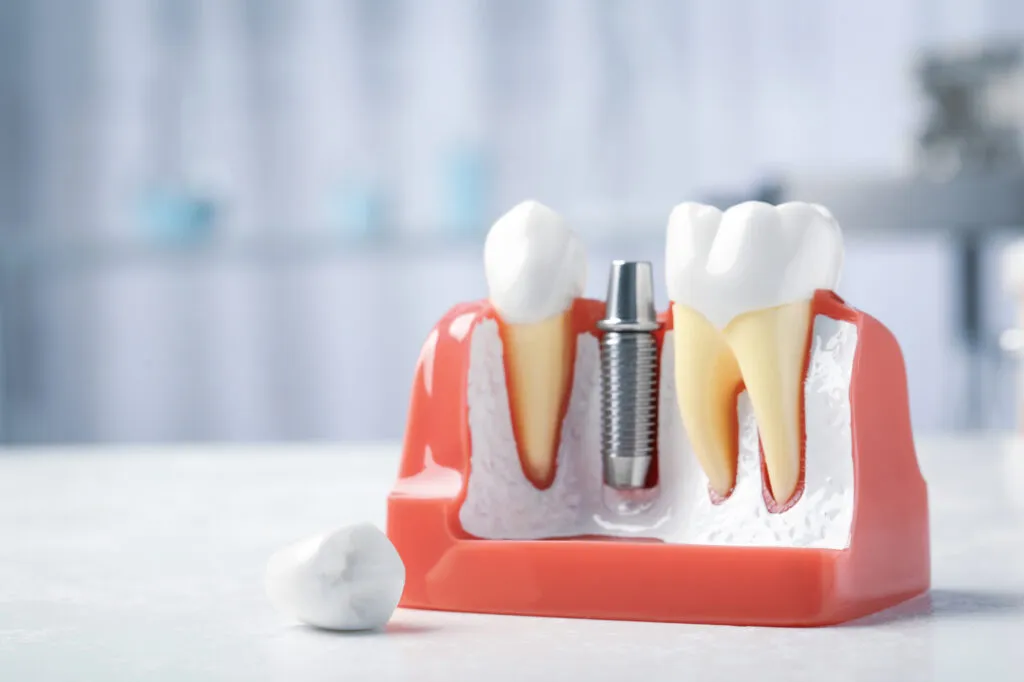
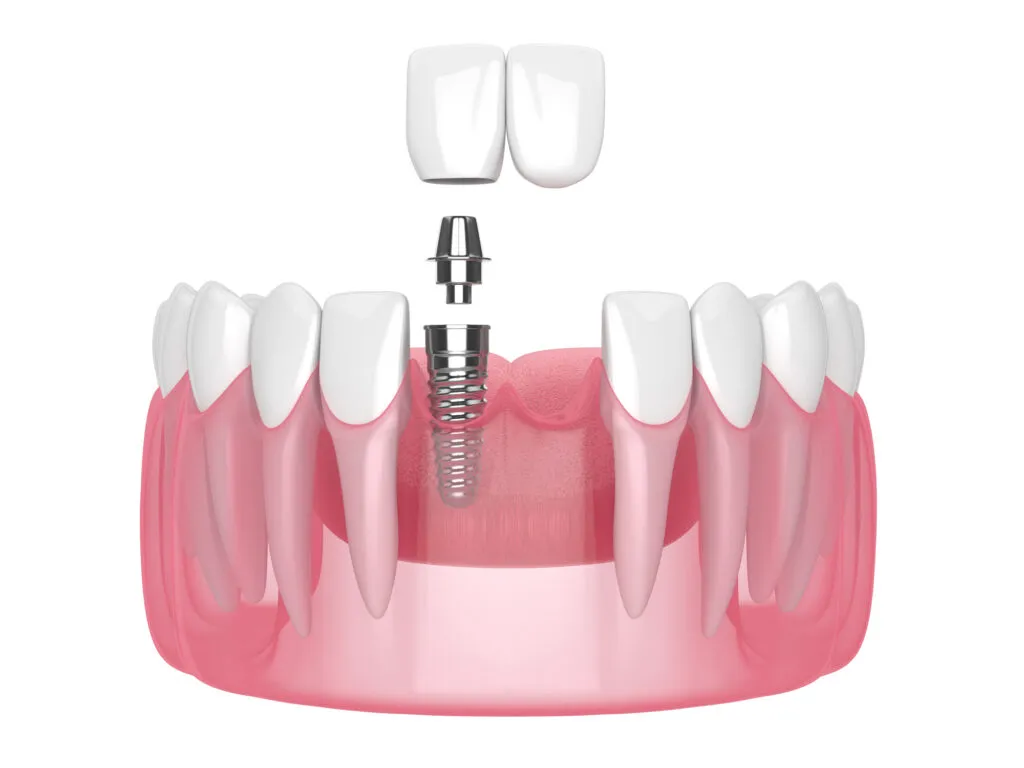
Placing a dental implant involves three main parts: the implant, the prosthesis, and the abutment. The abutment is the connector piece between the implant and the artificial tooth.
It links the crown, bridge, or denture to the implant. Depending on your implant’s position and jaw, a dentist may recommend a custom abutment design specifically for you. In other cases, prefabricated abutments may be used.
Types of Dental Abutments
There are numerous types of dental abutments. Abutments can be:
- Prefabricated or custom-made
- Straight or angled
- Temporary healing abutments or permanent abutments
What are Dental Abutments Used For?
Beyond connecting crowns and other dental restorations directly to the implant, the abutment serves several other roles. These include:
- Post-surgery integration — Dentists fit the abutment into the implant once you’ve healed from surgery and the implant has osseointegrated, or fused with the surrounding bone.
- Support for dental bridges — For dental bridges, crowns fit on two abutments connected by replacement teeth that rest on top of the gums. Dental professionals refer to the neighboring teeth that support the prosthetic crown as pontics.
- Shaping the gums — Abutments help shape the gums during healing. That makes accurate implant placement and a tight implant-abutment connection important.
The Steps for Placing an Abutment
Placing an abutment is a minor surgical procedure usually performed under local anesthesia.
Two-Stage Approach
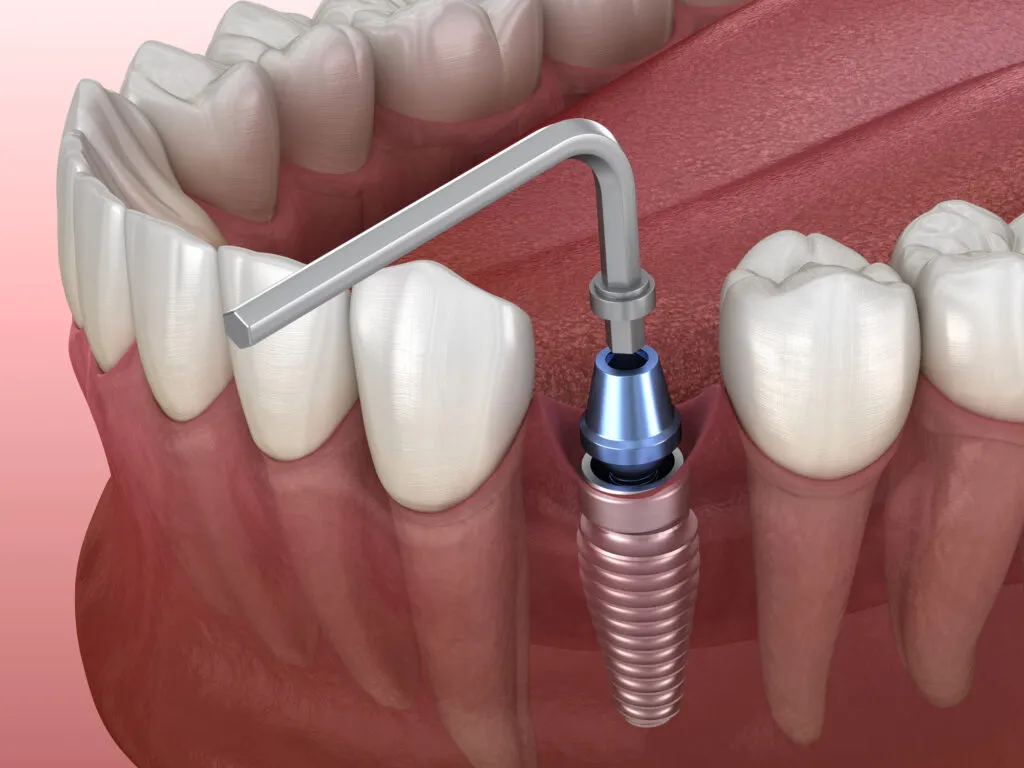
In a two-stage approach, after the implant has healed and osseointegrated, the dentist makes an incision in the gum to expose the implant. Then, they attach the healing abutment to the implant before closing the incision with stitches.
After the healing abutment is in place, the gums must heal for a few weeks before the dentist can place the permanent abutment and crown. In some cases, they may be able to place the crown on the same day as the abutment. However, it’s more common to wait until the gums have healed.
One-Stage Approach
The one-stage approach is an alternative procedure that involves fixing the implant and abutment during the same appointment. In this case, the dentist uses a temporary healing abutment to help the gum heal around the implant.
These are also called healing cuffs or caps. Healing abutments are wider than standard abutments and help make space for the crown.
Once the gums are healed and the implant is fully fused to the jawbone, the dentist unscrews the healing abutment and positions the final abutment and crown. This one-stage approach eliminates the need to reopen the gums after the implant heals.
What are Abutments Made of?
The material selected for the abutment can influence the implant’s strength and esthetics of your smile.
Dental abutments can be made from various materials, including:
- Titanium — Titanium is robust and biocompatible, meaning it fuses readily with bone. It’s suitable for most prosthetic restorations and strong enough to use for molars.
- Zirconium — This material complements the aesthetics of dental restorations. It’s a good choice if the gum line is thin and a titanium or stainless steel abutment would show through.
- Ceramic — This material is more esthetic and supports a natural-looking gum contour.
- Stainless steel — This is a less expensive option but not as strong as titanium. It’s usually only used for teeth with little chewing force.
- Polyether ether ketone (PEEK) — A polymer alternative to zirconium. It’s light, has good aesthetics, and is biocompatible. However, it has a higher risk of fracture.
How to Choose the Right Abutment
The abutment the dentist recommends may depend on various factors. These include the type of restoration, the tooth’s biting load, your budget, allergies, and preferences.
According to Dr. Nandita Lilly, one of NewMouth’s in-house dentists, “Many factors, including medical status, esthetic concerns, allergies, and the location of the implant, determine which materials and techniques are the best for you.”
Understanding the role of dental abutments is crucial for people considering implant-supported restorations. It allows you to make informed decisions about your dental treatment.
As always, we recommend consulting with a qualified dentist to determine the best abutment option for your specific situation.
What Is An Abutment For Dental Implants
NewMouth PodcastSources
- Saini et al. “Implant biomaterials: A comprehensive review.” World journal of clinical cases, 2015.
- Blanch-Martínez et al. “Behavior of polyether-ether-ketone (PEEK) in prostheses on dental implants. A review.” Journal of clinical and experimental dentistry. 2021.
- Gupta et al. “Dental implants.” StatPearls. 2021.
- Mayuri et al. “Success of Dental Implant Influenced by Abutment Types and Loading Protocol.” J Pharm Bioallied Sci, 2022.
- “Healing abutment” International Congress of Oral Implantologists“Dental implant procedures.” American Academy of Periodontology.

Board-certified general dentist specializing in patient education and preventive dentistry.

Public health expert and copywriter covering various health topics, including dentistry.
Related Articles
Dental Implant Failure: Signs, Causes, and Treatment
Dental implant failure is uncommon but possible. Learn what causes a dental implant to fail, how to spot the signs, and...
Dental Implant Procedure
A dental implant is a beneficial cosmetic and restorative dentistry procedure. Learn about preparation, recovery, costs,...
How Much Are Dental Implants & How Can You Pay for Them?
Wondering how much dental implants cost? We break down factors that affect implant pricing and explore different ways to...

All-on-Four Dental Implants
ClearChoice is the leading provider of dental implants. Learn about their benefits, how they work, and what to expect fr...